Ultrasonic Flow Meter

معلومات إضافية

Jade Ant Non-Intrusive Ultrasonic Flow Meter – Measure Without Cutting the Pipe

Jade Ant Non-Intrusive Ultrasonic Flow Meter – Measure Without Cutting the Pipe The Jade Ant Ultrasonic Flow Meter is a cutting-edge flow measurement solution designed for maximum flexibility and minimal downtime. Utilizing advanced transit-time technology, it allows for precise flow monitoring from outside the pipe—no cutting, no welding, and no process interruption required. Whether you are measuring ultra-pure water, hydrocarbons, or cooling water in HVAC systems, Jade Ant delivers reliable data with its intelligent signal processing capabilities. It is the perfect choice for retrofitting existing pipelines and measuring non-conductive fluids where electromagnetic meters cannot be used.

Product Overview

Jade Ant Ultrasonic Flow Meter is a cutting-edge flow measurement solution designed for maximum flexibility and minimal downtime. Utilizing advanced transit-time technology, it allows for precise flow monitoring from outside the pipe—no cutting, no welding, and no process interruption required. Whether you are measuring ultra-pure water, hydrocarbons, or cooling water in HVAC systems, Jade Ant delivers reliable data with its intelligent signal processing capabilities. It is the perfect choice for retrofitting existing pipelines and measuring non-conductive fluids where electromagnetic meters cannot be used.

  • Non-Invasive Installation: Features clamp-on transducers that mount to the exterior of the pipe, completely eliminating pressure drop and the risk of leakage or contamination.
  • Universal Compatibility: Capable of measuring a wide range of fluids, including non-conductive liquids like oils, alcohols, and deionized water, in pipes from DN15 to DN6000.
  • High Accuracy & Rangeability: Delivers measurement accuracy of  with a turndown ratio of 400:1, ensuring precision even at very low flow rates.
  • Jade Ant Smart Filtering: Equipped with proprietary Jade Ant digital filtering algorithms to eliminate noise from pipe vibrations and air bubbles, ensuring stable readings in industrial environments.
  • Versatile Power Options: Supports AC/DC power for fixed installations and offers a built-in high-capacity battery option for portable or remote applications where power is scarce.
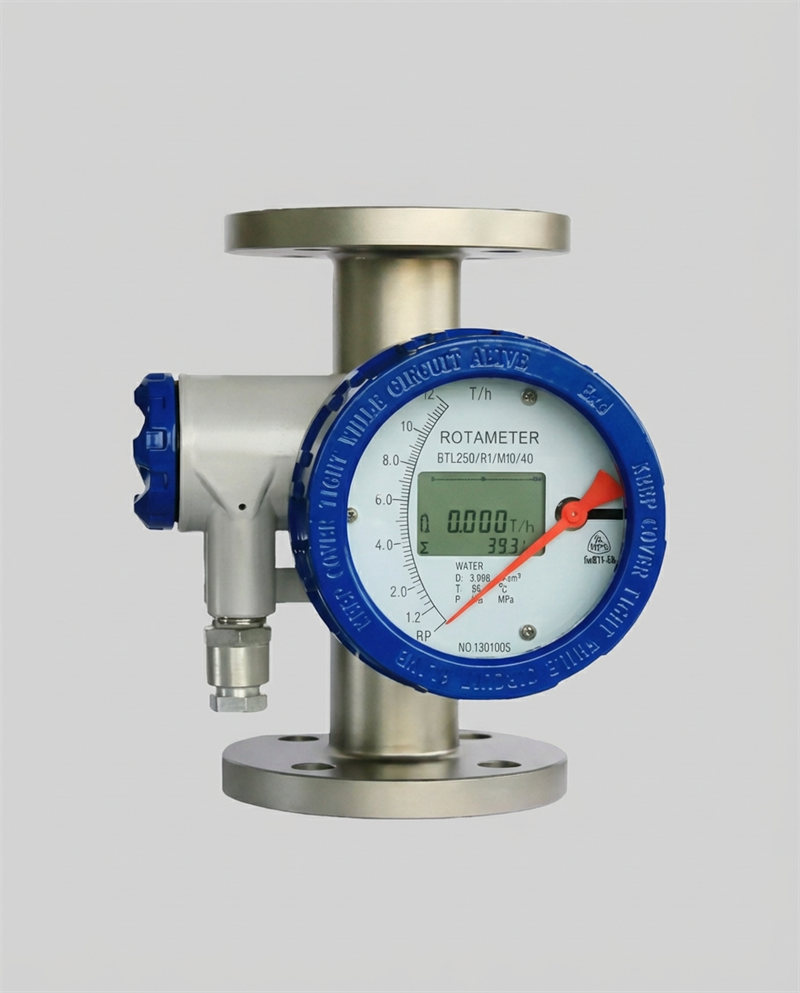
Precision Rotameter Flowmeter
Tube Shoulder Injection Mold supplier

Product Overview of Precision Rotameter Flowmeter

The Jade Ant Ultrasonic Flow Meter represents the cutting edge of non-contact flow measurement technology, using high-frequency sound waves to measure liquid flow velocity with exceptional accuracy and absolutely no interference with the process. Available in both clamp-on (non-invasive) and insertion configurations, our ultrasonic meters deliver unprecedented flexibility—install on existing pipelines without shutdown, process interruption, or pressure drop, while achieving ±1.0% accuracy comparable to traditional inline meters. This revolutionary capability makes Jade Ant ultrasonic meters the ideal solution for retrofit applications, temporary flow monitoring, critical processes where shutdown is impossible, and large-diameter pipelines where traditional meter installation would be prohibitively expensive.

Our advanced transit-time ultrasonic technology transmits ultrasonic signals both upstream and downstream through the flowing liquid, measuring the difference in transit times to calculate flow velocity with precision. The intelligent microprocessor compensates for temperature effects, pipe wall thickness variations, and liquid sound velocity changes, ensuring accurate measurement across diverse applications from clean water to wastewater, from chemicals to hydrocarbons, from cryogenic liquids at -40°C to hot water at +200°C. Available in sizes effectively from DN15 to DN6000 (1/2″ to 240″), with flow ranges from 0.01 m/s to 25 m/s velocity, Jade Ant ultrasonic meters serve applications including municipal water distribution, industrial process monitoring, energy management, chemical processing, oil and gas operations, and HVAC systems.

The clamp-on configuration mounts externally on the pipe with no process penetration, no wetted parts, no pressure drop, and no flow obstruction—install in minutes without cutting pipes, draining systems, or shutting down processes. Insertion meters provide higher accuracy (±0.5%) with a single probe inserted through a hot-tap fitting, ideal for large pipes where clamp-on signals may be weak. Both configurations offer maintenance-free operation with no moving parts, comprehensive output options including 4-20mA, pulse, and digital communication (Modbus, HART, Profibus), and intelligent diagnostics that continuously verify signal quality and measurement validity.

Whether you need temporary flow monitoring for a commissioning project, permanent metering on pipes too large for traditional meters, or non-invasive measurement where process contamination must be avoided, Jade Ant Ultrasonic Flow Meters deliver the accuracy, flexibility, and value modern applications demand.

الميزات الرئيسية

Non-Invasive Clamp-On Installation

The revolutionary clamp-on ultrasonic flowmeter mounts externally on the outside of the pipe without any process penetration, cutting, welding, or system shutdown. Two ultrasonic transducers attach to the pipe exterior using magnetic mounts, strap-on fixtures, or permanent brackets, transmitting and receiving ultrasonic signals through the pipe wall and flowing liquid. Installation takes 15-30 minutes versus hours or days for traditional inline meters requiring pipe cutting, flanging, and system drainage. This non-invasive capability delivers transformative advantages: zero process downtime for installation on operating systems, no pressure drop since there’s no flow obstruction, no contamination risk with no wetted components in contact with the process, no leak potential from flanged connections or penetrations, and complete portability allowing one meter to monitor multiple measurement points sequentially or relocate as needs change.

Clamp-on meters are ideal for temporary flow monitoring during commissioning, troubleshooting, or energy audits where permanent installation isn’t justified. They excel on large-diameter pipes (DN300-DN6000) where inline meter cost would be prohibitive—a DN1000 electromagnetic meter might cost $20,000-40,000 while a clamp-on ultrasonic meters costs $5,000-8,000 and installs without construction work. Retrofit applications benefit enormously from installation without shutdown, critical for continuous processes in refineries, chemical plants, and power generation facilities where shutdown costs exceed $50,000-100,000 per day. The ability to install on existing pipes with various materials (carbon steel, stainless steel, ductile iron, PVC, concrete, fiberglass) and configurations (straight pipes, reducers, elbows with adequate straight run) makes clamp-on ultrasonics the most versatile flow measurement technology available.

Advanced Transit-Time Measurement Technology

Jade Ant ultrasonic flowmeters employ proven transit-time (time-of-flight) measurement technology, the most accurate method for clean to moderately dirty liquids. The system uses two piezoelectric transducers positioned diagonally on opposite sides of the pipe, each alternately transmitting and receiving ultrasonic signals. When a transducer transmits an ultrasonic pulse, it travels through the pipe wall, across the flowing liquid at an angle to the flow direction, through the opposite pipe wall, and reaches the receiving transducer. The transit time depends on the sound velocity in the liquid and the liquid’s flow velocity—flow in the direction of signal travel decreases transit time, while flow opposite to signal direction increases transit time.

By measuring transit time in both directions (upstream and downstream), the system calculates the difference in transit times, which is directly proportional to the average flow velocity across the acoustic path. The fundamental relationship is: ΔT = (2 × V × L × cos θ) / C², where ΔT is the transit time difference, V is flow velocity, L is the acoustic path length, θ is the beam angle, and C is sound velocity in the liquid. The beauty of this differential measurement is that it cancels out the effect of sound velocity in the liquid (which varies with temperature and composition), leaving only the flow velocity component. Modern digital signal processing measures transit times with nanosecond precision, translating to velocity resolution better than 0.001 m/s and flow accuracy of ±1.0% for clamp-on and ±0.5% for insertion configurations.

Intelligent Signal Processing and Diagnostics

The advanced microprocessor-based converter incorporates sophisticated algorithms that optimize measurement performance across diverse pipe sizes, materials, liquids, and flow conditions. Automatic pipe material recognition and sound velocity detection identify the pipe characteristics during initial setup, while continuous adaptive signal processing adjusts amplification, filtering, and timing parameters in real-time to maintain optimal signal strength as conditions change. The system automatically compensates for temperature effects on sound velocity using integrated RTD sensors that measure pipe/liquid temperature, applying correction algorithms that maintain accuracy across temperature ranges from -40°C to +200°C.

Comprehensive self-diagnostics continuously monitor signal quality, verifying adequate signal strength, acceptable signal-to-noise ratio, proper transducer coupling, and valid transit time measurements. The diagnostic system provides real-time feedback during installation, guiding optimal transducer positioning for maximum signal strength. During operation, intelligent alarms warn of developing issues including weak signals from transducer fouling or misalignment, excessive noise from gas bubbles or suspended solids, empty pipe conditions, and reverse flow detection. Advanced signal averaging and filtering algorithms extract stable flow measurements even in challenging conditions including turbulent flow, pulsating pumps, partially full pipes, and electrically noisy environments. This intelligence transforms ultrasonic technology from a laboratory curiosity into a robust industrial instrument capable of reliable long-term operation.

Portable and Permanent Configurations

Jade Ant offers ultrasonic flowmeters in both portable handheld configurations for temporary measurement and permanent fixed installations for continuous monitoring. Portable ultrasonic flowmeters feature battery-powered operation (8-12 hours continuous use), integrated display and keypad, built-in data logging (typically storing 50,000+ measurement points), and rugged carrying cases with transducers, coupling gel, cables, and accessories. These portable meters serve commissioning engineers verifying system performance, energy auditors documenting water and energy consumption, maintenance technicians troubleshooting flow problems, and process engineers balancing flows across parallel equipment. The ability to quickly measure flows at dozens of locations with a single meter—impossible with fixed inline meters—provides unprecedented insight into system operation and identifies optimization opportunities.

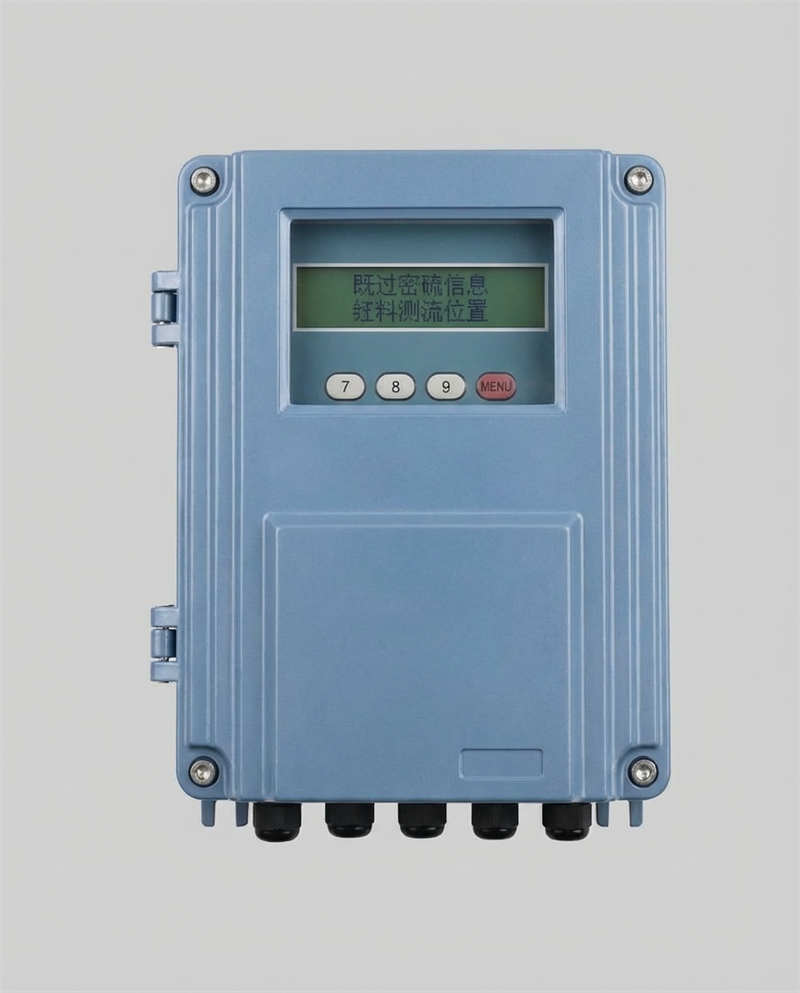
Permanent ultrasonic installations use wall-mounted or panel-mounted converters with remote transducers installed on the pipes, providing continuous flow monitoring with outputs connected to SCADA, control systems, or local recorders. These fixed installations offer all the advantages of clamp-on technology (no pressure drop, no process penetration, no maintenance) in a permanent configuration suitable for custody transfer, billing, regulatory compliance, and critical process control. The transducers can be installed with permanent brackets and protective covers, ensuring long-term stability in outdoor, underground, or harsh industrial environments. Both portable and permanent configurations use identical measurement technology—the choice depends on application requirements for temporary versus continuous monitoring.

Multi-Path Measurement for Enhanced Accuracy

For applications requiring the highest accuracy on large pipes, Jade Ant offers multi-path ultrasonic flowmeters with 2, 4, or even 8 independent acoustic paths measuring flow at different positions across the pipe cross-section. Single-path meters measure velocity along one diagonal path, which may not represent the true average velocity in large pipes where velocity profiles can be complex due to upstream disturbances, elbows, or partially developed flow. Dual-path configuration adds a second acoustic path at a different elevation, averaging the two measurements for better representation of the overall flow profile. Four-path configuration positions acoustic paths at four different elevations, providing excellent averaging across the pipe diameter and delivering ±0.5% accuracy on pipes DN300-DN3000. Eight-path configurations offer the ultimate accuracy approaching ±0.25% for custody transfer applications on large pipelines.

Multi-path meters are particularly valuable for natural gas liquid pipelines, crude oil transport, water supply mains, and other applications where high-value commodities or regulatory requirements demand maximum accuracy. While more expensive than single-path meters, multi-path ultrasonics often prove more economical than alternative technologies for very large pipes—a DN2000 electromagnetic meter might cost $100,000+ while a 4-path ultrasonic system costs $30,000-50,000 and offers comparable or superior accuracy with easier installation.

Insertion Ultrasonic Flowmeters

For applications where clamp-on signal strength is inadequate (very thick pipe walls, concrete-lined pipes, large pipes with weak signals), Jade Ant insertion ultrasonic flowmeters provide an excellent alternative combining ultrasonic technology advantages with improved signal strength. The insertion design mounts one or two ultrasonic transducers on a probe that inserts into the pipe through a hot-tap fitting, positioning the transducers in direct contact with the flowing liquid. This direct liquid contact eliminates signal attenuation through pipe walls, providing strong signals even on pipes up to DN6000 with thick walls or challenging materials.

Installation requires drilling and tapping the pipe for the insertion fitting—more invasive than clamp-on but far simpler and faster than installing a flanged inline meter. The insertion can often be performed using hot-tap equipment on pressurized lines without shutdown. Insertion ultrasonics deliver ±0.5% accuracy comparable to electromagnetic meters while retaining key ultrasonic advantages: minimal pressure drop (just the small probe obstruction), no moving parts requiring maintenance, and ability to withdraw the probe for inspection or replacement through isolation valves without system shutdown. Applications include large water and wastewater pipes, irrigation canals, open channels with stilling wells, and industrial process pipes where accuracy requirements exceed clamp-on capabilities.

Tube Shoulder Injection Mold supplier

Technical Specifications

الميزةDetails
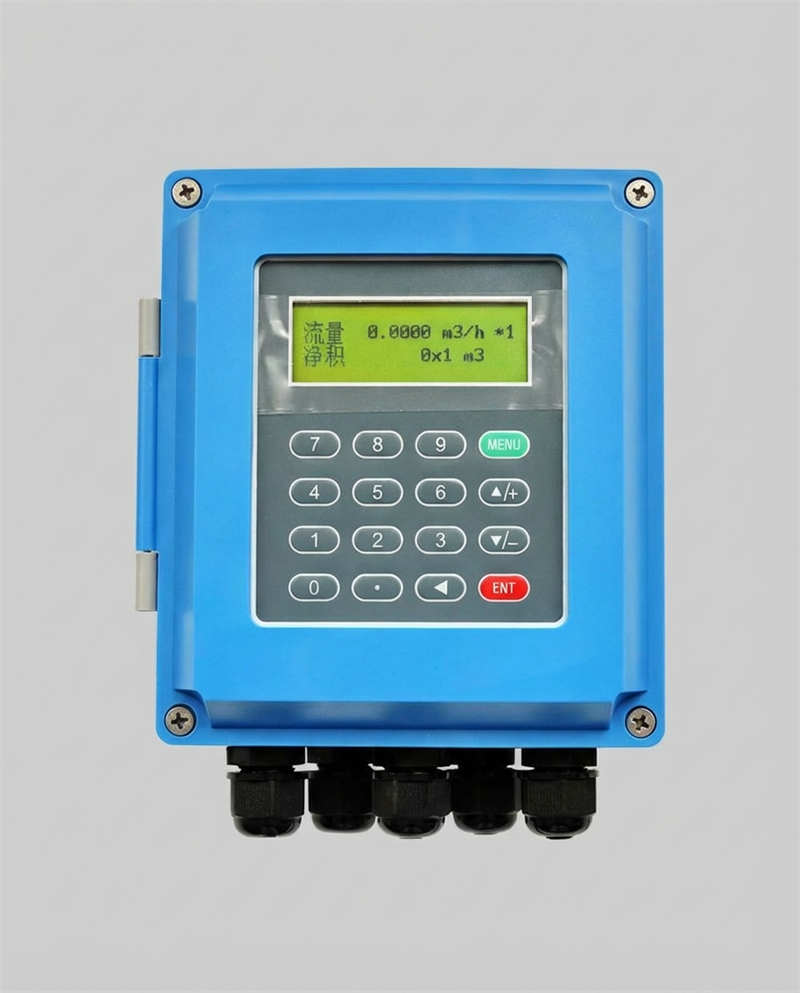
Product NameWall-mounted Ultrasonic Flowmeter
Measurement Accuracy1%
RepeatabilityBetter than 0.2%
Power SupplyIsolated DC 8-36V or AC 85-264V
Power ConsumptionOperating current 50mA
Optional InputThree-channel 4-20mA analog input loop
Display2×10 Chinese character backlit display
Operation16-key keypad
Pipe Diameter RangeClamp-on: DN32 ~ 1000mm
Insertion: DN50 ~ 6000mm
Inline (Pipe section): DN15 ~ 1200mm
SD Card StorageOptional
Protection Class (IP Rating)Main Unit: IP67
Sensors: IP68


Tube Shoulder Injection Mold supplier

Why Choose Our Ultrasonic Flow meter?

The Flexible Solution for Modern Flow Measurement

Non-Invasive Installation Saves Time and Money

The revolutionary clamp-on capability installs meters on existing pipes in 15-30 minutes without cutting, welding, shutdown, or system drainage—impossible with traditional inline meters. This transforms economics for retrofit applications: adding flow measurement to operating systems that would otherwise require costly shutdown, construction work, and production losses. For a typical DN300 installation, traditional inline meter costs might include $5,000-10,000 for the meter, $10,000-20,000 for pipe cutting/flanging/installation labor, plus $20,000-100,000+ in shutdown costs and lost production—total $35,000-130,000. A clamp-on ultrasonic meter costs $5,000-8,000 installed with zero shutdown, saving $30,000-120,000 per installation point.

Zero Pressure Drop Reduces Energy Costs

Complete absence of flow obstruction eliminates pressure drop and reduces pumping energy consumption. For a DN300 water line flowing 500 m³/h, an electromagnetic meter might create 0.05 bar (0.7 psi) pressure drop while an ultrasonic meter creates zero—annual energy savings of approximately 450 kWh worth $45-90. Across dozens of measurement points in a facility, these savings accumulate to thousands of dollars annually while also improving system hydraulic performance by maintaining design pressures and flows.

Unmatched Portability and Flexibility

Single portable ultrasonic meter can measure flows at unlimited locations sequentially, providing comprehensive system visibility impossible with fixed inline meters. Commission new systems, troubleshoot flow problems, perform energy audits, and verify equipment performance using one meter at dozens of measurement points—economics that would never justify installing permanent meters at each location. Relocate measurement points as process configurations change without abandoning expensive installed meters or undertaking new construction. This flexibility delivers enormous value for temporary measurement, commissioning activities, and dynamic industrial environments.

Comprehensive Size Range

Effectively measure pipes from DN15 to DN6000 (1/2″ to 240″) using appropriate transducer configurations—far wider range than any other single flowmeter technology. Small industrial pipes to major water transmission mains measured with consistent technology, simplifying training, spare parts, and operational procedures. Multi-path configurations provide custody transfer accuracy (±0.25-0.5%) on very large pipes where mechanical meter costs would be prohibitive.

Long-Term Reliability and Support

Jade Ant stands behind ultrasonic flowmeter technology with comprehensive support including expert application engineering to ensure proper meter selection and configuration, responsive technical support for installation assistance and troubleshooting, factory calibration services and verification, and global spare parts availability. From initial consultation through years of reliable operation, Jade Ant provides the expertise and support that ensures your ultrasonic flowmeters deliver accurate, dependable measurement.

Tube Shoulder Injection Mold supplier

Applications

Municipal Water and Wastewater

Jade Ant ultrasonic flowmeters serve as the technology of choice for municipal water distribution networks and wastewater collection systems where large pipe sizes, existing infrastructure, and non-disruptive installation requirements favor clamp-on or insertion technologies. Water distribution metering uses clamp-on ultrasonic meters on transmission mains (DN300-DN3000) for flow monitoring, district metering area (DMA) management, and leak detection programs. The ability to install meters on existing pipes without shutdown enables utilities to add metering points for improved system visibility and water loss control without the construction costs and service interruptions required for inline meter installation. Portable ultrasonic meters support commissioning new systems, verifying pump performance, balancing flows across parallel mains, and temporary metering during meter replacement or calibration.

Wastewater collection systems benefit from clamp-on meters that avoid contact with contaminated sewage while providing accurate flow measurement for collection system monitoring, I&I (inflow and infiltration) studies, and regulatory compliance reporting. The bidirectional flow capability measures both forward flow and reverse surcharging during wet weather events. Wastewater treatment plants use insertion ultrasonic meters in large channels, clarifiers, and effluent discharge pipes where traditional inline meters would be expensive or impractical. The ability to withdraw insertion probes through isolation valves allows maintenance and cleaning without draining large structures.

Water balance and leak detection programs deploy portable ultrasonic meters to measure flows at hundreds of locations across the distribution network, identifying zones with high losses and pinpointing areas for leak repair. The speed of clamp-on installation—15 minutes per measurement point—makes comprehensive network surveys economically feasible. Multi-path ultrasonic meters on major supply mains provide the accuracy required for custody transfer between utilities or water purchase accounting.

HVAC and Energy Management

Building energy management and district energy systems extensively use ultrasonic flowmeters for chilled water, hot water, and condenser water measurement supporting energy monitoring, optimization, and tenant billing. Chilled water metering at central plants and building submetering points uses clamp-on or inline ultrasonic meters (DN50-DN600) to measure volumetric flow, which combines with supply/return temperature measurements to calculate cooling energy consumption (ton-hours or MWh). The zero pressure drop is particularly valuable in chilled water systems where every kPa of pressure drop increases pumping energy—eliminating pressure drop saves energy and reduces operating costs.

District heating and cooling networks serving campuses, urban districts, or industrial complexes use large ultrasonic meters (DN200-DN1200) for plant production metering and building consumption billing. Multi-path ultrasonic meters provide the ±0.5% accuracy required for fiscal metering and fair cost allocation among multiple consumers. Heat exchanger monitoring uses paired ultrasonic meters on supply and return lines combined with temperature sensors to calculate heat transfer rates, monitor exchanger effectiveness, and detect fouling or performance degradation.

HVAC system balancing during commissioning employs portable ultrasonic meters to quickly measure flows at air handler coils, terminal units, and zone distribution to verify design flows are achieved and identify over/under flow conditions. Cooling tower makeup and blowdown measurement supports water balance calculations and chemical treatment optimization. Integration with building automation systems via Modbus or BACnet provides real-time flow data for demand-based control, setpoint optimization, and predictive maintenance programs that reduce energy consumption while maintaining comfort.

Chemical Processing and Pharmaceuticals

Chemical plants and pharmaceutical manufacturing facilities use ultrasonic flowmeters where non-invasive measurement prevents process contamination, handles corrosive or toxic liquids safely, and allows installation on operating systems without shutdown. Corrosive chemical measurement benefits from clamp-on technology that eliminates wetted materials and corrosion concerns—measure concentrated acids, caustic solutions, oxidizing agents, or aggressive solvents without selecting exotic liner and electrode materials. The measurement occurs entirely outside the process boundary, with no potential leak paths or material compatibility issues.

Sanitary pharmaceutical applications use clamp-on ultrasonic meters for WFI (Water for Injection), purified water, and process solutions where contamination from wetted sensors is unacceptable. The completely non-invasive approach maintains system sterility and eliminates cleaning validation concerns. Batch processing uses accurate totalization to deliver precise quantities of liquid ingredients for formulation and reaction control. Solvent recovery systems track flows through distillation, extraction, and purification equipment for mass balance accounting and process optimization.

Safety-critical applications involving flammable, explosive, or toxic liquids appreciate the non-invasive approach that eliminates potential leak points from flanged meter installations. Explosion-proof inline meters can be replaced with intrinsically safe clamp-on electronics mounted remotely from the hazardous area, reducing certification costs and improving safety. Process verification during scale-up uses portable ultrasonic meters to measure flows at multiple points throughout pilot plants and production facilities, providing the data needed to validate process models and optimize production parameters.

Oil, Gas, and Petrochemical Industries

Petroleum refining, petrochemical production, and pipeline operations deploy ultrasonic flowmeters for custody transfer, allocation metering, and process monitoring across diverse applications. Crude oil and refined product pipelines use multi-path ultrasonic meters (4-8 paths) for fiscal metering and custody transfer, meeting API MPMS Chapter 5.8 requirements for ultrasonic meter accuracy and proving procedures. These meters handle pipe sizes from DN200 to DN1200 with ±0.25-0.5% accuracy, providing economical alternatives to turbine meters on large lines where turbine meter costs would be prohibitive.

Refinery process measurement includes ultrasonic metering of crude feed, intermediate streams, finished products, and utilities throughout complex processes. Clamp-on meters provide flexible measurement points that can be added or relocated as process configurations change, without requiring system modifications or shutdown. Tank farm loading and unloading uses insertion ultrasonic meters in large transfer lines (DN300-DN800) where accurate totalization ensures proper inventory accounting and detects loading errors or product losses.

Natural gas liquids (NGL) and LPG measurement benefits from ultrasonic technology capable of handling cryogenic temperatures (-40°C) and high-pressure service. Produced water management in oil and gas production uses ultrasonic meters to measure water flows for disposal, treatment, or injection, often in challenging conditions with high suspended solids content. Pipeline leak detection systems employ permanently installed clamp-on ultrasonic meters at multiple locations along pipelines, comparing flows between segments to identify leaks based on mass balance calculations—the non-invasive installation allows adding monitoring points without pipeline shutdown.

Industrial Manufacturing

Diverse industrial processes integrate ultrasonic flowmeters for non-invasive flow monitoring, temporary measurement, and applications where zero pressure drop or maintenance-free operation provides value. Cooling water systems in manufacturing plants, data centers, and power generation facilities use clamp-on ultrasonic meters to monitor flows to heat exchangers, process equipment, and cooling towers without the pressure drop that would reduce heat transfer effectiveness or increase pumping costs.

Clean-in-place (CIP) systems in food processing, pharmaceutical manufacturing, and other sanitary industries use clamp-on meters to monitor cleaning solution flows, verify flow rates meet validation requirements, and totalize volumes for process documentation—all without contaminating the hygienic system with wetted sensors. Hydraulic systems use portable ultrasonic meters to troubleshoot flow problems, verify pump performance, and detect internal leaks in complex hydraulic circuits.

Temporary flow monitoring during plant commissioning, expansion projects, or system troubleshooting deploys portable ultrasonic meters to measure flows at dozens or hundreds of points quickly, providing the data needed for system balancing, pump selection verification, and identifying optimization opportunities. Energy audits use portable meters to quantify water and energy consumption across facilities, identifying waste and supporting sustainability initiatives.

Tube Shoulder Injection Mold supplier

Working Principle

Transit-Time Ultrasonic Measurement

Jade Ant ultrasonic flowmeters utilize the proven transit-time (time-of-flight) measurement principle, the most accurate and widely adopted ultrasonic technology for clean to moderately dirty liquids. The fundamental concept involves transmitting ultrasonic signals through the flowing liquid and measuring the time difference between upstream and downstream signal propagation. Two ultrasonic transducers are mounted on opposite sides of the pipe at a specific angle (typically 45-60 degrees to the pipe axis). Each transducer alternately acts as transmitter and receiver, creating two acoustic paths through the liquid—one path traveling with the flow (downstream) and one against the flow (upstream).

When liquid flows through the pipe, it carries the ultrasonic signal along with it in the downstream direction, slightly decreasing the transit time compared to stationary liquid. Conversely, flow opposes the upstream signal, slightly increasing transit time. The difference between these two transit times is directly proportional to the average flow velocity along the acoustic path. The mathematical relationship is: ΔT = (2 × V × L × sin θ) / C², where ΔT is the transit time difference (typically measured in nanoseconds or microseconds), V is the flow velocity, L is the path length between transducers, θ is the angle between the acoustic path and pipe axis, and C is the speed of sound in the liquid.

The brilliant advantage of this differential measurement is that it automatically compensates for variations in sound velocity caused by temperature changes, liquid composition variations, or pressure effects—these factors affect both upstream and downstream transit times equally, so they cancel out when calculating the difference. Modern digital signal processing measures transit times with precision better than 1 nanosecond, enabling velocity resolution of 0.001 m/s or better. The microprocessor continuously alternates between upstream and downstream measurements (typically 100-1000 times per second), averaging the results to provide stable, accurate flow readings even in turbulent or pulsating flow conditions.

Clamp-On vs Insertion Configuration

Clamp-on configuration mounts both transducers externally on the pipe surface, with ultrasonic signals passing through the pipe wall, across the liquid, and through the opposite pipe wall. This completely non-invasive approach requires no process penetration and can be installed on operating systems without shutdown. The transducers use acoustic coupling compound (gel or pads) to ensure efficient ultrasonic energy transfer between the transducer face and pipe surface. Signal strength depends on pipe material, wall thickness, and liquid properties—metal pipes with thin walls (<25mm) provide excellent signal transmission, while very thick walls (>60mm), concrete linings, or heavily scaled interior surfaces may attenuate signals and reduce accuracy. The clamp-on approach works best on clean liquids with low suspended solids content (<100 ppm) where ultrasonic signals can propagate through the liquid without excessive scattering or absorption.

Insertion configuration mounts one or more ultrasonic transducers on a probe inserted into the pipe through a threaded fitting or hot-tap connection, positioning the transducer face in direct contact with the flowing liquid. This direct contact eliminates signal losses through pipe walls, providing strong signals even on pipes with very thick walls, concrete linings, or challenging materials. Single-transducer insertion meters use a reflection configuration where the signal bounces off the opposite pipe wall and returns to the same transducer. Dual-transducer insertion meters position two transducers on a single probe or use separate probes on opposite sides of the pipe. Insertion configuration delivers superior accuracy (±0.5% vs ±1.0% for clamp-on) and works better with liquids containing moderate suspended solids. The tradeoff is that installation requires pipe penetration, though this is far simpler than installing a flanged inline meter.

Multi-Path Measurement for Large Pipes

Single-path ultrasonic meters measure flow velocity along one acoustic path (one chord across the pipe diameter), which provides accurate measurement when the velocity profile is uniform and symmetrical. However, in large pipes (DN500+) or when flow conditions include upstream disturbances, the velocity profile may not be uniform—velocity is typically higher at the pipe center and lower near the walls, with asymmetries caused by elbows, valves, or insufficient straight pipe. A single path measurement may not accurately represent the average velocity across the entire pipe cross-section, leading to measurement errors.

Multi-path ultrasonic flowmeters solve this problem by measuring velocity along multiple acoustic paths at different elevations across the pipe diameter, then mathematically combining these measurements to calculate the true average flow velocity. A 2-path configuration uses two acoustic beams at different heights, typically positioned at 0.25D and 0.75D from the pipe bottom (where D is the pipe diameter). This provides better averaging than a single path. A 4-path configuration adds paths at four elevations (typically 0.15D, 0.37D, 0.63D, and 0.85D), delivering excellent velocity profile integration and ±0.5% accuracy suitable for fiscal metering. 8-path systems position paths according to advanced integration schemes (Gaussian quadrature or similar), achieving ±0.25% accuracy approaching that of Coriolis or turbine meters.

Multi-path meters use weighted averaging algorithms that mathematically integrate the velocity profile across the pipe cross-section, with weighting factors based on the annular area each path represents. This sophisticated approach compensates for non-ideal velocity profiles, reducing sensitivity to upstream flow disturbances and allowing shorter straight pipe requirements—a 4-path meter might achieve rated accuracy with only 5D upstream straight pipe versus 10-20D for a single-path meter. While more expensive than single-path designs, multi-path ultrasonic meters prove economical for large pipes where their accuracy and reduced installation requirements offset the higher initial cost.

Tube Shoulder Injection Mold supplier

Installation and Maintenance Guide

Proper installation ensures optimal signal strength and accurate measurement from your Jade Ant clamp-on ultrasonic flowmeter. Begin by selecting an appropriate measurement location with adequate straight pipe: 10D upstream and 5D downstream minimum for standard accuracy, though ultrasonic meters are less sensitive to flow disturbances than other technologies due to their averaging across the acoustic path. Avoid locations immediately after pumps (minimum 20D), control valves in throttling service (15D minimum), or double elbows in different planes (15D minimum). The ideal location has straight, uniform pipe without valves, elbows, reducers, or other flow disturbances nearby.

Surface preparation is critical for good acoustic coupling. Clean the pipe exterior thoroughly, removing dirt, rust, loose paint, and any coatings or insulation that would prevent transducer contact with the bare pipe surface. For painted pipes, remove paint in the transducer mounting areas using wire brushing, grinding, or scraping to expose clean metal. For insulated pipes, remove insulation in a small area (typically 300-500mm length) to access the pipe surface. Measure the pipe outside diameter accurately and verify wall thickness (use ultrasonic thickness gauge if unknown)—these parameters are critical for proper signal path calculation.

Transducer mounting follows specific procedures to ensure optimal signal transmission. Apply acoustic coupling gel liberally to both transducer faces—this gel fills microscopic air gaps between the transducer and pipe surface, ensuring efficient ultrasonic energy transfer. Position the transducers according to the spacing calculated by the converter (based on pipe size, wall thickness, and liquid sound velocity), typically using the installation jig or spacing template provided. The transducers can be mounted in several configurations: V-path (most common, both transducers on same side of pipe), Z-path (transducers on opposite sides), or W-path (signal makes multiple reflections). The converter automatically recommends the optimal configuration based on pipe parameters.

Secure the transducers using the provided mounting hardware—typically stainless steel straps, magnetic clamps, or rail systems depending on application. Ensure firm, even contact across the entire transducer face without air gaps or excessive pressure that could crack the transducer. Connect the transducer cables to the converter, observing proper upstream/downstream orientation (cables are typically labeled “Upstream” and “Downstream” or “A” and “B”). Power on the converter and follow the setup wizard to enter pipe parameters, liquid type, and measurement units. The converter will display signal strength and quality indicators—adjust transducer positions slightly to maximize signal strength, usually by sliding transducers closer together or further apart to fine-tune the spacing.

Verification and commissioning includes checking displayed flow rate against expected values based on pump capacity or system design flows. For verification, compare ultrasonic readings against another meter, mass balance calculations, or volumetric tank proving. Configure output scaling, totalizer units, alarm setpoints, and communication parameters as required for your application. Install protective covers or enclosures if transducers will be exposed to weather, mechanical damage, or vandalism. For permanent installations, apply weatherproof sealant around mounting brackets and cable entries.

Maintenance & Service

Minimal Maintenance for Long-Term Reliability

Jade Ant ultrasonic flowmeters require minimal routine maintenance, making them ideal for applications where access is difficult or maintenance resources are limited. With no moving parts, no wetted components requiring cleaning, and no mechanical wear, ultrasonic meters can operate continuously for 10-15 years with only periodic verification and minor attention.

Monthly inspection should include visual checks of transducer mounting security—verify straps or clamps remain tight and transducers have not shifted position. Check cable connections for tightness and signs of moisture ingress or corrosion. Review displayed signal strength and quality indicators—gradually decreasing signal strength may indicate acoustic coupling degradation requiring transducer removal and fresh coupling gel application. For permanent outdoor installations, inspect weatherproofing and cable entries for deterioration.

Annual maintenance includes verifying measurement accuracy by comparing readings against independent methods such as mass balance calculations, comparison with another calibrated meter, or volumetric tank proving. Remove and inspect transducers, cleaning the mounting surfaces and transducer faces, and applying fresh acoustic coupling gel. This simple procedure often restores signal strength that may have degraded over time due to coupling gel drying or contamination. Verify all electrical connections remain tight and grounds are intact (<10Ω resistance). Update converter firmware if newer versions are available with improved features or bug fixes.

As-needed maintenance addresses specific issues. If signal strength drops suddenly, check for transducer displacement, coupling gel drying, pipe scaling or deposits affecting sound transmission, or temperature extremes affecting transducer operation. Air entrainment in the liquid (visible as erratic readings and low signal quality) requires investigating the source—leaking pump seals, vortexing in tanks, or inadequate pipe venting. Electrical noise interference (indicated by unstable readings) may require improved grounding, cable shielding, or relocating the converter away from noise sources.

Calibration verification intervals depend on application criticality. Custody transfer and billing applications typically require annual verification or biennial laboratory calibration. Process control applications can operate 2-3 years between verifications if supported by good performance history. For clamp-on meters, field verification is straightforward—compare readings against master meters, tank proving, or other independent measurements. Some users perform “zero flow verification” by closing isolation valves and confirming the meter reads zero with no flow, providing confidence that the meter hasn’t drifted. Factory recalibration is rarely required for ultrasonic meters as the measurement principle is inherently stable—unlike mechanical meters with wearing parts that change calibration over time.

Tube Shoulder Injection Mold supplier

FREQUENTLY ASKED QUESTIONS (FAQ)

Frequently Asked Questions About Jade Ant Ultrasonic Flow Meters

Q1: What is the difference between clamp-on and insertion ultrasonic flowmeters?

A: Clamp-on ultrasonic meters mount externally on the pipe with no process penetration—transducers attach to the outside pipe surface and ultrasonic signals pass through the pipe walls and liquid. This completely non-invasive approach offers zero pressure drop, no leak potential, no contamination risk, and installation on operating systems without shutdown. Accuracy is typically ±1.0% with best performance on clean liquids in metal pipes with thin to moderate wall thickness (<40mm). Insertion ultrasonic meters mount transducers on probes inserted through fittings into the pipe, positioning them in direct contact with the flowing liquid. This provides stronger signals especially on large pipes (DN500+), thick-walled pipes, or concrete-lined pipes where clamp-on signals would be weak. Insertion meters deliver better accuracy (±0.5%) and handle moderate suspended solids better than clamp-on, but require pipe penetration during installation. Choose clamp-on for maximum flexibility and non-invasive benefits; choose insertion when higher accuracy is required or pipe conditions make clamp-on signals inadequate.

Q2: Can ultrasonic meters measure dirty liquids or slurries?

A: Transit-time ultrasonic meters work best on clean to moderately dirty liquids with low suspended solids content. Ideal applications have <100 ppm suspended solids and particle sizes <50 microns. Higher solids concentrations (100-1000 ppm) may still work but with reduced accuracy and signal strength—the solid particles scatter and absorb ultrasonic energy, weakening signals. Liquids with very high solids content (>5% by volume) like mining slurries, sewage with heavy suspended solids, or pulp stock typically cannot be measured accurately with transit-time ultrasonics. For these applications, consider Doppler ultrasonic flowmeters (which actually require suspended solids to reflect the ultrasonic signal), electromagnetic flowmeters, or cross-correlation meters specifically designed for slurries. Gas bubbles entrained in the liquid also scatter ultrasonic signals—small bubbles up to 2-3% gas content may be tolerable, but higher aeration affects accuracy. Insertion ultrasonic meters handle suspended solids slightly better than clamp-on due to shorter signal path and higher signal strength.

Q3: How accurate are ultrasonic flowmeters compared to other technologies?

A: Clamp-on ultrasonic meters deliver ±1.0% of reading accuracy under proper installation and good signal conditions—comparable to electromagnetic meters (±0.5%) and vortex meters (±1.0%), though not quite as precise as high-end turbine (±0.25%) or Coriolis meters (±0.1-0.2%). Insertion ultrasonic meters achieve ±0.5% accuracy comparable to electromagnetic meters. Multi-path ultrasonic meters (4-8 paths) can reach ±0.25-0.5% accuracy suitable for custody transfer applications, approaching turbine meter precision at a fraction of the cost for very large pipes. Accuracy depends significantly on proper installation—adequate straight pipe, correct transducer spacing, good acoustic coupling, and proper configuration. Factors that degrade accuracy include inadequate straight pipe causing flow profile distortion, air entrainment, high suspended solids content, incorrect pipe parameters entered during setup, and poor transducer coupling. When properly applied and installed, ultrasonic meters provide excellent accuracy for the vast majority of industrial flow measurement applications.

Q4: What pipe materials and sizes can be measured with clamp-on ultrasonics?

A: Clamp-on ultrasonic meters work on virtually all common pipe materials including carbon steel, stainless steel, ductile iron, cast iron, copper, aluminum, PVC, CPVC, HDPE, polypropylene, fiberglass (FRP), and even concrete-lined steel pipes. The requirement is that the pipe material transmits ultrasonic signals—most solid materials work well. Pipe size range is effectively DN15 to DN6000 (1/2″ to 240″) depending on transducer frequency and configuration. Small pipes (DN15-DN50) use high-frequency transducers (2-5 MHz) with short acoustic paths. Medium pipes (DN50-DN700) use mid-frequency transducers (1-2 MHz). Large pipes (DN300-DN6000) use low-frequency transducers (0.5-1 MHz) with long acoustic paths that can span large diameters. Wall thickness limitations depend on pipe material and size—typical range is 3-60mm for metal pipes, though special configurations can handle thicker walls. Very thin walls (<3mm) may not provide sufficient structural rigidity, while very thick walls (>60mm) may attenuate signals excessively requiring insertion configuration instead.

Q5: Can I use portable ultrasonic meters for permanent installations?

A: Yes, many Jade Ant portable ultrasonic meters can be configured for permanent installation by powering them from AC mains instead of battery and connecting outputs to SCADA or control systems. However, dedicated permanent ultrasonic meters offer advantages including ruggedized converter housings (IP67/IP68 vs IP65 for portables), panel or wall mounting options, permanent transducer mounting hardware with weather protection, enhanced output options (multiple 4-20mA, additional relays), advanced communication protocols, and longer warranty periods. For critical permanent applications—custody transfer, billing, regulatory compliance, process control—specify permanent ultrasonic meters designed for continuous unattended operation. For temporary measurement, commissioning activities, energy audits, and periodic surveys, portable meters provide unmatched flexibility and value. Some users maintain a small fleet of portable meters for system-wide surveys and troubleshooting, complemented by permanent meters at critical continuous measurement points.

Q6: How do I ensure good signal strength during installation?

A: Signal strength depends on proper transducer positioning, good acoustic coupling, and suitable application conditions. During installation, the converter displays real-time signal strength and quality indicators—aim for signal strength >60% and signal quality “Good” or “Excellent.” To optimize signals: Ensure excellent acoustic coupling by applying generous amounts of coupling gel and achieving full contact across transducer faces without air gaps. Measure pipe parameters accurately—incorrect outside diameter or wall thickness entries cause incorrect spacing calculations and weak signals. Select appropriate transducer frequency for your pipe size—use high frequency (2-5 MHz) for small pipes, mid frequency (1-2 MHz) for medium pipes, low frequency (0.5-1 MHz) for large pipes. Choose optimal mounting configuration—V-path works best for small/medium pipes, Z-path may be better for large pipes or highly attenuating liquids. Verify liquid is clean with minimal suspended solids and no excessive aeration. If signals remain weak despite proper installation, consider: switching to insertion configuration, selecting different transducer mounting location with better pipe condition, or confirming the application is suitable for ultrasonic measurement (some liquids with very low sound velocity or high attenuation may not work well).

Q7: What are the straight pipe requirements for ultrasonic flowmeters?

A: Ultrasonic flowmeters are relatively tolerant of installation conditions compared to other technologies, requiring 10D upstream and 5D downstream straight pipe for rated accuracy in most applications. This is less stringent than turbine meters (typically 10-20D upstream) or vortex meters (15-30D upstream) because the ultrasonic measurement averages velocity across the acoustic path, reducing sensitivity to velocity profile distortions. However, installations after severe disturbances should increase straight pipe: 20D after pumps, 15D after control valves in throttling service, 15D after double elbows in different planes. Multi-path ultrasonic meters with 4-8 paths measuring at different elevations can often achieve rated accuracy with only 5D upstream due to superior velocity profile integration—this is a significant advantage for retrofits where adequate straight pipe may not be available. Unlike most inline meters that cannot be rotated, clamp-on transducers can be positioned anywhere around the pipe circumference, allowing optimization of acoustic path relative to upstream disturbances to minimize errors.

Q8: Can ultrasonic meters measure bidirectional flow?

A: Yes, ultrasonic flowmeters inherently measure bidirectional flow—the transit-time principle automatically detects flow direction based on which transit time (upstream or downstream) is shorter. The converter provides signed output indicating flow direction, separate forward and reverse totalizers for net flow calculation, and programmable relay outputs that trigger on reverse flow detection. This bidirectional capability makes ultrasonic meters ideal for applications including pump efficiency testing (detecting check valve leakage by measuring reverse flow), systems with reversing flow directions, pipeline leak detection comparing flows at multiple points, and tidal or oscillating flows. The accuracy is identical in both directions—unlike some mechanical meters that only work in one direction or provide degraded accuracy in reverse.

Q9: What maintenance do ultrasonic meters require?

A: Ultrasonic flowmeters require minimal maintenance—far less than mechanical meters with moving parts. For clamp-on meters: Annual tasks include verifying transducers remain securely mounted and properly coupled, removing and cleaning transducer faces and mounting surfaces, applying fresh acoustic coupling gel, and verifying accuracy against independent measurements. Every 2-3 years, verify electrical grounding, inspect cable connections, and update converter firmware if available. For insertion meters: Similar annual maintenance plus periodic probe withdrawal (every 2-3 years) to inspect transducer faces for fouling or damage and clean if necessary. Total maintenance time is typically 1-2 hours per year versus 4-8 hours for turbine meters (bearing inspection/replacement) or electromagnetic meters (electrode cleaning). The absence of moving parts eliminates the most common causes of flowmeter failure and accuracy degradation. Calibration verification is recommended annually for custody transfer, every 2-3 years for process control—but factory recalibration is rarely required as the measurement principle is inherently stable.

Q10: How do ultrasonic meters compare economically to other flowmeter technologies?

A: For small pipes (DN50-DN200), traditional inline meters (electromagnetic, turbine, vortex) often provide better value with comparable or lower initial cost and equal or better accuracy. The economic advantage of ultrasonics appears in several scenarios: Large pipes (DN500+) where inline meter costs escalate dramatically—a DN1000 electromagnetic meter might cost $25,000-40,000 while a clamp-on ultrasonic costs $6,000-10,000, and multi-path ultrasonic $25,000-35,000 with easier installation. Retrofit applications where installation without shutdown is critical—the value of avoiding $20,000-100,000+ shutdown costs far exceeds any meter price difference. Temporary or portable measurement where one portable ultrasonic meter ($8,000-12,000) replaces dozens of potential fixed meter installations ($200,000+ total cost). Applications requiring zero pressure drop where energy savings offset higher meter costs over time. When evaluating economics, consider total installed cost including meter, installation labor, shutdown costs, and long-term maintenance—ultrasonic meters often deliver superior total cost of ownership despite potentially higher initial meter price for small pipes.

jade ant flow meter workshop

Send us a message

Lorem ipsum dolor sit amet, consectetur adipiscing elit dolor.

الاتصال

سنتواصل معك خلال 24 ساعة.

لاستفساراتك العاجلة، يرجى الاتصال بنا عبر رقم الواتساب: +86 18817532529

انتظر

يوجد أحدث كتالوج للمنتجات وعرض أسعار خاص لك اليوم، لا تتردد في الاتصال بنا.

Contact jade ant flow meters