Thermal flowmeter

Catégorie

Thermal Gas Mass Flow Meter (No Compensation Needed)

Directly measures mass flow of various gases. Ideal for energy management and gas distribution.

  • Gases: Air, N2, O2, Ar, CO2, Biogas
  • Size: Inline (DN15-DN300) & Insertion (Up to DN3000)
  • Sensitivity: Detects very low flow rates (Leak detection)
  • Turndown: 100:1
  • Installation: Easy hot-tap installation available.

Informations complémentaires

Precision Thermal Mass Flowmeter by Jade Ant - Advanced Gas Flow Measurement Technology for Industrial Applications

Jade Ant’s Thermal Mass Flowmeter represents the pinnacle of gas flow measurement technology, delivering direct mass flow measurement without the need for external pressure or temperature compensation. Utilizing advanced thermal dispersion principle with dual platinum RTD sensors, our thermal flowmeter provides exceptional accuracy and reliability for measuring clean gases across a wide range of industrial applications.

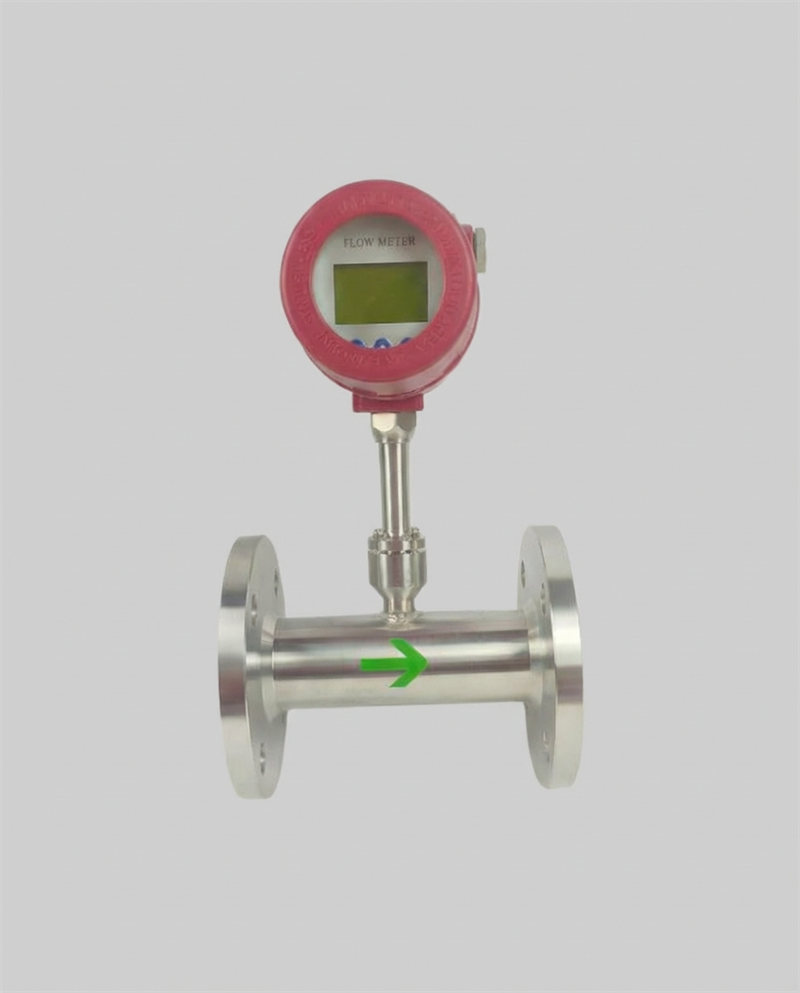
The compact design features a robust stainless steel body with flanged connections and an integrated digital display unit featuring a bright LCD screen. The distinctive red protective housing ensures visibility in industrial environments while protecting sensitive electronics. Whether you’re monitoring compressed air, nitrogen, natural gas, biogas, or other pure gases, Jade Ant thermal flowmeters deliver the measurement certainty your process demands.

With no moving parts, minimal pressure drop, and an impressive turndown ratio of up to 100:1, our thermal mass flowmeters offer unmatched versatility and long-term reliability. The intelligent microprocessor compensates for temperature variations automatically, ensuring accurate mass flow measurement regardless of changing process conditions.

Product Overview

The Jade Ant Thermal Gas Mass Flowmeter is a premier solution for direct mass flow measurement of gases without the need for temperature or pressure compensation. Utilizing advanced thermal dispersion technology, this meter is engineered to handle everything from clean inert gases to rugged industrial exhaust monitoring. Unlike traditional volumetric meters, the Jade Ant Thermal Flowmeter measures the mass of the gas directly, providing exceptional accuracy even at very low flow rates. Its robust stainless steel construction and no-moving-parts design make it virtually maintenance-free, perfect for harsh industrial environments where reliability is paramount. Whether you are measuring compressed air, natural gas, biogas, or flare gas, this device ensures precise data for process control and energy management.

  • Direct Mass Measurement: Measures gas mass flow directly, eliminating the need for external temperature and pressure sensors and reducing installation costs and complexity.
  • High Sensitivity & Turndown Ratio: Features an impressive turndown ratio of up to 1:1000, allowing for the detection of extremely low flow rates and leakage, which is critical for compressed air audits.
  • No Moving Parts: The sensor design contains no moving mechanical parts, resulting in minimal pressure drop, no wear and tear, and a long operational lifespan with low maintenance requirements.
  • Wide Application Range: Capable of measuring a vast array of gases, including Air, Nitrogen, Oxygen, Argon, Natural Gas, Carbon Dioxide, and Biogas, making it a versatile tool for any facility.
  • Robust & Durable: The sensor probe is encased in high-quality 316L stainless steel, offering superior resistance to corrosion and high temperatures.
  • Easy Installation: Available in both insertion (for large pipes) and inline flanged versions (as shown in the image), ensuring flexible installation options to fit existing piping infrastructure.
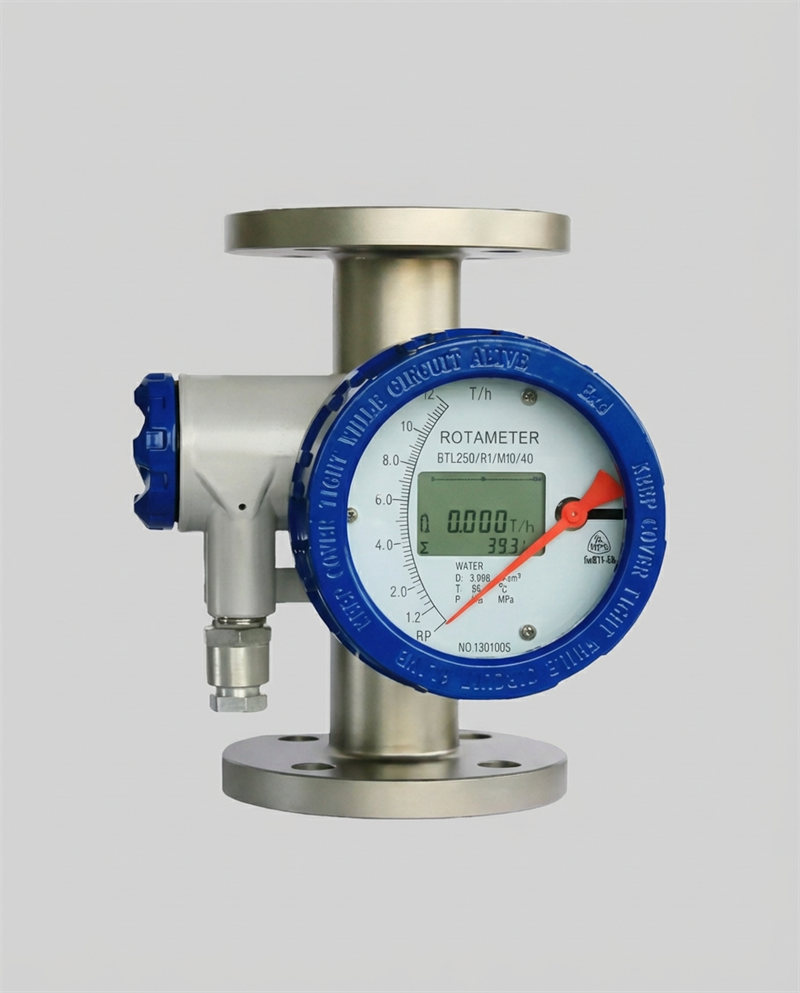
Precision Rotameter Flowmeter
fox thermal flow meter

Working Principle & Why Thermal Mass Flow Metering

How Jade Ant Thermal Mass Flowmeter Works

The Jade Ant Thermal Mass Flowmeter operates on the principle of thermal dispersion, which directly measures gas mass flow rate based on the convective heat transfer from a heated sensor to the flowing gas. This fundamental principle provides true mass measurement without requiring separate pressure or temperature compensation.

Dual Sensor Configuration:

The flowmeter incorporates two high-precision platinum RTD (Resistance Temperature Detector) sensors positioned directly in the flow stream:

  1. Reference Sensor (RT): This sensor measures the actual gas temperature without any heating element. It provides the baseline temperature reference for the measurement.

  2. Heated Sensor (RH): This sensor is actively heated and maintained at a constant temperature differential above the reference sensor, typically 30-50°C higher. Advanced electronics continuously monitor and adjust the heating power to maintain this precise temperature difference.

Measurement Process:

When gas flows past the sensors, it carries away heat from the heated sensor through convection. The rate of heat transfer depends on the mass flow rate of the gas—faster flow removes heat more quickly, slower flow removes heat more gradually.

The microprocessor-based electronics precisely measure the electrical power required to maintain the constant temperature differential between the two sensors. This power consumption is directly proportional to the mass flow rate of the gas.

Mathematical Relationship:

The fundamental heat transfer equation governing thermal mass flow measurement is:

Q = K × ΔT × Cp × ṁ

Where:

  • Q = Heat transfer rate (measured heating power in Watts)
  • K = Thermal conductivity coefficient (gas-specific constant)
  • ΔT = Maintained temperature difference between heated and reference sensors
  • Cp = Specific heat capacity of the gas at constant pressure
  •  = Mass flow rate (kg/s or lb/hr)

Since the measurement is based on heat transfer to the gas mass (not volume), the thermal flowmeter inherently measures true mass flow regardless of pressure and temperature variations in the process.

Automatic Compensation:

The intelligent microprocessor continuously monitors the reference sensor to track actual gas temperature. It automatically compensates for temperature variations by adjusting the measurement algorithms, ensuring accurate mass flow readings across the full operating temperature range without external T/P compensation devices.

Gas Property Database:

Jade Ant thermal flowmeters come pre-programmed with thermal properties (specific heat, thermal conductivity, density relationships) for over 50 common industrial gases. Users simply select their gas type from the menu, and the meter automatically applies the correct compensation factors.

Key Advantages of Thermal Measurement Principle:

  • Direct mass measurement without external compensation devices
  • Excellent low-flow sensitivity due to high thermal transfer efficiency
  • Unaffected by pressure fluctuations (measures mass, not volume)
  • Minimal sensitivity to viscosity changes (unlike differential pressure meters)
  • No mechanical wear components ensuring long-term stability
  • Wide measurement range with consistent accuracy throughout

The Jade Ant Thermal Gas Mass Flowmeter operates on the principle of thermal dispersion. The sensor probe consists of two balanced resistance temperature detectors (RTDs). One RTD is heated to a controlled temperature differential above the process gas temperature, while the other RTD measures the actual gas temperature. As gas flows past the heated sensor, it carries heat away. The rate at which heat is dissipated is directly proportional to the gas mass flow rate. The electronic circuitry maintains a constant temperature difference between the two sensors by varying the power supplied to the heated RTD. This power variance is then converted into a linear output signal directly proportional to the mass flow, ensuring precise and repeatable measurements.

Common pain points in compressed air and process gas systems include:

  • Inconsistent accounting on mass/standard basis: volumetric flow changes with pressure and temperature, complicating energy reporting.
  • Unstable readings at low flow & limited turndown: off-peak or intermittent usage exposes poor low-end sensitivity.
  • Pressure drop & retrofit concerns: users want inline measurement with minimal pressure loss and straightforward PLC/EMS integration.
    Jade Ant Thermal Flowmeter addresses these needs with a gas-focused mass flow solution—turning measurement into actionable, auditable data.
thermal mass flow meter

Key Features & Benefits

True Mass Flow Measurement

Unlike volumetric flowmeters that require separate pressure and temperature compensation devices, Jade Ant thermal mass flowmeters measure actual mass flow directly. This eliminates the need for additional instrumentation, simplifies system design, reduces installation costs, and provides more accurate readings under varying process conditions. The measurement is unaffected by pressure and temperature fluctuations, ensuring consistent accuracy for process control and energy management applications.

Wide Measurement Range with Exceptional Turndown

Featuring an impressive turndown ratio of 100:1 (with some models achieving up to 1000:1), our thermal flowmeters accurately measure from very low to high flow rates without sacrificing accuracy. This wide dynamic range makes them perfect for applications with widely varying flow conditions, such as batch processes, compressed air systems with fluctuating demand, and leak detection programs requiring sensitivity to minimal flows.

No Moving Parts – Zero Maintenance

The thermal measurement principle uses no mechanical components whatsoever. There are no bearings to wear, no rotors to spin, no turbines to fail, and no diaphragms to rupture. This eliminates wear and tear, dramatically reduces maintenance costs, and ensures long-term measurement stability. The robust sensor design withstands process upsets and continues delivering reliable measurements year after year with minimal intervention.

Minimal Pressure Drop – Energy Efficient

The streamlined insertion-style sensor design creates virtually no obstruction to flow, resulting in negligible pressure loss across the meter. This energy-efficient design reduces operational costs compared to differential pressure flowmeters, orifice plates, or turbine meters. Lower pressure drop also means less strain on compressors and blowers, extending equipment life and reducing energy consumption.

Fast Response Time for Real-Time Control

Advanced sensor technology and intelligent digital signal processing provide rapid response to flow changes, typically less than one second. This enables real-time process control, quick leak detection, and immediate response to system upsets. The fast response makes Jade Ant thermal flowmeters ideal for applications requiring dynamic flow monitoring and automated control systems.

Multi-Parameter Display with Intuitive Interface

The bright backlit LCD screen simultaneously displays mass flow rate, totalized mass flow, gas temperature, and user-configurable parameters. The intuitive menu navigation system with multi-language support ensures easy operation and monitoring. Operators can quickly access historical data, alarm settings, and diagnostic information without external tools or complex procedures.

Versatile Communication for Easy Integration

Jade Ant thermal flowmeters support multiple industry-standard output protocols including 4-20mA analog output (active or passive), pulse output for totalizing, RS485 Modbus RTU for digital communication, HART protocol for smart device management, and optional Profibus or DeviceNet. This versatility ensures seamless integration with any DCS, PLC, SCADA system, or building management system.

Robust Construction for Harsh Environments

Built with premium stainless steel 316L wetted parts and a durable protective housing rated IP65/IP67, our thermal flowmeters withstand harsh industrial environments including outdoor installations, high humidity areas, and temperature extremes from -40°C to +200°C. Optional explosion-proof versions meet ATEX, IECEx, and FM standards for hazardous area installations.

thermal mass flow meter working principle

Spécifications techniques

ParameterSpecification
Measurement PrincipleThermal Dispersion / Constant Temperature Differential
Pipe SizeDN15 to DN300 (Inline type); DN50 to DN3000 (Insertion type)
Flow Velocity Range0.1 to 100 NMPS (Normal Meters Per Second)
Accuracy±1.5% of reading ±0.5% F.S. (Standard); ±1.0% of reading ±0.5% F.S. (Premium)
Repeatability±0.2% of reading
Turndown Ratio100:1 (Standard); Up to 1000:1 (Special applications)
Response Time<1 second (T90)
Medium Temperature Range-40°C to +200°C (Standard); -40°C to +400°C (High temperature option)
Ambient Temperature Range-20°C to +60°C
Pressure RatingUp to 10.0 MPa (Higher pressure available on request)
Sensor MaterialStainless Steel 316L
Body MaterialStainless Steel 304/316, Carbon Steel with SS internals
Suitable GasesAir, N₂, O₂, CO₂, Ar, He, H₂, CH₄, Natural Gas, Biogas, and 50+ more
Gas Temperature EffectAutomatic compensation, effect negligible
Gas Pressure EffectAutomatic compensation, <0.5% per 100 kPa variation
Display128×64 pixel LCD with white LED backlight
Display ParametersInstantaneous flow, Total flow, Temperature, Configurable units
Power Supply24VDC (12-30VDC range); 220VAC optional; Loop-powered option
Power Consumption<3W (Display on); <15W (with heater at maximum)
Output Signals4-20mA (Active/Passive), Pulse output, RS485 Modbus RTU, HART, Profibus, DeviceNet
Alarm Outputs2× Relay outputs (SPDT, 5A @ 250VAC)
Indice de protectionIP65 standard; IP67/IP68 optional
Explosion-ProofATEX II 2G Ex d IIB T4; IECEx Ex d IIB T4; FM Class I Div 1 Groups B, C, D
Connection TypeFlanged (ANSI, DIN, JIS standards); NPT threaded; Tri-clamp (sanitary)
Straight Pipe RequirementsMinimum 5D upstream, 3D downstream (10D/5D recommended)
Wetted MaterialsSS316L sensor, SS304/316 body, Viton O-rings (EPDM, Kalrez optional)
Electronics Housing MaterialDie-cast aluminum with epoxy powder coating
Electrical ConnectionM20×1.5 or ½” NPT conduit entries
Dimensions (DN50 example)Sensor length: 150mm; Body length: 200mm; Display housing: 140×100×65mm
Weight (DN50 example)Approximately 3.5 kg
CertificationsCE, ATEX, IECEx, FM, ISO 9001, ISO 14001, Calibration traceable to NIST
thermal mass flow meter correction factor

Why Choose Our Rotameter Flowmeter?

Advanced Microprocessor with Proprietary Algorithms

The heart of every Jade Ant thermal flowmeter is a powerful 32-bit microprocessor running sophisticated proprietary algorithms developed through years of research. Our advanced signal processing includes:

  • Adaptive filtering that automatically adjusts damping based on flow stability
  • Multi-point linearization across the entire measurement range (not just 2-point)
  • Temperature drift compensation that learns sensor characteristics over time
  • Flow profile correction that compensates for non-ideal velocity distributions
  • Gas property interpolation for precise measurement of gas mixtures

This intelligent processing delivers superior accuracy compared to simple analog circuits used in competitive products.

Comprehensive Gas Library with Custom Calibration

Pre-programmed with thermal properties for over 50 industrial gases including air, nitrogen, oxygen, argon, helium, hydrogen, carbon dioxide, methane, natural gas, biogas, and many specialty gases. For gas mixtures or unlisted gases, Jade Ant offers:

  • Custom calibration at our ISO 17025 accredited flow laboratory
  • Multi-gas programming allowing field-switchable gas selection
  • Gas mixture calculation tools to estimate properties from composition
  • Periodic recalibration services for changing gas compositions

Simply select your gas from the intuitive menu, and the meter automatically applies the correct compensation factors for accurate mass flow measurement.

Self-Diagnostic and Predictive Maintenance

Jade Ant thermal flowmeters continuously monitor their own health and performance:

  • Sensor resistance monitoring detects contamination, corrosion, or damage
  • Heater power analysis identifies changes in heat transfer characteristics
  • Signal quality assessment flags excessive noise or drift
  • Temperature tracking monitors for thermal shock or out-of-spec conditions
  • Calibration drift detection compares current performance to factory baseline

The system generates diagnostic alerts before measurement accuracy is compromised, enabling scheduled maintenance rather than unexpected failures. Diagnostic data can be accessed locally or remotely via digital communication protocols.

Contamination Resistance and Self-Cleaning

The heated sensor design provides inherent advantages for contamination resistance:

  • Burn-off effect: The elevated sensor temperature (typically 50-80°C above gas temperature) continuously burns off light organic deposits and moisture
  • Smooth sensor surface: Electropolished 316L stainless steel minimizes adhesion sites for particulates
  • Optimal sensor geometry: Streamlined design reduces particle impingement and allows contaminants to flow past
  • Protective coatings available: For harsh environments, optional ceramic or PTFE coatings provide additional protection

Field experience demonstrates that Jade Ant thermal sensors maintain calibration accuracy far longer than competitive products in typical industrial environments.

Flexible Mounting and Retrofitting Options

Jade Ant offers exceptional installation flexibility:

Inline Flanged Type:

  • Compact design for small pipes (DN15-DN100)
  • Minimal pressure drop
  • Easy replacement of traditional meters
  • Available in ANSI, DIN, and JIS flange standards

Inline Threaded Type:

  • Cost-effective solution for smaller applications
  • NPT or BSP threads
  • Quick installation without welding
  • Ideal for instrument air and utility monitoring

Insertion Type:

  • Economical solution for large pipes (DN50-DN3000)
  • Hot-tappable models for installation without shutdown
  • Adjustable insertion depth
  • Retraction capability for cleaning without removal

Remote Electronics:

  • Sensor and display separated for high-temperature or difficult-to-access locations
  • Cable lengths up to 10 meters standard (longer available)
  • Same accuracy as integral mount
  • Ideal for retrofits

Modular Electronics for Easy Repair

Unlike competitive products with integrated electronics requiring complete meter replacement, Jade Ant uses a modular architecture:

  • Field-replaceable display module – swap in minutes without sensor disturbance
  • Plug-in communication boards – upgrade protocols without returning to factory
  • Separate sensor electronics – replace if damaged without recalibration
  • Firmware updates via USB – add new features to installed meters

This modular approach reduces repair costs, minimizes downtime, and extends product lifespan well beyond typical 5-7 year industrial meter life cycles.

Extended Temperature Range Capability

Standard Jade Ant thermal flowmeters operate from -40°C to +200°C, covering most industrial applications. For extreme conditions, we offer:

  • Extra High Temperature (EHT) version: -40°C to +400°C for superheated gases, furnace exhaust, and high-temperature process monitoring
  • Cryogenic version: -200°C to +50°C for LNG, liquid nitrogen vaporization, and cryogenic processes
  • Wide ambient version: Electronics rated -40°C to +70°C ambient for outdoor installations in extreme climates

All temperature versions maintain specified accuracy across their full range through advanced thermal compensation algorithms.

Hygienic and Sanitary Designs

For food, pharmaceutical, and biotechnology applications, Jade Ant offers:

  • Electropolished surfaces (Ra <0.4 μm) to 3-A sanitary standards
  • Tri-clamp connections (1″ to 4″) for tool-free disassembly
  • Drainable design with no dead legs or entrapment areas
  • CIP/SIP compatible materials (up to 150°C steam sterilization)
  • FDA CFR 21 compliant materials and coatings
  • EHEDG certification for hygienic design

All wetted parts use 316L stainless steel with FDA-compliant elastomers (USP Class VI).

Exceptional Warranty and Support

Jade Ant stands behind our quality with industry-leading warranty coverage:

  • 1-year comprehensive warranty covering all parts and labor
  • 2-year extended warranty option with enhanced support
  • Lifetime technical support for all products
  • 24/7 emergency hotline for critical applications
  • Free firmware updates for life of product
  • Replacement sensor exchange program with guaranteed pricing

Our commitment extends beyond the sale to ensure your long-term satisfaction and success.

astm c518 heat flow meter thermal conductivity standard

Applications

Where Jade Ant Thermal Mass Flowmeters Excel

Compressed Air Monitoring and Management

Compressed air is often called the “fourth utility” in manufacturing, yet it’s frequently the most expensive and wasteful. Jade Ant thermal mass flowmeters provide accurate monitoring of compressed air consumption throughout manufacturing facilities to identify leaks, optimize usage patterns, and reduce energy costs. The exceptional low-flow sensitivity enables detection of even small leaks that collectively waste significant energy. Install meters at main headers, department feeds, and critical equipment to establish accountability and track improvement initiatives. The wide turndown ratio accommodates both baseline consumption and peak demand without requiring multiple meter sizes.

Natural Gas Metering and Energy Management

Monitor natural gas flow to industrial burners, boilers, process heaters, and co-generation equipment with precision. Jade Ant thermal flowmeters provide the accurate mass flow measurement essential for BTU metering, fuel-air ratio control, and energy cost allocation. The direct mass measurement eliminates errors from pressure and temperature fluctuations common in steam boiler applications. Use the data for submetering to allocate energy costs by department, building, or process, enabling informed decisions about energy efficiency investments and identifying opportunities for waste reduction.

Nitrogen Blanketing, Purging, and Inerting

Control inert gas flow in storage tanks, reactors, distillation columns, and packaging operations where oxygen exclusion is critical. The sensitive low-flow measurement ensures precise control while minimizing expensive gas consumption in nitrogen blanketing applications. Monitor purge gas flow to verify proper inerting procedures before entering confined spaces or during maintenance activities. The fast response time enables tight control of nitrogen flow during automated purge cycles, reducing gas waste while maintaining safety.

Biogas and Landfill Gas Measurement

Monitor biogas production from anaerobic digesters in wastewater treatment plants, agricultural operations, and food processing facilities. Measure landfill gas collection for flare control or energy recovery systems. Jade Ant thermal flowmeters handle the varying compositions typical of biogas (50-75% methane, 25-50% CO₂, plus trace components) through custom calibration. The measurement is unaffected by the moisture content often present in these applications. Track biogas production to optimize digester operation and document renewable energy generation for regulatory credits and incentives.

Chemical and Petrochemical Processing

Measure pure gases and inert atmospheres in chemical reactors, distillation columns, crystallizers, and drying operations. Monitor nitrogen, hydrogen, oxygen, carbon dioxide, and specialty gases used as reactants, catalyst carriers, or protective atmospheres. The no-moving-parts design ensures reliability in continuous process operations with minimal maintenance disruption. The corrosion-resistant 316L stainless steel construction withstands exposure to many process chemicals. Use thermal meters for both custody transfer metering and process control applications.

Semiconductor and Electronics Manufacturing

Precision gas flow control in cleanroom environments for CVD (Chemical Vapor Deposition), plasma etching, wafer cleaning, and atmospheric control. Monitor specialty gases including nitrogen, argon, hydrogen, helium, and process gases with ppb-level purity requirements. Jade Ant thermal flowmeters meet the stringent accuracy, repeatability, and cleanliness standards demanded by semiconductor manufacturing. Available with electropolished surfaces and special certifications for ultra-high purity applications. The compact design minimizes cleanroom footprint while the digital outputs integrate seamlessly with fab automation systems.

Environmental Monitoring and Emissions Control

Measure stack gas, flare gas, and process vent flows for environmental compliance reporting under EPA regulations. Monitor fugitive emissions from storage tanks, loading racks, and process equipment. The thermal meter’s ability to accurately measure very low flows makes it suitable for leak detection and repair (LDAR) programs. Track VOC (Volatile Organic Compound) emissions to thermal oxidizers or carbon adsorption systems. Verify proper operation of flare systems and document emissions for regulatory reporting.

Food and Beverage Processing

Monitor nitrogen used for modified atmosphere packaging, tank blanketing in breweries and wineries, and inerting in food processing. Measure carbon dioxide for carbonation systems and cryogenic freezing. Track natural gas to ovens, roasters, and process heaters. Jade Ant offers sanitary designs with electropolished surfaces, tri-clamp connections, and 3-A certification for direct food contact applications. The hygienic design facilitates CIP (Clean-In-Place) procedures and meets FDA requirements for food processing equipment.

Pharmaceutical Manufacturing

Monitor high-purity nitrogen, oxygen, and compressed air in API (Active Pharmaceutical Ingredient) production, tablet coating, freeze drying, and sterile filling operations. Measure process gases in reactor vessels and fermenters. Track utility gases for facility-wide cost allocation and validation documentation. Jade Ant thermal flowmeters support pharmaceutical validation requirements with IQ/OQ documentation, material certifications, and full traceability. The 21 CFR Part 11 compliant data logging option provides the audit trail required for regulated operations.

Oxygen Therapy and Medical Gas Systems

Monitor medical oxygen, medical air, and vacuum systems in hospitals and healthcare facilities. Measure gas flow to ventilators, anesthesia machines, and hyperbaric chambers. Verify proper operation of medical gas pipeline systems and document flows for quality assurance. Available in configurations compliant with NFPA 99 medical gas standards and with oxygen-safe cleaning procedures and materials.

HVAC and Building Automation

Measure outside air ventilation rates to optimize indoor air quality while minimizing heating and cooling costs. Monitor gas flow to boilers and rooftop units for energy management. Track nitrogen or dry air used for pneumatic controls. The compact design fits easily into existing ductwork, and the multiple output options integrate with all major building automation systems. Use energy flow data for LEED certification documentation and continuous commissioning programs.

Wastewater Treatment Aeration Control

Optimize aeration blower operation in activated sludge processes by measuring actual air flow to diffusers. Proper air flow control can reduce aeration energy costs by 30-50% while improving treatment efficiency. The wide turndown ratio accommodates varying load conditions as influent flow and quality change throughout the day. Use flow data with dissolved oxygen measurements to implement demand-based aeration control strategies.

astm c518 heat flow meter thermal conductivity standard

Installation Guidelines

Proper Installation for Optimal Performance and Long-Term Reliability

To ensure your Jade Ant Thermal Mass Flowmeter delivers maximum accuracy, reliability, and longevity, careful attention must be paid to installation location, piping configuration, and commissioning procedures. Following these guidelines will help you avoid common installation mistakes and achieve the best possible performance.

Location Selection

Avoid These Locations:

  • Directly downstream of elbows, tees, valves, reducers, expanders, or any flow disturbance
  • Areas with excessive vibration from pumps, compressors, or rotating equipment
  • Locations subject to extreme temperature fluctuations or thermal cycling
  • Areas exposed to direct sunlight or radiant heat from furnaces or process equipment
  • Low points in piping where condensate can accumulate
  • High points where gas pockets or air locks may form
  • Near sources of electromagnetic interference (VFD drives, welders, motors)
  • Areas difficult to access for maintenance, calibration, or display viewing

Preferred Locations:

  • Straight pipe sections with adequate upstream and downstream lengths
  • Easily accessible areas for maintenance and display reading
  • Environmentally protected locations (indoors preferred)
  • Positions with minimal vibration transmission
  • Adequate clearance around electronics housing for wiring and service
  • Locations where ambient temperature remains within specification

Piping Configuration and Straight Pipe Requirements

Adequate straight pipe runs are essential for accurate measurement. Flow disturbances create velocity profile distortions and turbulence that affect sensor readings.

Minimum Requirements:

  • Upstream Straight Pipe: 5D (5 times the pipe diameter)
  • Downstream Straight Pipe: 3D (3 times the pipe diameter)

Recommended for Best Performance:

  • After Single 90° Elbow: 10D upstream minimum
  • After Two 90° Elbows in Same Plane: 15D upstream
  • After Two 90° Elbows in Different Planes: 20D upstream
  • After Valves or Reducers: 15D upstream
  • Before Any Obstruction: 5D downstream

Example: For a DN50 (2-inch) pipe installation:

  • Minimum: 250mm (5D) upstream, 150mm (3D) downstream
  • Recommended: 500mm (10D) upstream, 250mm (5D) downstream

Flow Conditioning: If adequate straight pipe lengths cannot be provided due to space constraints, install a flow straightener (honeycomb or tube bundle type) 5D upstream of the meter. While not ideal, this is preferable to installation with insufficient straight pipe.

Filtration: Always install a strainer or filter upstream (recommended mesh size 60-80) to protect the sensor from particulates, pipe scale, and debris. Position the strainer far enough upstream (minimum 2D) so it doesn’t create additional flow disturbance. Check and clean filters regularly based on system conditions.

Mounting Orientation

Horizontal Piping (Preferred):

  • Mount sensor in the top half of the pipe (12 o’clock or 3 o’clock position)
  • Never mount at bottom (6 o’clock) where condensate or liquid can accumulate on sensor
  • The display housing can be rotated 350° for optimal viewing angle without disturbing sensor alignment
  • Ensure flow direction arrow on meter body matches actual gas flow direction

Vertical Piping:

  • Upward flow strongly preferred (ensures any condensate or liquids drain away from sensor)
  • Downward flow acceptable only if gas is guaranteed dry with no possibility of liquid carryover
  • For steam applications, always use upward flow orientation

Sensor Insertion Depth (Insertion-Style Meters):

  • For pipes DN80-DN200: Insert sensor to 1/3 of pipe diameter from wall
  • For pipes >DN200: Follow specific insertion depth marked on sensor probe
  • Do not bottom out sensor against opposite pipe wall
  • Ensure sensor tip is positioned in representative flow stream, not in boundary layer near wall

Electrical Installation

Power Supply Wiring:

  • Use appropriately sized wire for distance and current (typically 18-22 AWG for short runs)
  • Provide dedicated regulated DC power supply (24VDC ±10%)
  • Include overcurrent protection (fuse or circuit breaker) per local codes
  • For AC powered units, verify voltage matches meter specification (115VAC or 230VAC)

Signal Wiring Best Practices:

  • Use twisted, shielded pair cable for 4-20mA analog signals
  • Use shielded cable for RS485 Modbus (impedance-matched recommended)
  • Keep signal cables separate from power cables and AC wiring (minimum 12 inches separation)
  • Ground shield at ONE end only (typically at control system end) to prevent ground loops
  • Use proper termination resistors for RS485 networks (120-ohm at each end of bus)
  • Label all wires clearly for future maintenance

Conduit and Enclosures:

  • Use appropriate conduit type for environment (rigid, EMT, liquidtight flexible)
  • Seal conduit entries with appropriate fittings to maintain IP rating
  • Ensure proper drainage or slope to prevent water accumulation in conduit
  • For outdoor installations, use weatherproof junction boxes and drip loops

Hazardous Area Installations:

  • Verify area classification matches meter certification (Zone 1/Div 1, Zone 2/Div 2)
  • Use only approved conduit, fittings, and seals for the area classification
  • Install sealing fittings within required distances per code
  • Ensure all covers and cable glands are properly secured
  • Do not open electronics housing while circuit is energized in hazardous areas

Grounding:

  • Connect meter body to electrical ground per local codes
  • Bond meter to piping system if piping is grounded
  • For plastic piping, provide separate ground wire to meter body
  • Ensure ground path has low resistance (<1 ohm)

Pressure Testing and Leak Checking

Before commissioning:

  • Verify all pipe connections are properly tightened (do not overtighten flanges)
  • Perform pressure test to system design pressure
  • Check all connections with leak detection solution or meter
  • Verify no leaks at sensor insertion point (insertion-style meters)
  • If leaks found, depressurize, repair, and retest

Pre-Start Commissioning Checklist

Mechanical Verification: ☐ All piping connections tight and leak-free ☐ Strainer/filter installed upstream and clean ☐ Flow direction correct (arrow on meter matches flow) ☐ Sensor clean and undamaged (visual inspection) ☐ Adequate straight pipe upstream and downstream ☐ No obvious vibration or stress on meter body ☐ Display housing properly secured and rotated for viewing

Electrical Verification: ☐ Power supply voltage correct and stable (measure with meter) ☐ All wiring connections secure and properly terminated ☐ Shield grounding correct (one end only) ☐ Grounding connection low resistance ☐ No obvious electromagnetic interference sources nearby ☐ All covers and cable glands secure and properly rated

Configuration Verification: ☐ Gas type correctly selected from menu ☐ Pipe size entered correctly ☐ Engineering units set appropriately (kg/h, SCFM, etc.) ☐ Output ranges configured (4-20mA span, pulse scaling) ☐ Damping/filtering set for application ☐ Totalizer units and decimals configured ☐ Alarm setpoints configured if used

Initial Startup Procedure

Step 1: Power-Up and Warm-Up

  • Apply power to meter
  • Verify display illuminates and shows startup screen
  • Allow minimum 30-minute warm-up period before expecting stable readings
  • During warm-up, display may show “WARMING UP” or fluctuating values – this is normal

Step 2: Zero Adjustment

  • With NO gas flow (close isolation valves), access zero adjustment menu
  • Initiate auto-zero procedure (meter will automatically determine zero point)
  • Wait for completion (typically 2-5 minutes)
  • Verify zero reading is stable (should be <0.5% of full scale)
  • If zero reading excessive or unstable, check for valve leakage or external flow disturbances

Step 3: Flow Verification

  • Slowly open isolation valves to establish flow
  • Allow flow to stabilize for 5 minutes
  • Compare meter reading to expected value based on:
    • Downstream pressure regulators or control valves
    • Equipment consumption specifications
    • Existing reference meters
    • Calculated flow from system parameters
  • Reading should be within ±10% for initial startup (±5% after optimization)

Step 4: Output Verification

  • Measure 4-20mA output signal with calibrated multimeter
  • At zero flow: Should read 4.00 mA ±0.1 mA
  • At known flow: Calculate expected mA based on configured span
  • Verify pulse output with frequency counter (if used)
  • Test digital communication (Modbus query, HART communication)
  • Verify proper integration with control system

Step 5: Alarm Testing

  • If alarm outputs configured, test each alarm point
  • Temporarily adjust setpoint to trigger alarm
  • Verify relay contacts operate correctly
  • Verify control system receives alarm indication
  • Return setpoints to proper operating values

Step 6: Documentation

  • Record serial number and configuration settings
  • Document installation location and piping details
  • Record initial zero value
  • Note baseline flow readings under normal operation
  • Take photographs of installation for future reference
  • File calibration certificate and documentation

Optimization and Fine-Tuning

After initial startup and several days of operation:

Performance Evaluation:

  • Review recorded flow data for consistency and trends
  • Compare totalized flow to expected consumption
  • Check for unexpected variations or anomalies
  • Evaluate response time and stability

Adjustments if Needed:

  • If readings systematically high or low, verify gas type selection is correct
  • If excessive noise or fluctuation, increase damping/filtering
  • If response too slow, decrease damping (balance stability vs. speed)
  • Repeat zero adjustment if zero drift observed

System Integration:

  • Fine-tune PID control loops using meter output
  • Establish alarm and warning setpoints based on actual operating data
  • Configure trend displays and historical data logging
  • Set up automatic reporting if required
fox thermal mass flow meter

FREQUENTLY ASKED QUESTIONS (FAQ)

Q1: What is the fundamental difference between thermal mass flowmeters and volumetric flowmeters?

A: Thermal mass flowmeters measure the actual mass flow rate of gas (such as kg/h, lb/min, or standard cubic meters per hour) directly, while volumetric flowmeters measure the volume of gas passing through the meter (such as actual cubic meters per hour). The key difference is that volumetric measurements are affected by changes in gas pressure and temperature—when pressure increases or temperature decreases, the gas becomes denser, so more mass passes through even though the volumetric flow rate remains the same.

Jade Ant thermal mass flowmeters eliminate this problem by measuring heat transfer, which is directly proportional to mass flow regardless of pressure or temperature changes. This means you don’t need separate pressure and temperature transmitters plus compensation calculations. For applications like compressed air monitoring, energy management, or process control where you need to know the actual amount of gas (not just its volume), thermal mass measurement provides more accurate and meaningful data.

Q2: Can Jade Ant thermal flowmeters measure wet or saturated gases?

A: Jade Ant thermal mass flowmeters are designed and calibrated specifically for dry, clean gases. The presence of moisture, liquid droplets, or condensate on the heated sensor will significantly affect measurement accuracy because liquids have very different thermal properties than gases. When liquid contacts the hot sensor, it absorbs much more heat than gas would, causing erroneously high flow readings.

For gases with moisture content or potential for condensation:

  • Install a moisture separator or coalescing filter upstream of the flowmeter to remove liquid droplets
  • Heat trace the piping to maintain gas temperature above the dew point
  • Install at a high point in the piping system where condensate won’t accumulate
  • Consider alternative technologies such as vortex or ultrasonic flowmeters which are less sensitive to moisture

If your application involves saturated steam or wet gases that cannot be dried, please consult Jade Ant technical support to discuss alternative measurement solutions that may be more appropriate.

Q3: What gases can Jade Ant thermal flowmeters measure accurately?

A: Jade Ant thermal mass flowmeters come pre-programmed with thermal properties for over 50 common industrial gases, including:

Common Gases:

  • Air (compressed air, instrument air)
  • Nitrogen (N₂)
  • Oxygen (O₂)
  • Carbon Dioxide (CO₂)
  • Argon (Ar)
  • Helium (He)
  • Hydrogen (H₂)
  • Methane (CH₄)

Fuel Gases:

  • Natural Gas (various compositions)
  • Propane, Butane, LPG mixtures
  • Biogas (methane/CO₂ mixtures)
  • Landfill gas

Specialty Gases:

  • Ammonia (NH₃)
  • Chlorine (Cl₂)
  • Sulfur Dioxide (SO₂)
  • Various refrigerants
  • And many more

For gas mixtures not in the standard library, Jade Ant offers custom calibration services where we calibrate the meter specifically for your gas composition. If you provide a detailed gas analysis (percentage of each component), we can either:

  1. Calculate thermal properties and program the meter accordingly
  2. Perform actual flow calibration with your specific gas mixture in our laboratory
  3. Provide a multi-gas configuration allowing you to switch between different gases in the field

Important Note: Thermal flowmeters measure gases only, not liquids or steam. For steam applications, please refer to our vortex or differential pressure flowmeter product lines.

Q4: How does gas composition affect thermal flowmeter accuracy, and what happens if my gas composition changes?

A: Thermal mass flow measurement depends fundamentally on two gas properties: specific heat capacity (Cp) et thermal conductivity (k). Different gases have different thermal properties, which is why you must configure the meter for the correct gas type.

If gas composition changes significantly (typically more than 5-10% change in a major component):

  • Measurement accuracy will be affected proportionally to the difference in thermal properties
  • The error can be positive or negative depending on whether the new composition has higher or lower Cp×k values
  • For natural gas, composition variations within typical pipeline specifications (±5% methane content) usually cause errors less than ±1-2%

What to do if composition varies:

  1. For minor variations (natural gas from different suppliers, biogas with seasonal changes):

    • Use an average composition for calibration
    • Accept slightly reduced accuracy (typically ±2-3% instead of ±1%)
    • Recalibrate annually based on actual gas analysis
  2. For predictable composition changes (switching between two known gas types):

    • Order meter with multi-gas calibration
    • Switch gas type in the configuration menu when composition changes
    • Jade Ant can program up to 5 different gas calibrations in one meter
  3. For continuously varying composition (biogas production, mixed waste gases):

    • Consider adding a gas chromatograph or composition analyzer
    • Use the analysis to apply real-time correction factors
    • Or accept thermal flowmeter as an indicator rather than precision measurement

For critical applications with varying composition, consult Jade Ant applications engineers to discuss the best measurement strategy for your specific situation.

Q5: What is the minimum detectable flow rate for thermal mass flowmeters?

A: One of the greatest advantages of thermal mass flowmeters is their exceptional sensitivity to low flows. The minimum detectable flow depends on three factors: pipe sizegas typeet meter configuration.

General Guidelines:

For air or nitrogen in common pipe sizes:

  • DN50 (2″): Minimum detectable ~0.05 m/s velocity = approximately 0.3 m³/h
  • DN80 (3″): Minimum detectable ~0.05 m/s velocity = approximately 0.8 m³/h
  • DN100 (4″): Minimum detectable ~0.05 m/s velocity = approximately 1.2 m³/h

This exceptional low-flow sensitivity makes Jade Ant thermal flowmeters ideal for:

  • Leak detection programs where you need to detect small continuous losses
  • Compressed air monitoring to identify equipment left running unnecessarily
  • Pilot flow measurement in burner control systems
  • Purge gas monitoring where flows are intentionally kept very low

Low-Flow Cutoff:

Jade Ant meters include a configurable low-flow cutoff setting (typically 0.5-2% of full scale). Below this threshold:

  • The display shows zero to avoid displaying meaningless noise
  • The totalizer stops accumulating to prevent false totalization
  • The 4-20mA output goes to 4.00 mA

You can adjust this cutoff based on your application needs. For leak detection, set it very low (0.5%). For process control where low flows are not significant, set it higher (2-3%) to provide cleaner control signals.

Q6: How long does the thermal flowmeter take to warm up, and can I use it immediately after power-on?

A: Jade Ant thermal mass flowmeters require a warm-up period of approximately 30 minutes after initial power application before they provide fully accurate readings. This warm-up is necessary because:

  1. Thermal stabilization: The sensor heating elements must reach and stabilize at their operating temperature
  2. Electronics stabilization: The precision analog circuits must reach thermal equilibrium
  3. Baseline establishment: The microprocessor establishes baseline reference values

What happens during warm-up:

  • The display may show “WARMING UP” or “WAIT” message
  • Flow readings may fluctuate or show non-zero values even with no flow
  • Outputs (4-20mA, pulse) may not be accurate
  • This is completely normal behavior

Best Practices:

For critical applications requiring immediate measurement after power loss:

  • Use UPS backup power to maintain continuous operation through utility outages
  • Plan maintenance during scheduled downtime when 30-minute warm-up is acceptable
  • Parallel redundancy with a second meter if instant failover is required

For applications with frequent power cycling:

  • Consider battery backup option that maintains sensor temperature during short outages
  • Configure shorter warm-up mode (15 minutes) with slightly reduced accuracy if acceptable

After the initial warm-up on installation, most users leave the flowmeter powered continuously. The power consumption is very low (<3W for display, <15W total), so continuous operation costs less than $20/year in electricity while ensuring instant readiness.

Q7: Can thermal flowmeters be used in hazardous or explosive atmospheres?

A: Yes, Jade Ant offers explosion-proof and intrinsically safe versions of thermal mass flowmeters certified for installation in hazardous areas where flammable gases, vapors, or combustible dusts may be present.

Available Certifications:

ATEX (European Union):

  • Zone 1: Ex d IIB T4 (flameproof enclosure)
  • Zone 2: Ex d IIB T4 or Ex nA IIB T4 (flameproof or non-sparking)
  • Suitable for gases in Groups IIA, IIB

IECEx (International):

  • Ex d IIB T4 Gb (flameproof enclosure)
  • Ex nA IIB T4 Gc (non-sparking for Zone 2)

FM Approvals (North America):

  • Class I, Division 1, Groups B, C, D
  • Class I, Division 2, Groups A, B, C, D

CSA (Canada):

  • Class I, Division 1, Groups B, C, D

Important Requirements for Hazardous Area Installation:

  1. Specify at time of order – Explosion-proof certification must be factory-configured; cannot be added later
  2. Use approved conduit and fittings – All electrical connections must use certified explosion-proof or intrinsically safe components
  3. Install sealing fittings as required by code (typically within 18 inches of enclosure entry)
  4. Proper grounding is essential – verify ground resistance <1 ohm
  5. Do not open enclosure while system is energized in classified areas
  6. Follow all warning labels and installation instructions

The explosion-proof versions are slightly larger and heavier than standard models due to the reinforced enclosures required, but measurement performance is identical. Consult Jade Ant at the quote stage to ensure proper configuration for your hazardous area classification.

Q8: What causes sensor drift in thermal flowmeters, and how can it be corrected?

A: Sensor drift refers to a gradual change in the meter’s calibration over time, causing readings to become progressively more inaccurate. Understanding the causes helps prevent drift and correct it when detected.

Primary Causes of Drift:

  1. Sensor Contamination (Most Common):

    • Oil carryover from compressors deposits on sensor
    • Particulates from piping corrosion or scale
    • Organic vapors condensing on sensor surface
    • Prevention: Install high-quality filtration; maintain air compressor; use coalescing filters
  2. Thermal Cycling Stress:

    • Repeated heating/cooling changes sensor characteristics
    • Particularly problematic with rapid temperature swings
    • Prevention: Avoid installation in extreme temperature locations; use thermal insulation
  3. Corrosive Gases:

    • Chemical attack degrades sensor surface
    • More rapid with acidic or chlorinated gases
    • Prevention: Specify corrosion-resistant materials; use protective coatings
  4. Mechanical Vibration:

    • Continuous vibration can alter sensor mechanical mounting
    • Prevention: Isolate from vibration sources; use vibration dampeners

Detection of Drift:

Jade Ant thermal flowmeters include automatic drift detection:

  • Self-diagnostics compare current performance to factory baseline stored in memory
  • Alarm alerts when drift exceeds acceptable thresholds (typically ±2%)
  • Trending data shows gradual changes over time

You can also detect drift by:

  • Comparing readings to a parallel reference meter
  • Checking totalizer against known consumption
  • Performing periodic zero-flow verification

Correction Methods:

Minor Drift (<2%):

  1. Zero Adjustment: With flow shut off, perform auto-zero procedure from menu (takes 2-5 minutes)
  2. Span Adjustment: If reference flow available, adjust span to match known value
  3. This can be done in field without removing meter

Moderate Drift (2-5%):

  1. Sensor Cleaning: Remove and clean sensor per maintenance procedure
  2. Re-zero after cleaning
  3. Verify with known flow if possible

Severe Drift (>5%):

  1. Return for factory recalibration – full multi-point calibration on traceable flow standards
  2. Sensor replacement if contamination cannot be cleaned or sensor damaged
  3. Typically required every 3-5 years in harsh applications, 5-10 years in clean applications

Jade Ant Advantage:

Our advanced microprocessors include adaptive drift compensation algorithms that continuously learn sensor characteristics and automatically apply minor corrections. This extends calibration intervals significantly compared to competitive products using simpler electronics.

Q9: How do I select the correct pipe size for my thermal mass flowmeter application?

A: Proper meter sizing is critical for accuracy, rangeability, and cost-effectiveness. Unlike some other flowmeter technologies, thermal mass flowmeters should generally be sized for the actual pipe size (not downsized) because:

  1. Thermal meters have very wide turndown ratios (100:1), so they can handle low flows accurately even in larger pipes
  2. Downsizing increases pressure drop and installation cost
  3. The sensor measures a representative sample of the flow stream

Sizing Procedure:

Step 1: Determine Your Flow Rates

  • Maximum flow rate: Highest flow you’ll ever measure
  • Normal flow rate: Typical operating condition (most important)
  • Minimum flow rate: Lowest flow you need to measure accurately

Step 2: Determine Operating Conditions

  • Gas type and composition
  • Operating pressure (absolute)
  • Operating temperature
  • Standard reference conditions if expressing mass in standard volumes (e.g., SCFM)

Step 3: Calculate Flow Velocity

Velocity (m/s) = Volumetric Flow (m³/h) ÷ [Pipe Area (m²) × 3600]

Optimal Velocity Ranges:

  • Minimum: 0.5 m/s (for good accuracy)
  • Normal: 3-15 m/s (best accuracy)
  • Maximum: 40 m/s (velocity limit before erosion concerns)

Step 4: Select Meter Size

Generally, select a meter matching your pipe size if normal flow velocity is within 2-25 m/s.

Example:

Application: Compressed air monitoring

  • Pipe size: DN80 (3-inch)
  • Maximum flow: 500 SCFM
  • Normal flow: 200 SCFM
  • Minimum flow: 20 SCFM
  • Pressure: 7 bar gauge (8 bar absolute)
  • Temperature: 25°C

Convert to actual conditions:

  • Actual volumetric flow at normal = 200 SCFM × (1.013/8) = 25.3 actual CFM = 43 m³/h

Velocity check:

  • Pipe area for DN80 = 0.00503 m²
  • Velocity = 43 ÷ (0.00503 × 3600) = 2.4 m/s ✓ (within optimal range)

Recommendation: DN80 Jade Ant Thermal Mass Flowmeter

  • This size will accurately measure across the full range (20-500 SCFM)
  • Turndown ratio utilized: 500÷20 = 25:1 (well within 100:1 capability)

When to Downsize:

Consider a smaller meter only if:

  • Normal flow velocity would be <1 m/s in the actual pipe size
  • Budget is extremely limited and slightly higher pressure drop is acceptable
  • Installation space is severely constrained

Jade Ant Sizing Service:

Unsure about sizing? Contact Jade Ant applications engineering with your flow data, and we’ll provide a free sizing calculation and recommendation within 24 hours. We can also provide multiple options if your flow rates vary significantly.

Q10: Can the same thermal flowmeter measure different gases by changing the configuration?

A: Yes, with limitations. Jade Ant thermal flowmeters can be configured at the factory for multi-gas operation, allowing you to switch between different gases in the field by simply changing a menu setting. However, there are important considerations:

How Multi-Gas Configuration Works:

  1. Factory Calibration: The meter is calibrated for each specific gas you specify (up to 5 different

    gases) 2. Stored Calibration Data: Each gas calibration is stored in non-volatile memory with its specific thermal properties and correction factors 3. Field Selection: The operator selects the active gas type from the configuration menu 4. Automatic Compensation: The meter applies the correct calibration for the selected gas

    When Multi-Gas Operation Works Well:

    Ideal Scenarios:

    • Similar Thermal Properties: Gases with comparable specific heat and thermal conductivity (e.g., air and nitrogen differ by only ~3%)
    • Sequential Processes: Applications where you measure different gases at different times, not simultaneously
    • Known Gas Switching: You know exactly when gas type changes (e.g., nitrogen purge vs. process air)

    Common Multi-Gas Applications:

    • Nitrogen purging systems that also measure air during startup
    • Laboratory gas distribution systems with multiple gases to different users
    • Process equipment that uses different gases for different production recipes
    • Pilot plants or R&D facilities testing various gas mixtures

    Accuracy Considerations:

    • For similar gases (air/N₂/O₂): Accuracy typically ±1.5-2% for each gas
    • For very different gases (He vs. CO₂): Accuracy may be ±2-3% due to wider differences in thermal properties
    • Single-gas calibration is always more accurate: If you measure only one gas, single-gas calibration provides ±1% accuracy

    Limitations and When NOT to Use Multi-Gas:

    Not Recommended For:

    1. Automatic gas detection: Thermal meters cannot identify which gas is flowing; you must tell it
    2. Gas mixtures with varying composition: If natural gas composition varies continuously, multi-gas doesn’t help
    3. Simultaneous multi-component mixtures: Cannot measure a mixture of gases unless specifically calibrated for that exact mixture
    4. Widely different thermal properties: Helium and CO₂, for example, may not calibrate well on the same sensor

    Alternative Solutions:

    If your application involves:

    • Unknown gas mixtures: Consider adding a gas chromatograph or composition analyzer
    • Continuously varying composition: Custom calibration for the average composition with acceptance of ±2-3% accuracy
    • Critical accuracy requirements: Use dedicated single-gas meters for each gas stream

    Ordering Multi-Gas Configuration:

    When ordering, specify:

    • All gas types you need to measure
    • Expected flow ranges for each gas
    • Whether gases will be measured simultaneously or sequentially
    • Accuracy requirements for each gas

    Jade Ant will recommend whether multi-gas configuration is appropriate or if separate meters would be better for your application.

jade ant flow meter workshop

Send us a message

Lorem ipsum dolor sit amet, consectetur adipiscing elit dolor.

CONNECTER

Nous vous contacterons dans les 24 heures.

Pour toute demande urgente, veuillez nous contacter par whatsapp No : +86 18817532529

tenir bon

Nous disposons aujourd'hui d'un catalogue des produits les plus récents et d'un devis spécial. N'hésitez pas à nous contacter.

Contact jade ant flow meters