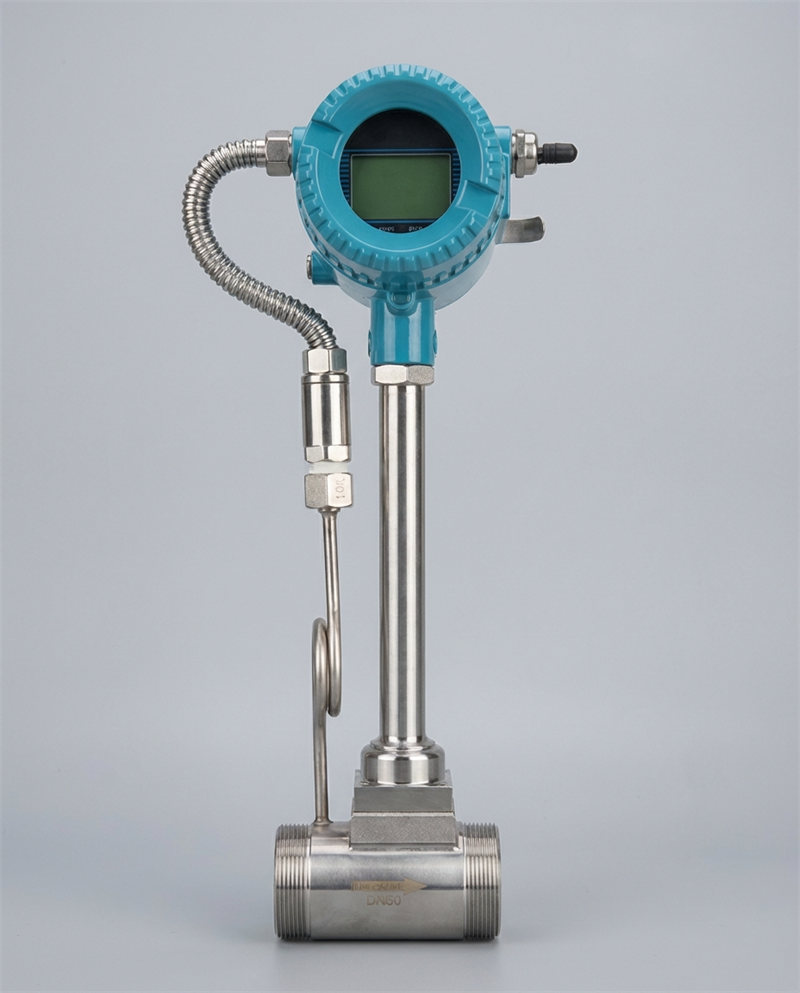
Vortex Flow Meter

カテゴリー

Smart Vortex Flow Meter (Steam & Gas Specialist)

A versatile flow meter designed for Steam (Saturated & Superheated), Gas, and Liquids.

  • Built-in Compensation: Integrated Temperature & Pressure sensors for Mass Flow measurement.
  • Temperature: Up to 350°C
  • Pressure: Up to 6.3 MPa
  • Output: 4-20mA / HART / RS485
  • Durability: No moving parts, maintenance-free design.

追加情報

High-Performance Vortex Flow Meter by Jade Ant - Reliable Measurement for Steam, Gas & Liquid Applications

The Jade Ant Vortex Flow Meter is a versatile and robust flow measurement solution designed to handle the toughest industrial applications. Whether you need to measure steam (saturated or superheated), conductive or non-conductive liquids, or industrial gases, this meter delivers exceptional stability and high precision. Engineered with a unique non-moving parts design, the Jade Ant Vortex Meter minimizes maintenance costs while maximizing operational uptime. It is particularly renowned for its performance in steam metering systems, where pressure and temperature fluctuations require reliable compensation. With built-in intelligent circuitry, it offers seamless integration into modern automation systems, making it the preferred choice for engineers seeking a “fit-and-forget” flow measurement device.

Product Overview

Versatile Flow Measurement Technology for the Most Demanding Industrial Applications

The Jade Ant Vortex Flow Meter represents cutting-edge flow measurement technology based on the Karman vortex street principle, delivering exceptional reliability and accuracy for steam, gas, and liquid measurement across diverse industrial processes. Engineered with no moving parts and advanced digital signal processing, our vortex flowmeters provide maintenance-free operation and long-term stability that traditional mechanical meters simply cannot match.

Featuring a robust stainless steel construction with integrated temperature and pressure compensation, the Jade Ant vortex flowmeter automatically calculates mass flow and energy consumption for saturated and superheated steam applications. The piezoelectric sensor technology ensures superior sensitivity and immunity to vibration, while the intelligent microprocessor provides advanced diagnostics, multi-parameter display, and comprehensive communication capabilities.

With wide measurement range (turndown ratio up to 40:1), minimal pressure drop, and exceptional temperature capability (-40°C to +350°C), Jade Ant vortex flowmeters excel in challenging applications including steam distribution systems, compressed air networks, chemical processing, and utilities monitoring. The compact integrated design combines the sensor body, electronics, and multi-line LCD display in a single unit rated IP67, simplifying installation and reducing total cost of ownership.

Whether you’re measuring superheated steam to a turbine, saturated steam for process heating, natural gas for burner control, or demineralized water in a power plant, Jade Ant vortex flowmeters deliver the accuracy, reliability, and intelligence your critical applications demand.

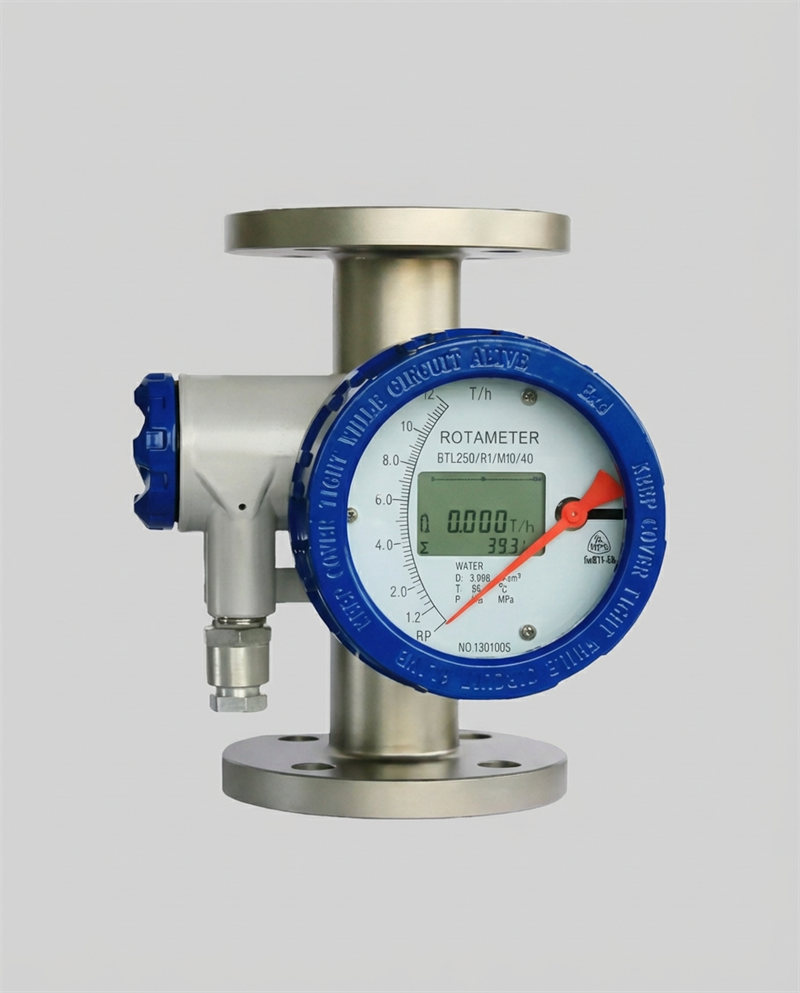
Precision Rotameter Flowmeter
thermal dispersion flow meter

Key Features of Vortex flowmeter

  • Universal Applicability: One meter for three mediums—Steam, Gas, and Liquid. It excels in high-temperature steam applications where other meters often fail.
  • Integrated Compensation: Available with built-in temperature and pressure compensation (Multivariable version), allowing for direct mass flow measurement of steam and gases without external computers.
  • No Moving Parts: The sensor design eliminates moving mechanical components, meaning there is zero wear, no drift in accuracy over time, and virtually no maintenance required.
  • Wide Turndown Ratio: Offers a turndown ratio of up to 1:10 or 1:15, providing accurate readings across a broad range of flow rates.
  • High Stability: Features advanced digital signal processing (DSP) technology that effectively filters out pipeline vibration and noise, ensuring stable readings even in harsh environments.
  • Robust Construction: Manufactured with 304/316 Stainless Steel, the meter body resists corrosion and withstands high temperatures (up to 350°C).
  • Diverse Outputs: Supports standard 4-20mA, Pulse output, and HART / RS485 (Modbus) communication for easy connection to DCS and PLC systems.
thermal mass flow meter working principle

Technical Specifications of Vortex flowmeter

ParameterSpecification
Measurement PrincipleKarman Vortex Street / Piezoelectric Sensor Detection
Nominal DiameterDN15-DN300 (½”-12″); Larger sizes available on request
Accuracy±1.0% of reading (liquid); ±1.5% of reading (steam/gas)
Repeatability±0.2% of reading
Turndown Ratio20:1 (standard); 40:1 (extended range option)
Flow Velocity RangeLiquid: 0.5-7 m/s; Gas: 4-70 m/s; Steam: 4-70 m/s
Reynolds Number Range20,000-7,000,000
Medium Temperature-40°C to +250°C (standard); -40°C to +350°C (high-temp); -200°C to +50°C (cryogenic)
Ambient Temperature-40°C to +85°C (electronics rated)
Pressure RatingPN16, PN25, PN40, PN64, PN100; ANSI 150#, 300#, 600#
Max Working Pressure10.0 MPa (higher available)
Pressure DropTypical 5-15 kPa at normal flow (much lower than orifice)
Body MaterialStainless Steel 304, 316L (standard); Hastelloy C, Monel, Titanium (optional)
Vortex Shedder MaterialStainless Steel 316L, Tungsten Carbide coated
Sensor TypePiezoelectric crystal (stress-type), hermetically sealed
Temperature SensorPT100 or PT1000 RTD (Class A, 4-wire), integrated in body
Pressure SensorPiezoresistive or capacitive (optional), 0-1.6 MPa to 0-10 MPa ranges
Display128×64 pixel LCD with white LED backlight, multi-line display
Display ParametersFlow rate, Total, Temperature, Pressure, Density, Energy, Signal strength, Alarms
Power Supply24VDC (18-36VDC range); 220VAC ±10% (optional); 3.6V lithium battery (optional)
Power Consumption<1W (battery mode); <15W (powered mode with display)
Analog Output4-20mA (isolated, active or passive), configurable parameter
Pulse OutputPassive (NPN/PNP) or Active relay, frequency 0-5000 Hz, configurable scaling
Digital CommunicationRS485 Modbus RTU, HART, Profibus DP, Foundation Fieldbus (specify)
Alarm Outputs2× programmable relays (SPDT, 5A @ 250VAC), high/low flow, fault alarms
Data LoggingInternal memory stores 10,000+ records with timestamp (optional)
保護等級IP65 (standard); IP67 (optional); IP68 for submersible (special order)
Explosion-ProofATEX Ex d IIB T4-T6; IECEx; FM Class I Div 1; CSA (specify certification)
Connection TypeFlanged (RF, RTJ); Wafer (between-flange); Threaded (NPT, BSP) for small sizes
Flange StandardANSI B16.5, DIN 2501, JIS B2220, GB/T 9119
Straight Pipe Req.Upstream: 20D (after double elbow), 15D (after single elbow), 10D (minimum)
 Downstream: 5D minimum
Installation OrientationHorizontal, vertical (upward flow preferred), inclined (with precautions)
Wetted MaterialsAll SS316L wetted parts for corrosion resistance
Gasket MaterialsGraphite, PTFE, Viton (specify based on temperature)
CertificationsCE, ATEX, IECEx, FM, CSA, SIL2 capable, ISO 9001, Calibration traceable to national standards
Compliance StandardsISO 5167, ASME MFC-6M, JJG 1029 (China), MI-004 OIML R49
Ambient ConditionsHumidity: 5-95% RH non-condensing; Altitude: up to 4000m
Vibration Resistance10-200 Hz, acceleration ≤2g (exceptional vibration immunity)
EMC ComplianceEN 61326-1 (Industrial), FCC Part 15 Class A
thermal flow meter

Why Choose Our Vortex flowmeter?

Why Choose Jade Ant Vortex Flow Meter?

No Moving Parts – Zero Maintenance

Unlike turbine or positive displacement meters with bearings, rotors, and gears that wear out, Jade Ant vortex flowmeters utilize a fixed bluff body to generate vortices with absolutely no moving mechanical components. This fundamental design advantage eliminates wear, drift, and the need for regular maintenance or replacement of internal parts. The piezoelectric sensor is hermetically sealed and isolated from the process fluid, ensuring decades of reliable operation even in the harshest conditions. Installation and forget – your Jade Ant vortex meter will continue delivering accurate measurements year after year without intervention.

Integrated Temperature & Pressure Compensation

For steam and gas applications where density varies with process conditions, Jade Ant vortex flowmeters feature integrated PT100/PT1000 RTD temperature sensors and optional pressure transmitters built directly into the meter body. The advanced microprocessor continuously monitors temperature and pressure, automatically calculating and displaying true mass flow rate and totalized mass according to IAPWS-IF97 steam property tables. No need for external compensation devices, complex calculations, or separate instrumentation – everything you need for accurate steam energy measurement is integrated in one compact package, reducing installation cost, complexity, and potential error sources.

Superior Signal Processing Technology

Jade Ant employs proprietary digital signal processing algorithms that distinguish true vortex signals from mechanical vibration, pressure fluctuations, and electrical noise. Our advanced spectral analysis technology provides exceptional noise immunity, allowing installation in challenging environments with pumps, compressors, and process equipment that would overwhelm conventional vortex meters. The adaptive filtering automatically adjusts to changing process conditions, maintaining accuracy across the full flow range from minimum to maximum. Real-time signal strength indication and diagnostic alerts warn of installation issues or process anomalies before they affect measurement.

Wide Measurement Range

With an industry-leading turndown ratio of 40:1 (compared to 10:1 for many competitive products), Jade Ant vortex flowmeters accurately measure from very low to very high flow rates without requiring multiple meter sizes. This exceptional rangeability accommodates:

  • Batch processes with widely varying flow rates
  • Steam systems with seasonal load variations
  • Compressed air networks with fluctuating demand
  • Multi-product pipelines with different flow requirements

The wide range reduces inventory requirements, simplifies sizing, and ensures accurate measurement even during startup, shutdown, or reduced production periods.

Minimal Pressure Drop

The streamlined vortex shedder design creates minimal obstruction to flow, resulting in pressure loss typically 50-70% lower than orifice plates and significantly less than turbine meters at high flows. Lower pressure drop means:

  • Reduced pumping and compression energy costs
  • Higher system efficiency and capacity
  • Less stress on upstream equipment
  • Improved process control stability

For steam applications, reduced pressure drop translates directly to energy savings and increased available pressure for downstream equipment.

Multi-Parameter Display

The high-resolution LCD display simultaneously shows multiple process parameters:

  • Volumetric flow rate (actual conditions)
  • Mass flow rate (for steam and compensated gas)
  • Totalized volume (resettable and non-resettable)
  • Totalized mass (for steam energy accounting)
  • Temperature (process fluid temperature)
  • Pressure (if pressure sensor installed)
  • Signal strength (diagnostic indicator)
  • Density/Steam quality (calculated from T&P)

The intuitive interface with backlit display ensures easy reading even in dim industrial environments. Multiple screens accessible via push-button navigation provide access to configuration parameters, diagnostic data, and historical information.

Comprehensive Steam Tables

For steam measurement applications, Jade Ant vortex flowmeters incorporate complete IAPWS-IF97 industrial formulation steam property tables covering:

  • Saturated steam: 0.01-374.15°C
  • Superheated steam: Up to 600°C and 100 MPa
  • Automatic phase detection: Identifies saturated vs. superheated conditions
  • Dryness fraction calculation: For wet steam applications (with limitations)

Simply configure for steam measurement, and the meter automatically determines density, enthalpy, and other properties from measured temperature and pressure, calculating mass flow and energy (GJ, kW, MMBtu) with no external devices required.

Versatile Communication Options

Jade Ant vortex flowmeters support all major industrial communication protocols:

  • 4-20mA analog output: Configurable for flow, temperature, pressure, or energy
  • Pulse/Frequency output: For totalizing and batch control applications
  • RS485 Modbus RTU: Industry-standard digital communication
  • HART Protocol: Smart device management and diagnostics
  • Profibus DP: High-speed process automation networks
  • Foundation Fieldbus: Advanced digital plant infrastructure

Multiple simultaneous outputs allow integration with DCS, PLC, SCADA systems, and energy management software without requiring protocol converters or additional devices.

Exceptional Temperature & Pressure Ratings

Jade Ant vortex flowmeters are available in multiple temperature classes:

  • Standard: -40°C to +250°C (-40°F to +482°F)
  • High Temperature: -40°C to +350°C (-40°F to +662°F)
  • Cryogenic: -200°C to +50°C (-328°F to +122°F)

Pressure ratings up to ANSI 600# / PN100 accommodate high-pressure steam, hydraulic systems, and demanding process applications. All wetted materials are corrosion-resistant stainless steel 316L, with optional exotic alloys (Hastelloy, Monel, Titanium) for corrosive media.

astm c518 heat flow meter thermal conductivity standard

Applications of Vortex flowmeter

Where Jade Ant Vortex Flow Meters Excel in Industrial Processes

Steam Flow Measurement and Energy Management

Vortex flowmeters are the preferred technology for steam measurement in industrial facilities, and Jade Ant vortex meters excel in both saturated and superheated steam applications.

Saturated Steam Applications:

  • Boiler steam distribution systems: Monitor steam flow from central boilers to multiple process areas or buildings
  • Steam tracing systems: Measure steam consumption for pipeline freeze protection and temperature maintenance
  • Heat exchangers: Track steam usage for process heating, water heating, and HVAC applications
  • Sterilization equipment: Monitor steam flow to autoclaves in pharmaceutical, food, and medical applications
  • Humidification systems: Control steam injection for relative humidity control in textiles, paper, and tobacco processing

Superheated Steam Applications:

  • Steam turbine feed: Measure high-pressure, high-temperature steam to power generation turbines
  • Steam drives: Monitor steam flow to turbine-driven compressors, pumps, and mechanical equipment
  • Process reactors: Provide steam for chemical reactions requiring precise temperature control
  • Drying processes: Supply controlled superheat steam for paper drying, textile processing, and food drying

Energy Management Benefits: With integrated temperature and pressure compensation, Jade Ant vortex meters calculate:

  • Mass flow rate in kg/h, lb/h, or tonnes/h
  • Energy consumption in GJ/h, MMBtu/h, or MW
  • Cumulative energy totals for cost allocation and billing
  • Specific enthalpy for process optimization

This eliminates the need for separate flow computer, reduces instrumentation cost, and provides accurate steam cost allocation to departments, processes, or tenant buildings.

Compressed Air Monitoring

Compressed air is often the most expensive utility in manufacturing facilities, making accurate measurement essential for energy management and leak detection.

Main Header Metering: Install Jade Ant vortex flowmeters on the main compressed air header leaving the compressor room to:

  • Monitor total plant air consumption
  • Verify compressor performance and efficiency
  • Identify consumption trends and seasonal variations
  • Calculate specific power (kW per CFM) for system optimization

Department Submetering: Measure air consumption by department or process area to:

  • Allocate utility costs accurately
  • Establish accountability for air usage
  • Identify opportunities for waste reduction
  • Track improvement initiatives

Leak Detection: The wide turndown ratio (40:1) and excellent low-flow sensitivity make Jade Ant vortex meters ideal for compressed air leak detection:

  • Measure baseline consumption during non-production periods (nights, weekends)
  • Identify abnormal flow indicating significant leaks
  • Track leak repair effectiveness
  • Establish ongoing leak monitoring programs

Why Vortex for Compressed Air:

  • No moving parts to wear from particulates or moisture
  • Minimal pressure drop preserves system pressure
  • Wide range handles varying demand
  • Temperature compensation accounts for heat of compression
  • Long-term stability without drift or recalibration

Natural Gas and Fuel Gas Metering

Accurate measurement of fuel gases is essential for combustion control, energy management, and environmental compliance.

Boiler and Furnace Applications:

  • Natural gas to boilers: Measure fuel consumption for efficiency monitoring and cost allocation
  • Burner management systems: Provide flow signal for fuel-air ratio control
  • Multiple burner systems: Monitor individual burner flows for load balancing
  • Backup fuel systems: Measure propane or fuel oil flow during natural gas interruptions

Process Heating:

  • Direct-fired heaters: Control fuel flow to reformers, crackers, and process heaters in petrochemical plants
  • Thermal oxidizers: Monitor fuel gas to VOC and HAP destruction systems
  • Flare systems: Measure purge gas and assist gas flow for environmental compliance

Co-generation and Power Generation:

  • Gas turbines: Measure natural gas feed to combustion turbines
  • Reciprocating engines: Monitor fuel consumption to generator sets
  • Fuel cells: Measure hydrogen or natural gas flow to fuel cell systems

Advantages for Gas Metering:

  • Wide rangeability accommodates varying heating loads
  • Temperature and pressure compensation provides accurate mass flow
  • No moving parts eliminates maintenance in clean gas service
  • Fast response supports combustion control
  • Energy calculation (BTU/h, therms) when combined with calorific value

Chemical and Petrochemical Processing

Vortex flowmeters are widely used throughout chemical plants for measuring process fluids, utilities, and cooling water.

Process Fluid Measurement:

  • Reactor feed streams: Monitor liquid and gas reactant flows
  • Solvent recovery systems: Measure recovered solvent flows for material balance
  • Distillation columns: Track overhead vapor and liquid product flows
  • Heat transfer fluids: Monitor thermal oil, Dowtherm, and glycol circulation

Cooling Water Systems:

  • Cooling tower circulation: Measure makeup water and circulating water flow
  • Heat exchanger monitoring: Individual exchanger flow measurement for fouling detection
  • Closed-loop cooling: Track secondary coolant circulation

Utility Distribution:

  • Plant air distribution: Monitor instrument air and plant air usage
  • Nitrogen distribution: Measure inert gas for blanketing, purging, and process use
  • Process water: Track demineralized water, boiler feedwater, and process water consumption

Material Compatibility: For corrosive chemicals, Jade Ant offers:

  • Hastelloy C construction for strong acids and chlorinated organics
  • Monel construction for hydrofluoric acid service
  • Titanium construction for chlorine and seawater applications
  • PTFE lining for highly corrosive liquids

Power Generation and Utilities

Power plants, whether fossil-fueled, nuclear, or renewable, require extensive flow measurement for process control and performance monitoring.

Steam Cycle Monitoring:

  • Main steam flow: High-pressure superheated steam from boiler to turbine
  • Reheat steam: Intermediate pressure steam after reheating
  • Extraction steam: Steam extracted at various turbine stages for feedwater heating
  • Condensate return: Monitor condensate flow back to deaerator
  • Boiler feedwater: Track treated water feed to steam generators

Cooling Systems:

  • Circulating water: Measure massive flows (thousands of GPM) through condensers
  • Service water: Monitor cooling water to auxiliary equipment
  • Chilled water: Track HVAC and equipment cooling systems

Fuel Measurement:

  • Natural gas: Primary fuel metering for combustion turbines and boilers
  • Fuel oil: Backup and dual-fuel systems
  • Hydrogen cooling: Monitor H₂ flow in generator cooling systems

Emissions Monitoring:

  • Flue gas flow: Measure stack gas for emissions calculations (with appropriate high-temperature versions)
  • Scrubber systems: Monitor reagent flows in SO₂ and NOx removal

Why Vortex for Power Plants:

  • Handles extreme temperatures (-40°C to +350°C) in steam applications
  • High pressure ratings (up to PN100) for main steam service
  • Superior accuracy for heat rate calculations and performance testing
  • SIL-capable versions available for safety-critical measurements
  • Long-term stability reduces calibration frequency

Food and Beverage Processing

Sanitary design vortex flowmeters are essential in food, dairy, beverage, and pharmaceutical applications requiring hygienic construction.

Liquid Product Measurement:

  • Milk and dairy processing: Measure raw milk, cream, whey, and finished products
  • Beverage production: Monitor juice, soft drinks, beer, wine, and spirits
  • Edible oils: Vegetable oil, corn oil, and specialty oils
  • Syrups and concentrates: High-viscosity liquid products

CIP (Clean-In-Place) Systems:

  • Cleaning solution flow: Monitor caustic, acid, and sanitizer circulation
  • Rinse water flow: Verify adequate rinsing after chemical cleaning
  • Temperature monitoring: Integrated temperature sensor for CIP validation

Utility Monitoring:

  • Hot water: Process heating and cleanup water
  • Steam: Cooking, sterilization, and cleaning applications
  • Compressed air: Pneumatic controls and packaging equipment
  • CO₂: Carbonation systems in beverage production

Sanitary Design Features:

  • Tri-clamp connections: Tool-free disassembly for inspection and cleaning
  • Electropolished surfaces: Ra <0.8 μm finish prevents bacterial growth
  • Self-draining design: No dead zones or pockets where product can accumulate
  • 3-A Sanitary Standards compliance: Certified for direct food contact
  • FDA materials: All wetted parts meet FDA 21 CFR requirements
  • CIP/SIP capable: Withstands automated cleaning and steam sterilization

HVAC and Building Automation

In commercial buildings, hospitals, universities, and district heating/cooling systems, accurate flow measurement is essential for energy management and system optimization.

Chilled Water Systems:

  • Central plant metering: Measure total chilled water production from chillers
  • Building metering: Submeter chilled water consumption by building or tenant
  • AHU monitoring: Individual air handler flow measurement for VAV system balancing
  • Thermal energy metering: Calculate cooling energy (ton-hours, kW) with ΔT measurement

Hot Water and Steam Distribution:

  • District heating: Main distribution and customer service metering
  • Building heating: Monitor hot water or steam to heating coils and radiators
  • Domestic hot water: Track DHW production and circulation
  • Heat recovery systems: Measure flows in economizer and heat recovery loops

Condenser Water Systems:

  • Cooling tower circulation: Monitor condenser water flow rates
  • Free cooling systems: Waterside economizer flow measurement
  • Heat rejection: Track heat exchanger flows

Energy Sub-metering:

  • Tenant billing: Accurate measurement for utility cost allocation in multi-tenant buildings
  • Departmental allocation: Assign energy costs to departments or cost centers
  • LEED certification: Document energy flows for green building certification
  • Continuous commissioning: Ongoing monitoring to maintain optimal system performance

Building Automation Integration:

  • BACnet communication: Direct integration with building management systems
  • Modbus integration: Compatible with most energy management software
  • Trending and analytics: Long-term data storage for pattern analysis
  • Alarm notification: Immediate alerts for abnormal flow conditions


thermal air flow meter

Working Principle

How Jade Ant Vortex Flow Meter Works – The Karman Vortex Street Phenomenon

The Jade Ant Vortex Flow Meter operates based on the natural phenomenon known as the Karman vortex street, discovered by Hungarian-American physicist Theodore von Kármán in 1911. This elegant principle provides highly reliable flow measurement without moving parts.

The Physics of Vortex Shedding:

When fluid flows past a non-streamlined obstruction (called a “bluff body” or “vortex shedder”), the flow cannot follow the contour smoothly. Instead, the flow separates alternately from each side of the obstruction, creating rotating vortices that detach and travel downstream. These vortices form a distinctive pattern called a vortex street – alternating clockwise and counterclockwise swirls arranged in two parallel rows.

Key Physical Relationship:

The frequency at which vortices are shed is directly proportional to the flow velocity. This relationship is expressed by the Strouhal equation:

f = St × V / d

Where:

  • f = Vortex shedding frequency (Hz)
  • St = Strouhal number (dimensionless constant, typically ~0.17-0.21 depending on bluff body geometry)
  • V = Flow velocity (m/s)
  • d = Characteristic dimension of bluff body (meters)

Since the pipe cross-sectional area is fixed, flow velocity is proportional to volumetric flow rate. Therefore, by measuring vortex frequency, we can determine flow rate with high accuracy.

Jade Ant Vortex Meter Components:

1. Vortex Shedder (Bluff Body): The heart of the meter is a precisely engineered non-streamlined obstruction positioned across the flow path. Jade Ant uses an optimized trapezoidal or triangular profile manufactured from stainless steel 316L, with optional tungsten carbide coating for abrasive service. The geometry is computer-optimized using computational fluid dynamics (CFD) to:

  • Generate strong, stable vortices across a wide Reynolds number range
  • Minimize pressure drop
  • Resist fouling and buildup
  • Provide consistent Strouhal number over the measurement range

2. Piezoelectric Sensor: Behind the vortex shedder, a highly sensitive piezoelectric crystal sensor detects the alternating pressure fluctuations caused by vortex formation. As each vortex forms, it creates a small pressure pulse that deforms the piezoelectric element, generating an electrical charge proportional to the pressure change.

The sensor is hermetically sealed and isolated from the process fluid by a thin stainless steel diaphragm, protecting it from corrosion, temperature extremes, and contamination while maintaining high sensitivity. Unlike older capacitive sensors, piezoelectric technology provides:

  • Superior signal strength and signal-to-noise ratio
  • Excellent frequency response (up to several kHz)
  • Immunity to dielectric changes in the fluid
  • Long-term stability without drift

3. Signal Processing Electronics:

The raw signal from the piezoelectric sensor contains not only the true vortex frequency but also noise from:

  • Mechanical vibration from pumps, compressors, and rotating equipment
  • Pressure pulsations from reciprocating equipment
  • Electrical interference from motors and VFDs
  • Turbulence and flow instabilities

Jade Ant’s advanced digital signal processor (DSP) employs sophisticated algorithms including:

Fast Fourier Transform (FFT) Analysis: Converts the time-domain signal into frequency domain, allowing identification of the true vortex frequency even in noisy environments.

Adaptive Filtering: Automatically adjusts filter parameters based on signal characteristics, rejecting noise while preserving the vortex signal.

Pattern Recognition: Identifies the characteristic pattern of vortex shedding versus random noise or periodic mechanical vibration.

Multi-Point Validation: Verifies signal consistency over multiple measurement cycles before accepting as valid flow measurement.

This intelligent processing provides exceptional noise immunity, allowing successful installation in applications where competitive vortex meters fail due to vibration or process noise.

4. Flow Calculation:

Once the vortex frequency is accurately determined, the microprocessor calculates volumetric flow rate:

Q = K × f

Where:

  • Q = Volumetric flow rate
  • K = Meter calibration constant (determined during factory calibration)
  • f = Measured vortex frequency

For liquid applications, volumetric flow is often sufficient. However, for steam and gas applications where density varies significantly with temperature and pressure, mass flow calculation is essential.

5. Temperature & Pressure Compensation (for Steam/Gas):

Jade Ant vortex flowmeters with integrated T&P compensation continuously measure:

  • Process temperature via platinum RTD sensor (PT100/PT1000)
  • Process pressure via integrated pressure transmitter (optional)

The microprocessor then:

  1. Determines fluid density from measured T&P using property tables or equations of state
  2. Calculates mass flow: ṁ = ρ × Q (where ρ = density)
  3. For steam, also calculates enthalpy and energy flow

Steam Property Database:

For steam applications, Jade Ant meters incorporate the complete IAPWS-IF97 (International Association for the Properties of Water and Steam – Industrial Formulation 1997) steam table database. This internationally recognized standard provides accurate thermodynamic properties including:

  • Density as a function of temperature and pressure
  • Specific enthalpy for energy calculations
  • Automatic phase determination (saturated vs. superheated)
  • Dryness fraction estimation for quality determination

Advantages of the Vortex Principle:

  • No moving parts: Eliminates wear, drift, and maintenance
  • Wide rangeability: Linear relationship between frequency and flow across wide range
  • Bidirectional capability: Measures flow in either direction (if configured)
  • Multi-fluid capability: Same meter measures liquid, gas, or steam with appropriate configuration
  • Pressure/temperature compensation: Integrated sensors provide true mass measurement
  • Self-diagnostic capability: Signal strength monitoring indicates installation or process issues
Realistic industrial photography featuring a vorte 1767879730103

Installation and Maintenance Guide

Proper Installation for Optimal Vortex Flowmeter Performance

Correct installation is critical for vortex flowmeters to achieve specified accuracy and long-term reliability. Following these comprehensive guidelines will ensure your Jade Ant vortex flowmeter performs optimally.

Location Selection and Piping Requirements

Straight Pipe Requirements:

Vortex flowmeters require adequate straight pipe upstream and downstream to ensure a fully developed, symmetrical flow profile. Insufficient straight pipe causes measurement errors and flow instability.

Minimum Straight Pipe Lengths:

Upstream Requirements:

  • After single 90° elbow in same plane: 15D minimum (20D recommended)
  • After two 90° elbows in same plane: 20D minimum (25D recommended)
  • After two 90° elbows in perpendicular planes: 25D minimum (30D recommended)
  • After reducer (gradual): 15D minimum
  • After reducer (abrupt): 20D minimum
  • After control valve or regulator: 30D minimum (40D recommended)
  • After pump or compressor: 30D minimum

Downstream Requirements:

  • Minimum 5D after meter
  • 10D recommended if followed by elbow or obstruction

Example: For a DN100 (4-inch) vortex flowmeter:

  • Minimum upstream: 15D = 1.5 meters (5 feet)
  • Recommended upstream: 20D = 2.0 meters (6.5 feet)
  • Minimum downstream: 5D = 0.5 meters (1.6 feet)

When Straight Pipe Cannot Be Provided:

If piping constraints prevent adequate straight pipe, install a flow conditioner or flow straightener 10D upstream of the meter. Jade Ant can supply:

  • Tube bundle type straighteners (most effective)
  • Perforated plate straighteners (economical)
  • Vane type straighteners (low pressure drop)

While flow conditioners reduce required straight pipe, they cannot completely eliminate the requirement. Even with a straightener, maintain minimum 10D upstream and 5D downstream.

Proper pipe sizing is essential for vortex flowmeter performance. The meter should be sized so that normal operating flow velocity falls within the optimal range for the fluid type.

Optimal Flow Velocity Ranges:

Fluid TypeMinimum VelocityOptimal RangeMaximum Velocity
Liquids0.5 m/s1-5 m/s7 m/s
Gases4 m/s8-40 m/s70 m/s
Saturated Steam5 m/s10-50 m/s70 m/s
Superheated Steam5 m/s15-60 m/s70 m/s

Why Velocity Matters:

  • Too Low (<minimum): Weak vortex signal, poor signal-to-noise ratio, measurement instability
  • Optimal Range: Strong vortex generation, excellent accuracy, stable measurement
  • Too High (>maximum): Risk of erosion, excessive noise, potential sensor damage

Sizing Procedure:

  1. Determine maximum, normal, and minimum flow rates for your application
  2. Calculate flow velocities at these rates in the existing or proposed pipe size
  3. Verify normal flow velocity falls in optimal range
  4. Check that minimum flow is above minimum velocity
  5. Confirm maximum flow does not exceed maximum velocity

Important: Unlike some other flowmeter types, vortex meters should generally be sized to match the pipe size, not downsized. The wide turndown ratio (40:1) allows accurate measurement across a wide flow range without requiring a smaller meter size.

fox thermal flow meter

FREQUENTLY ASKED QUESTIONS (FAQ)

Q1: What is the fundamental difference between vortex flowmeters and other flow measurement technologies like electromagnetic or turbine meters?

A: Vortex flowmeters operate on a completely different principle than electromagnetic or turbine meters, each with distinct advantages:

Vortex Flowmeters (Jade Ant):

  • Measure flow by detecting vortices shed from a bluff body
  • No moving parts – eliminates wear and maintenance
  • Measure liquids, gases, and steam with the same meter
  • Require minimum flow velocity to generate stable vortices
  • Excellent for clean fluids but sensitive to contamination on sensor
  • Work with conductive and non-conductive liquids (unlike magnetic meters)

Electromagnetic Flowmeters:

  • Measure flow using Faraday’s law of electromagnetic induction
  • Require electrically conductive liquids only (cannot measure gases, steam, or hydrocarbons)
  • No flow velocity minimum – excellent for very low flows
  • No obstruction – no pressure drop
  • Best for dirty liquids, slurries, and wastewater

Turbine Flowmeters:

  • Use rotating turbine whose speed is proportional to flow
  • Moving parts require regular maintenance and eventual replacement
  • Excellent accuracy for clean liquids only
  • Cannot measure steam or gases accurately
  • Sensitive to viscosity changes

When to Choose Jade Ant Vortex:

  • Steam measurement (saturated or superheated)
  • Clean gases (compressed air, nitrogen, natural gas)
  • Clean liquids where no moving parts desired
  • Multi-phase applications requiring one meter for liquid and gas
  • High-temperature applications (up to 350°C)
  • Long-term reliability without maintenance

For your specific application, Jade Ant applications engineers can help determine the optimal technology based on fluid properties, process conditions, and performance requirements.

Q2: Can Jade Ant vortex flowmeters accurately measure both saturated and superheated steam?

A: Yes, Jade Ant vortex flowmeters with integrated temperature and pressure compensation are specifically designed to accurately measure both saturated and superheated steam across a wide range of operating conditions.

Saturated Steam Measurement:

For saturated steam, temperature and pressure are interdependent – knowing one determines the other. Jade Ant vortex meters:

  • Measure either temperature or pressure (both not required but recommended for verification)
  • Automatically determine steam density from IAPWS-IF97 steam tables
  • Calculate mass flow rate = volumetric flow × density
  • Calculate energy flow using saturation enthalpy at measured pressure/temperature
  • Typical operating range: 0.5-4.0 MPa (7-580 psi), 80-250°C (176-482°F)

Important for Saturated Steam: The meter assumes steam is dry saturated (100% vapor, no liquid droplets). If steam quality is less than 95% (wet steam with significant moisture), measurement accuracy degrades because:

  • Liquid droplets do not generate vortices effectively
  • Density calculation assumes pure vapor
  • Actual enthalpy is lower than dry saturated value

Solution for Wet Steam: Install a steam separator upstream to remove moisture and ensure steam quality >98%.

Superheated Steam Measurement:

For superheated steam, both temperature and pressure must be measured because they are independent variables. Jade Ant vortex meters:

  • Measure both temperature and pressure simultaneously
  • Automatically detect superheated condition (temperature > saturation temperature at measured pressure)
  • Look up density and enthalpy from superheated steam tables
  • Calculate mass flow and energy flow accurately
  • Typical operating range: Up to 16 MPa (2320 psi), 600°C (1112°F) depending on model

Advantages for Superheated Steam:

  • More stable measurement (no condensation concerns)
  • Higher energy content per kg of steam
  • No wet steam complications
  • Suitable for main steam to turbines, high-pressure process applications

Automatic Phase Detection:

Jade Ant vortex flowmeters automatically detect whether steam is saturated or superheated by comparing measured temperature to saturation temperature at measured pressure:

  • If T = T_sat (within tolerance): Saturated steam mode
  • If T > T_sat: Superheated steam mode
  • Automatically selects correct property table and calculation method
  • No user intervention required when steam conditions change

Accuracy Specifications:

  • Volumetric flow: ±1.5% of reading
  • Mass flow (with T&P compensation): ±2.0% of reading
  • Energy measurement: ±2.5% (includes uncertainty in flow, T, P, and property tables)

This makes Jade Ant vortex flowmeters ideal for steam energy management, cost allocation, and performance monitoring across diverse industrial steam systems.

Q3: How do I properly size a vortex flowmeter for my application?

A: Proper sizing is critical for vortex flowmeter accuracy and reliability. Unlike some other technologies, vortex meters should generally be sized to match the pipe size, not downsized, because of their wide turndown ratio (40:1). Follow this systematic sizing procedure:

Step 1: Gather Application Data

Flow Rates:

  • Maximum flow rate: Highest flow you’ll ever measure (consider upset conditions)
  • Normal flow rate: Typical operating condition (most important for sizing)
  • Minimum flow rate: Lowest flow requiring accurate measurement

Fluid Properties:

  • Fluid type (water, steam, air, specific chemical, etc.)
  • Operating temperature (minimum, normal, maximum)
  • Operating pressure (minimum, normal, maximum)
  • For liquids: Viscosity (especially if >5 cP)
  • For gases: Molecular weight and compressibility

Pipe Information:

  • Existing or planned pipe size (DN or inches)
  • Pipe schedule (affects actual ID)
  • Pipe material
  • Flange standard (ANSI, DIN, JIS, etc.)

Step 2: Calculate Flow Velocities

For each flow rate (min, normal, max), calculate flow velocity in the pipe:

For Liquids: Velocity (m/s) = Volumetric Flow (m³/h) ÷ [Pipe Area (m²) × 3600]

For Gases and Steam: First convert mass flow or standard volumetric flow to actual volumetric flow at operating conditions, then calculate velocity.

Step 3: Check Against Velocity Limits

Compare calculated velocities to Jade Ant specifications:

Fluid TypeMinimum VelocityOptimal RangeMaximum Velocity
Water/Liquids0.5 m/s1-5 m/s7 m/s
Gases4 m/s8-40 m/s70 m/s
Saturated Steam5 m/s10-50 m/s70 m/s
Superheated Steam5 m/s15-60 m/s70 m/s

Sizing Criteria:

  • Normal flow velocity MUST fall within optimal range for best accuracy
  • Minimum flow velocity must exceed minimum for stable vortex generation
  • Maximum flow velocity must not exceed maximum to avoid sensor damage and erosion

Step 4: Determine Meter Size

General Rule: Select meter size matching your pipe size if normal flow velocity is within optimal range.

Example 1: Steam Application

Given:

  • Pipe size: DN100 (4-inch Schedule 40, ID = 102.3mm)
  • Steam flow: 2000 kg/h normal, 3500 kg/h maximum
  • Pressure: 1.0 MPa (145 psi)
  • Temperature: 180°C (saturated steam)
  • Steam density at conditions: 5.16 kg/m³

Calculate volumetric flow:

  • Normal: 2000 kg/h ÷ 5.16 kg/m³ = 388 m³/h
  • Maximum: 3500 kg/h ÷ 5.16 kg/m³ = 678 m³/h

Calculate pipe area:

  • Area = π × (0.1023m)² / 4 = 0.00822 m²

Calculate velocities:

  • Normal velocity: 388 m³/h ÷ (0.00822 m² × 3600 s/h) = 13.1 m/s ✓
  • Maximum velocity: 678 m³/h ÷ (0.00822 m² × 3600 s/h) = 23.0 m/s ✓

Recommendation: DN100 Jade Ant Vortex Flowmeter

  • Normal velocity 13.1 m/s is in optimal range (10-50 m/s) ✓
  • Maximum velocity 23.0 m/s is well below limit (70 m/s) ✓
  • Excellent performance expected

Example 2: Compressed Air Application

Given:

  • Pipe size: DN50 (2-inch)
  • Flow: 300 SCFM normal, 500 SCFM maximum
  • Pressure: 7 bar gauge (8 bar absolute = 116 psi)
  • Temperature: 25°C

Convert to actual flow:

  • Actual flow = Standard flow × (P_standard / P_actual) × (T_actual / T_standard)
  • Normal actual: 300 SCFM × (1.013/8) × (298/288) = 39 actual CFM = 66 m³/h
  • Maximum actual: 500 SCFM × (1.013/8) × (298/288) = 65 actual CFM = 110 m³/h

Calculate velocities for DN50 (ID = 52.5mm, Area = 0.00216 m²):

  • Normal velocity: 66 m³/h ÷ (0.00216 m² × 3600) = 8.5 m/s ✓
  • Maximum velocity: 110 m³/h ÷ (0.00216 m² × 3600) = 14.1 m/s ✓

Recommendation: DN50 Jade Ant Vortex Flowmeter

  • Normal velocity 8.5 m/s is in optimal range (8-40 m/s) ✓
  • Good performance expected

When to Consider Upsizing or Downsizing:

Upsize (select larger meter than pipe):

  • Never recommended for vortex – creates low velocity and measurement instability
  • If flow velocities too low, consider different technology (electromagnetic, thermal mass)

Downsize (select smaller meter than pipe):

  • Only if normal flow velocity is significantly below minimum
  • Requires pipe reducers upstream and downstream (adds cost and pressure drop)
  • Generally not recommended due to wide turndown ratio of vortex meters

Special Sizing Considerations:

High Viscosity Liquids (>5 cP):

  • Vortex performance degrades above 5 cP viscosity
  • Consult Jade Ant for viscosity correction factors
  • May require higher minimum velocity
  • Consider electromagnetic or positive displacement for viscous fluids >20 cP

Dirty or Abrasive Service:

  • Consider tungsten carbide coated vortex shedder
  • Or select alternative technology (electromagnetic for dirty liquids)

Very Low Flow Applications:

  • If minimum flow velocity cannot be achieved even in smallest meter size
  • Consider thermal mass flowmeter for gases
  • Consider electromagnetic or ultrasonic for liquids

Jade Ant Free Sizing Service:

Unsure about sizing? Send your application data to Jade Ant applications engineering:

  • Fluid type and properties
  • Flow rates (min, normal, max)
  • Operating temperature and pressure
  • Pipe size and material
  • Performance requirements

We’ll provide:

  • Recommended meter size with detailed calculations
  • Performance predictions (accuracy, rangeability, pressure drop)
  • Alternative options if applicable
  • Formal quotation
  • Response within 24 hours
jade ant flow meter workshop

Send us a message

Lorem ipsum dolor sit amet, consectetur adipiscing elit dolor.

コネクト

24時間以内にご連絡いたします。

あなたの緊急の照会については、whatsappによって私達に連絡しなさいいいえ: +86 18817532529

当てる

私たちは、お客様との長期ビジネスを確立されています。私達のプロダクトの何れかのモデルに興味がある場合は、お問い合わせは、自由にしてくださいを参照してください。

Contact jade ant flow meters