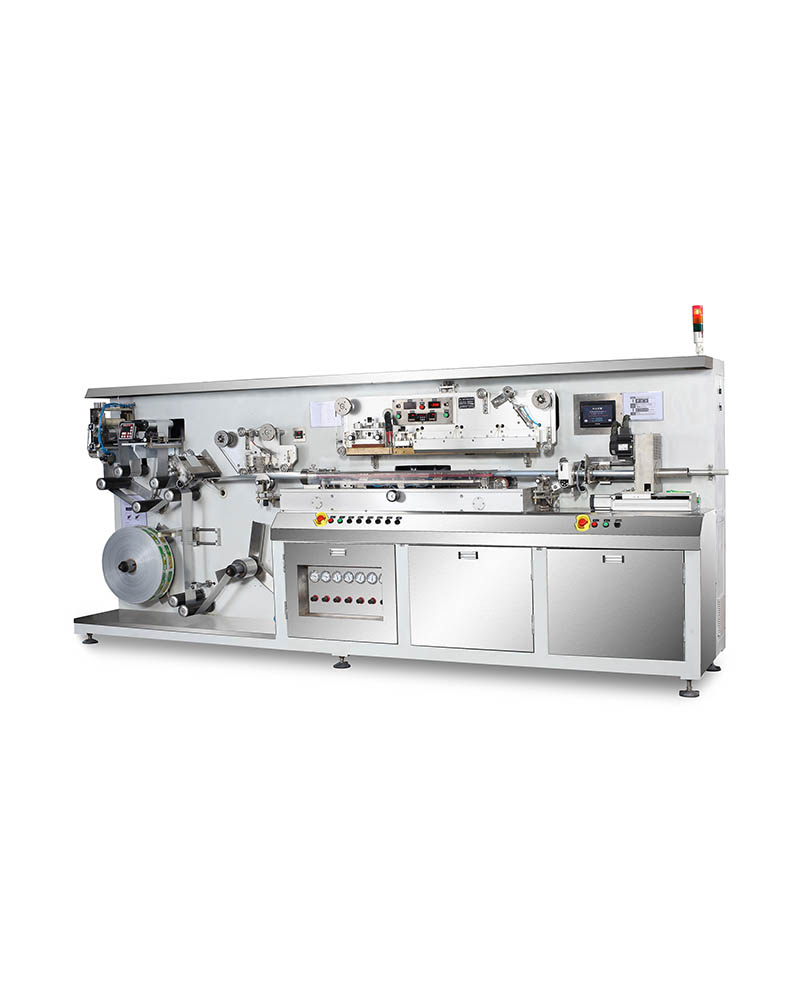
Understanding Laminate Tube Manufacturing Technology
Laminate tube production represents a sophisticated manufacturing process transforming flat sheet materials into cylindrical tube bodies ready for subsequent heading and filling operations. This technology serves as the foundation of modern tube packaging.
The Laminate Tube Manufacturing Process:
- Material Feeding: Laminate sheet material (printed or unprinted) fed from unwinder
- Sheet Guidance: Precision rollers guide material maintaining proper tension and alignment
- Tube Forming: Sheet material wrapped around forming mandrel creating cylindrical shape
- Longitudinal Sealing: Ultrasonic or heat sealing creates hermetic longitudinal seam
- Diameter Control: Precision mandrel sizing ensures accurate tube diameter
- Tube Cutting: Rotary cutting system severs individual tubes to specified lengths
- Tube Discharge: Finished tube bodies collected for subsequent heading operations
Why Laminate Tube Technology Matters:
Laminate tubes offer compelling advantages over extruded plastic tubes:
Superior Barrier Properties:
- Multi-layer construction provides excellent oxygen and moisture barriers
- ABL (Aluminum Barrier Laminate) tubes offer complete light and gas barriers
- Extended product shelf life for sensitive formulations
- Better protection than single-layer extruded tubes
Enhanced Graphics Quality:
- Printing on flat laminate before forming enables superior graphics
- Rotogravure or offset printing delivers photographic quality
- 360-degree decoration coverage
- Metallic effects and premium finishes
- Complex multi-color graphics economically feasible
Material Efficiency:
- Precise material usage minimizes waste
- Thinner walls achieve equivalent strength through laminate structure
- Optimized material combinations reduce costs
- Recyclable and sustainable material options available
Manufacturing Flexibility:
- Quick diameter changes without tooling investment
- Economical short runs for specialty products
- Rapid product development and market testing
- Custom sizes without expensive extrusion dies
Our MYD-LGA/P-100 laminate tube making machine excels in converting laminate materials into precision tube bodies enabling you to leverage all these advantages.
Exceptional Production Speed and Efficiency
In tube manufacturing, production speed directly determines capacity, unit costs, and market competitiveness. Our MYD-LGA/P-100 delivers industry-leading performance maximizing your manufacturing efficiency.
30 Meters Per Minute Maximum Speed:
This impressive linear speed translates to substantial tube production capacity:
Production Calculation Examples:
Small Tubes (Ø16mm, 100mm length):
- Linear speed: 30 meters/minute
- Tubes per minute: (30,000mm ÷ 100mm) = 300 tubes/minute
- Hourly production: 300 × 60 = 18,000 tubes/hour
- Daily capacity (20 hours): 360,000 tubes
- Annual capacity (300 days): 108 million tubes
Medium Tubes (Ø35mm, 150mm length):
- Linear speed: 30 meters/minute (at optimal settings)
- Tubes per minute: (30,000mm ÷ 150mm) = 200 tubes/minute
- Hourly production: 200 × 60 = 12,000 tubes/hour
- Daily capacity (20 hours): 240,000 tubes
- Annual capacity (300 days): 72 million tubes
Large Tubes (Ø50mm, 200mm length):
- Typical operating speed: 25 meters/minute
- Tubes per minute: (25,000mm ÷ 200mm) = 125 tubes/minute
- Hourly production: 125 × 60 = 7,500 tubes/hour
- Daily capacity (20 hours): 150,000 tubes
- Annual capacity (300 days): 45 million tubes
This substantial capacity enables:
- Serving high-volume brand customers
- Supporting aggressive business growth
- Building inventory for seasonal demands
- Accepting rush orders without constraints
- Competitive unit costs through volume efficiency
Speed Optimization Factors:
Actual production speed depends on several variables:
Material Type:
- Thin laminates (170-250 micron): Maximum speed achievable
- Standard laminates (250-350 micron): Full speed capability
- Heavy laminates (350-400 micron): May require slight speed reduction
- ABL materials: Moderate speeds ensuring quality sealing
Tube Diameter:
- Small diameters (Ø12.7-25mm): Maximum speeds possible
- Medium diameters (Ø25-45mm): Full rated speed
- Large diameters (Ø45-60mm): May operate at 80-90% maximum speed
Tube Length:
- Shorter tubes: More cuts per minute, higher tube count
- Longer tubes: Fewer cuts per minute, but consistent linear speed
- Cutting precision maintained across length range
Seal Complexity:
- Standard side seam: Full speed operation
- Additional features: May require speed adjustment
Productivity Advantages:
Beyond raw speed, the system delivers comprehensive efficiency benefits:
Consistent Performance:
- Servo control maintains precise speed regardless of variations
- Eliminates fluctuations plaguing mechanical drive systems
- Predictable production planning and scheduling
- Reliable delivery commitments to customers
Minimal Downtime:
- Robust construction maximizes equipment uptime
- Quick material changeover (15-30 minutes)
- Preventive maintenance minimizes unexpected failures
- Average uptime: 95%+ with proper maintenance
Labor Efficiency:
- One operator monitors automated system
- Minimal manual intervention required
- Automated quality monitoring reduces inspection labor
- Simplified operation enables rapid operator training
Material Utilization:
- Precision cutting minimizes material waste
- Accurate tube length control optimizes material yield
- Defect reduction through automated quality control
- Scrap rates typically <2% of total material
Superior Ultrasonic Sealing Technology
The longitudinal seal represents the most critical quality feature of laminate tubes. Our advanced ultrasonic sealing system ensures consistent, hermetic seals maintaining product integrity throughout the tube lifecycle.
Ultrasonic Sealing Advantages:
Principle of Operation:
- High-frequency ultrasonic vibrations (20-40 kHz typical)
- Generates localized heat through molecular friction
- Melts plastic layers creating fusion bond
- No external heat source required
- Instantaneous bonding process
Superior to Heat Sealing:
- Faster Cycle Time: Instantaneous bonding vs. heating/cooling time
- Cleaner Process: No adhesives or external heat application
- Consistent Quality: Precise energy control ensures uniform seals
- Material Compatibility: Works across wide range of thermoplastics
- Lower Energy: Efficient conversion of electrical to mechanical energy
- Minimal Distortion: Localized heating prevents tube warping
Seal Quality Characteristics:
Hermetic Sealing:
- Complete fusion across seal width
- No micro-channels or leak paths
- Maintains product sterility (pharmaceutical applications)
- Prevents oxygen infiltration (sensitive formulations)
- Withstands internal pressure during filling
Mechanical Strength:
- Seal strength equals or exceeds base material
- Withstands handling during manufacturing and distribution
- No delamination under stress
- Maintains integrity through repeated flexing
Visual Quality:
- Clean, uniform seal appearance
- No burn marks or discoloration
- Minimal seal width (material efficiency)
- Professional appearance suitable for premium products
Process Consistency:
- Real-time power monitoring ensures consistent energy application
- Automated gap control maintains optimal horn-to-anvil spacing
- Pressure sensors verify proper sealing force
- Defect detection identifies seal anomalies
Seal Verification:
In-Line Quality Control:
- Ultrasonic power monitoring detects sealing anomalies
- Vision inspection verifies seal appearance (optional)
- Seal width measurement ensures specification compliance
- Automated rejection of defective seals
Quality Testing:
- Peel strength testing validates seal integrity
- Pressure/vacuum leak testing confirms hermetic sealing
- Dye penetration testing identifies seal defects
- Statistical process control monitors trends
Comprehensive Diameter Range and Flexibility
Modern tube packaging spans diverse sizes serving different product volumes and market segments. Our MYD-LGA/P-100 accommodates this full spectrum through versatile design and quick changeover capabilities.
Tube Diameter Range: Ø12.7-60mm
This impressive 4.7:1 diameter range covers virtually all commercial laminate tube applications:
Small Tubes (Ø12.7-19mm):
- Travel-size and sample products (5-15ml capacity)
- Specialty pharmaceutical preparations
- Eye creams, spot treatments, precision applicators
- Luxury sample sizes for premium brands
- Promotional and trial-size offerings
Medium-Small Tubes (Ø19-30mm):
- Standard small-format packaging (15-40ml capacity)
- Eye care products, lip treatments, nail care
- Pharmaceutical ointments and topicals
- Specialty cosmetic treatments
- Concentrated formulations
Medium Tubes (Ø30-40mm):
- Most common cosmetic tube size (40-100ml capacity)
- Facial cleansers, hand creams, body lotions
- Standard pharmaceutical creams and gels
- Toothpaste and oral care products
- Food condiments and concentrated ingredients
Medium-Large Tubes (Ø40-50mm):
- Larger personal care formats (100-150ml capacity)
- Body care products, hair treatments
- Family-size pharmaceutical preparations
- Food packaging applications
- Industrial adhesives and sealants
Large Tubes (Ø50-60mm):
- Maximum-size laminate tubes (150-250ml capacity)
- Bulk personal care products
- Industrial adhesives and lubricants
- Large-format food packaging
- Heavy-duty sealants and compounds
Laminate Thickness Range: 170-400 Micron
Compatible with industry-standard laminate materials:
Thin Laminates (170-250 micron):
- Economy products maximizing material efficiency
- Soft squeeze characteristics
- Lightweight reducing shipping costs
- Standard 3-layer or 4-layer constructions
Standard Laminates (250-350 micron):
- Most common tube wall construction
- Balanced strength, barrier properties, cost
- 5-layer constructions typical
- Suitable for most applications
Heavy Laminates (350-400 micron):
- Premium products with substantial feel
- Enhanced rigidity and barrier properties
- Industrial applications requiring durability
- 7-layer or specialty constructions
Laminate Material Structures:
Plastic Laminate Tubes:
- PE/PE/PE: Simple 3-layer structure (economy applications)
- PE/EVOH/PE: 3-layer with barrier (oxygen-sensitive products)
- PE/PE/EVOH/PE/PE: 5-layer standard construction
- PET/PE combinations: Enhanced stiffness and barrier
ABL (Aluminum Barrier Laminate) Tubes:
- PE/Adhesive/Aluminum Foil/Adhesive/PE: Standard ABL
- Complete light and oxygen barrier
- Premium appearance and texture
- Pharmaceutical and luxury cosmetic applications
- Requires specialized ultrasonic sealing parameters
Printed vs. Unprinted:
- Pre-printed laminates: Graphics applied before tube forming
- Unprinted/white: For post-tube-forming decoration
- Both handled equally by machine
Quick Diameter Changeover:
Accommodating the wide diameter range requires efficient changeover:
Mandrel Change:
- Modular forming mandrel system
- Quick-release mounting mechanism
- Typically 15-30 minutes changeover time
- No special tools required for trained operators
Guide Adjustment:
- Material guide rollers adjust to accommodate diameter
- Indexed positioning for common sizes
- Micrometer adjustments for precision
- Alignment verification procedures
Parameter Updates:
- Recipe management system stores all diameter-specific settings
- Automatic parameter recall from library
- Electronic adjustment of speeds, tensions, seal parameters
- Eliminates manual parameter re-entry
Benefits of Diameter Flexibility:
- Single machine serves entire product portfolio
- Lower capital investment vs. multiple dedicated machines
- Efficient facility space utilization
- Simplified maintenance (one machine vs. multiple)
- Flexibility for future product development
Premium Component Quality Ensures Reliability
High-speed automated equipment reliability directly impacts production efficiency and total cost of ownership. Our MYD-LGA/P-100 is built using premium components from world-leading suppliers.
Panasonic Servo Motors:
All critical motion control axes use Panasonic servo systems:
Performance Characteristics:
- Precision positioning: ±0.01mm resolution
- Smooth motion profiles eliminate vibration
- High-speed acceleration/deceleration
- Real-time torque and position monitoring
- Designed for 50,000+ operating hours
- Advanced communication protocols
Application in Tube Making:
- Material Feed Control: Precise web speed and tension
- Cutting System Drive: Exact tube length control
- Sealing Head Positioning: Consistent seal placement
- Discharge Conveyor: Synchronized tube handling
Benefits:
- Consistent tube length (±0.5mm typical)
- Reliable material tension preventing defects
- Accurate cutting without material waste
- Extended component life through smooth operation
Mitsubishi PLC:
The Mitsubishi programmable logic controller serves as the intelligent control system:
Controller Capabilities:
- Industrial-grade processor for 24/7 operation
- Extensive I/O capacity for comprehensive monitoring
- Advanced programming supporting complex logic
- Multiple communication protocols (Ethernet, Modbus, etc.)
- Built-in diagnostics simplifying troubleshooting
- Proven reliability in demanding applications
Control Functions:
- Coordinates all machine functions and sequences
- Monitors all sensors and safety interlocks
- Executes recipe parameters for different products
- Collects and logs production data
- Communicates with factory systems
- Provides predictive maintenance alerts
Weinview (Weintek) HMI:
The touchscreen human-machine interface provides intuitive operator control:
Interface Features:
- Large color touchscreen (7″ or 10″)
- Icon-based navigation, logical menus
- Real-time production monitoring
- Recipe management and recall
- Alarm history and troubleshooting guidance
- Multi-language support (English, Chinese, Spanish, others)
- Production data logging and reporting
- Optional remote connectivity
Operator Benefits:
- Minimal training required for operation
- Quick product changeover through recipes
- Immediate visibility into production status
- Easy troubleshooting with guided diagnostics
- Complete production documentation
AirTAC Pneumatic Components:
All pneumatic cylinders, valves, and fittings sourced from AirTAC:
Component Quality:
- Precision manufacturing ensuring consistent performance
- Industrial-grade seals designed for millions of cycles
- Comprehensive product range simplifying design
- Excellent quality-to-price ratio
- Wide availability in Asian and global markets
Pneumatic Applications:
- Material tension control
- Sealing head clamping
- Cutting system actuation
- Tube discharge handling
- Safety system interlocks
Panasonic Sensors:
Detection and measurement sensors throughout machine:
Sensor Types:
- Photoelectric Sensors: Material presence, edge detection, positioning
- Proximity Sensors: Mechanical positions, limit switches
- Fiber Optic Sensors: Confined space detection applications
- Ultrasonic Sensors: Distance and position measurement
- High Reliability: Solid-state construction, long service life
- Easy Setup: LED indicators, simple adjustment
Quality Construction Throughout:
Structural Components:
- Heavy-duty steel frame provides rigid foundation
- Precision linear guides ensure smooth motion
- Quality bearings and drive components
- Stainless steel contact surfaces where appropriate
- Professional cable management and labeling
- Powder-coat finish for corrosion resistance
Component Quality Benefits:
- Higher equipment uptime (95%+ typical)
- Lower maintenance costs and frequency
- Better performance and precision
- Longer overall service life (15-20+ years)
- Higher resale value if equipment sold
Intelligent Automation for Consistent Production
Modern tube manufacturing demands automated systems minimizing labor, maximizing consistency, and ensuring reliable high-volume production.
Automatic Material Handling:
Unwinder System:
- Motorized unwinder with tension control
- Accommodates standard laminate roll widths
- Automatic tension adjustment maintains consistency
- Splice detection alerts operator for roll changes
- Pneumatic shaft expansion for quick roll loading
Material Guiding:
- Precision roller guides maintain alignment
- Edge sensors detect material position
- Automatic alignment correction (optional)
- Anti-wrinkle systems prevent material damage
- Adjustable for different material widths
Tension Control:
- Closed-loop tension control system
- Dancer roller or load cell feedback
- Prevents material stretching or slack
- Maintains consistent feeding through production
- Adjustable tension for different materials
Tube Forming and Sealing:
Automated Forming:
- Material wraps around precision forming mandrel
- Controlled forming prevents wrinkles or defects
- Overlap maintained for consistent seal width
- Guides ensure proper material positioning
Ultrasonic Sealing:
- Automatic seal activation when material present
- Consistent energy application every cycle
- Real-time monitoring verifies seal quality
- Automated power adjustment compensates for variations
- Seal verification before tube proceeds
Cutting and Length Control:
Precision Cutting System:
- Rotary or guillotine cutting (depending on configuration)
- Servo-controlled for exact length
- Clean cuts without material tearing or distortion
- Adjustable length through electronic parameter
- Minimal material waste at cut points
Length Accuracy:
- Typical tolerance: ±0.5mm
- Consistent length aids downstream operations
- Reduces variation in headed tube overall length
- Material efficiency through precision
Quality Monitoring:
In-Process Inspection:
- Seal quality monitoring through ultrasonic feedback
- Material tracking verifies proper feeding
- Cut length verification
- Diameter consistency monitoring
Defect Detection and Rejection:
- Automatic identification of defective tubes
- Air blast or pusher diverts rejects
- Separate collection for rework/recycle
- Defect tracking by type for analysis
- Alarm notification for excessive defects
Tube Discharge:
Automated Collection:
- Conveyor system transfers finished tubes
- Orientation control for downstream equipment
- Accumulation buffer for batch collection
- Integration with heading machines (optional)
Production Data Collection:
Real-Time Monitoring:
- Production counter (total, good, rejects)
- Linear speed and actual tube production rate
- Downtime tracking and categorization
- Material consumption calculation
- OEE (Overall Equipment Effectiveness)
Historical Data:
- Long-term production records
- Quality trend analysis
- Material usage tracking
- Equipment performance metrics
- Maintenance history
Integration Capability:
- Ethernet connectivity for factory networks
- Standard protocols (OPC-UA, Modbus, etc.)
- Export data for MES/ERP systems
- Remote monitoring (optional)