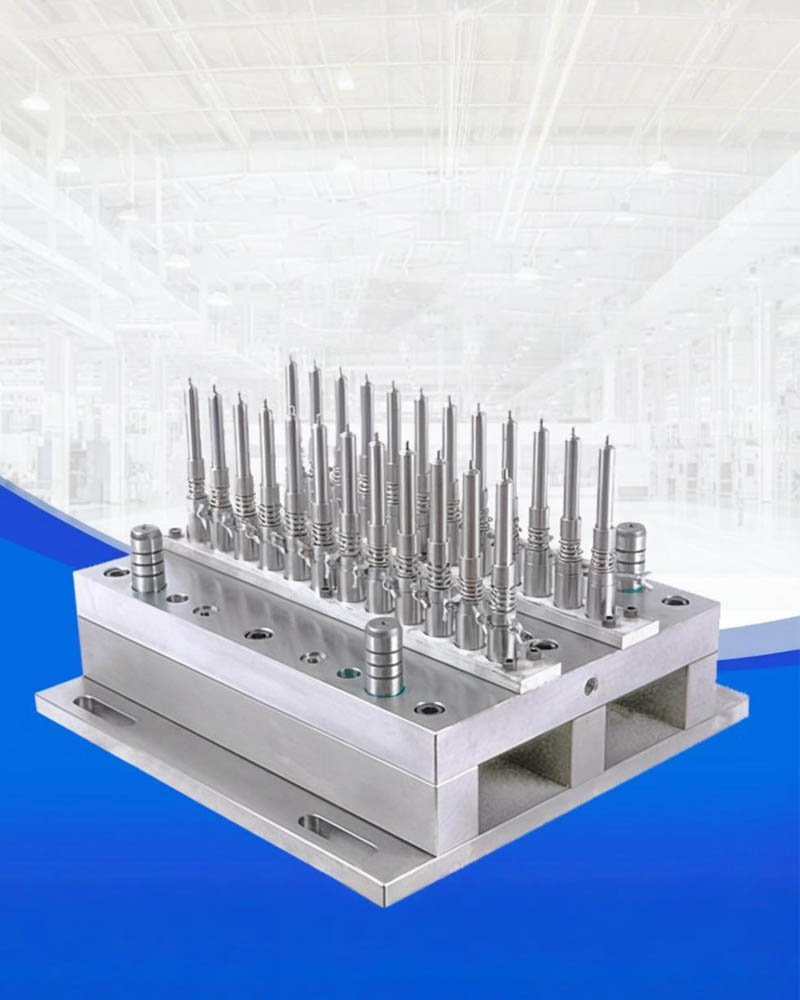
Precision Tube Shoulder Injection Mold

  • Durable Stainless Steel Construction: Made from high-quality stainless steel for excellent durability and resistance to wear and tear.
  • Long Mold Life: Capable of over 5 million cycles, ensuring long-term cost-efficiency and reliability.
  • Advanced Cooling System: Optimized cooling channels reduce cycle time and maintain consistent quality.
  • Fully Automated Ejection System: Ensures automatic tube ejection for seamless production without manual intervention.
  • Versatile Tube Compatibility: Works with various tube materials, including plasticaluminum, and composite materials.
  • Precision Mold Design: Achieves precise tube shoulder shapes, ensuring high-quality products with excellent sealing capabilities.

Additional information

🌟 MYD-LGA/P-100 Laminate Tube Making Machine

Our Tube Shoulder Injection Mold is crafted from high-quality stainless steel to ensure durability, precision, and long-lasting performance. Designed for automatic tube production lines, this mold offers advanced cooling system design to maintain consistent quality while significantly enhancing the mold’s service life. With a robust design, this mold is capable of withstanding over 5 million cycles, making it an ideal solution for high-volume tube manufacturing.

Achieve exceptional tube shoulder quality and maximum production efficiency with our precision-engineered tube shoulder injection molds. Constructed entirely from premium stainless steel with advanced cooling system design, these molds deliver consistent shoulder formation, thread precision, and seal surface quality across 5+ million production cycles. Whether you’re manufacturing cosmetic tubes, pharmaceutical packaging, food tubes, or industrial applications, our molds provide the durability, precision, and reliability demanded by high-volume automated tube heading operations, ensuring your investment delivers long-term value and consistent quality.

🔧 Product Overview

The Tube Shoulder Injection Mold is designed to efficiently form the shoulders of tubes in a variety of materials, including plastic and composite tubes. The mold’s fully automated ejection system ensures a smooth and uninterrupted operation in a high-speed production environment. The advanced cooling system not only improves cycle time but also enhances the overall quality of the molded tubes by reducing warping or uneven wall thickness.

Key Features:

  • Durable Stainless Steel Construction: Made from high-quality stainless steel for excellent durability and resistance to wear and tear.
  • Long Mold Life: Capable of over 5 million cycles, ensuring long-term cost-efficiency and reliability.
  • Advanced Cooling System: Optimized cooling channels reduce cycle time and maintain consistent quality.
  • Fully Automated Ejection System: Ensures automatic tube ejection for seamless production without manual intervention.
  • Versatile Tube Compatibility: Works with various tube materials, including plasticaluminum, and composite materials.
  • Precision Mold Design: Achieves precise tube shoulder shapes, ensuring high-quality products with excellent sealing capabilities.

🛠️ How It Works

  1. Material Injection: The mold is loaded with the desired tube material, which is injected into the mold cavity.
  2. Shoulder Forming: The advanced design ensures precise shoulder shaping during the injection process, creating smooth and even shoulder profiles on the tube.
  3. Cooling Process: The integrated cooling system rapidly cools the injected material to ensure a stable and consistent tube shoulder form.
  4. Automatic Ejection: After the forming process, the fully automated system ejects the molded tube, ready for further processing (such as filling, sealing, or labeling).
Tube Shoulder Injection Mold
Tube Shoulder Injection Mold factory

WHY CHOOSE OUR TUBE SHOULDER INJECTION MOLDS

Understanding Tube Shoulder Mold Technology

The tube shoulder injection mold represents one of the most critical tooling investments in tube manufacturing. This precision tool transforms open tube bodies into finished, functional packaging through the injection molding process, forming the shoulder, threads, seal surfaces, and closure features that determine tube performance.

Critical Mold Functions:

Thread Formation:

  • Precise thread pitch, depth, and profile
  • Smooth thread surfaces for cap application
  • Consistent opening/closing torque
  • Thread strength and durability
  • Uniform dimensions across all cavities

Seal Surface Creation:

  • Flat, smooth sealing surfaces
  • Precise flatness tolerances (<0.05mm deviation)
  • Compatible with cap seal materials
  • Leak-proof performance under pressure
  • Long-term seal integrity maintenance

Shoulder Geometry:

  • Accurate shoulder dimensions and contours
  • Smooth surface finish for aesthetics
  • Wall thickness uniformity
  • Integration with tube body
  • Support for various closure types

Material Fusion:

  • Strong bond between shoulder and tube body
  • No cold joints or weak fusion zones
  • Consistent fusion across production runs
  • Material compatibility optimization
  • Thermal management for proper bonding

Why Mold Quality Matters:

Production Quality:

  • Mold precision directly determines tube shoulder quality
  • Defects in mold create defects in every tube
  • Thread accuracy affects consumer experience
  • Surface finish influences brand perception
  • Consistency depends on mold durability

Manufacturing Efficiency:

  • Quality molds enable faster cycle times
  • Efficient cooling reduces production time
  • Durability minimizes downtime for mold changes
  • Automatic ejection eliminates manual intervention
  • Consistent performance enables unmanned operation

Economic Impact:

  • Mold life directly affects unit costs
  • Replacement frequency impacts profitability
  • Defect rates influence material waste
  • Maintenance requirements affect labor costs
  • Quality determines customer satisfaction and retention

Regulatory Compliance:

  • Pharmaceutical tubes require validated tooling
  • Food-contact applications demand material compliance
  • Traceability requires mold identification
  • Quality documentation supports certifications
  • Consistent dimensions enable automated downstream operations

Our tube shoulder injection molds excel in all these critical areas through premium materials, advanced design, and precision manufacturing.

Full Stainless Steel Construction for Superior Performance

Material selection fundamentally determines mold performance, durability, and suitability for demanding applications. Our molds are constructed entirely from premium stainless steel, delivering multiple critical advantages over traditional tool steel molds.

Stainless Steel Material Benefits:

Exceptional Corrosion Resistance:

  • Immune to rust and oxidation in humid environments
  • Resistant to chemical attack from molding materials
  • Compatible with aggressive cleaning agents
  • Suitable for pharmaceutical and food applications
  • Maintains surface finish throughout service life
  • No rust contamination of molded products

Traditional tool steel molds require protective coatings, rust prevention treatments, and careful storage. Stainless steel eliminates these concerns, simplifying maintenance and ensuring consistent performance even in challenging production environments.

Superior Surface Finish:

  • Naturally smooth surface reduces polishing requirements
  • Maintains mirror finish through millions of cycles
  • Minimal friction during ejection reduces wear
  • Easy cleaning and maintenance
  • Aesthetic appearance for cavity surfaces
  • Reduced defects from surface imperfections

The inherent surface properties of stainless steel contribute to superior molded part quality. Smooth cavity surfaces produce tubes with excellent appearance, while reduced friction enables reliable automatic ejection and extends mold life.

Extended Mold Life:

  • Hardened stainless steel provides excellent wear resistance
  • Maintains dimensional accuracy through millions of cycles
  • Reduced erosion from molten plastic flow
  • Minimal thermal fatigue cracking
  • Consistent performance over extended production runs
  • 5+ million cycle lifespan typical

The combination of corrosion resistance, wear resistance, and thermal stability enables our stainless steel molds to significantly outlast traditional tool steel alternatives. While initial investment is higher, the extended service life delivers superior long-term value.

Hygienic Advantages:

  • Easy cleaning and sterilization
  • No crevices or porous surfaces harboring contaminants
  • Compatible with aggressive cleaning protocols
  • Suitable for pharmaceutical GMP environments
  • Approved for food-contact applications
  • Cleanroom compatible

Pharmaceutical and food tube manufacturers particularly benefit from stainless steel’s hygienic properties. The material meets stringent regulatory requirements while simplifying cleaning validation and ongoing compliance.

Thermal Conductivity Optimization:

  • Controlled thermal conductivity for heat management
  • Uniform temperature distribution across cavity
  • Reduced hot spots preventing material degradation
  • Efficient heat transfer to cooling system
  • Consistent part quality through thermal stability

Proper thermal management is critical for quality tube shoulders. Our stainless steel molds are engineered to optimize heat transfer, ensuring uniform cooling and dimensional consistency.

Material Specifications:

Stainless Steel Grade Selection:

  • Cavity/Core: Premium stainless steel (typically 420 or 440C equivalent)
  • Hardness: HRC 48-52 after heat treatment
  • Corrosion Resistance: Excellent in standard production environments
  • Polishing: Mirror finish (Ra 0.05-0.1μm) standard
  • Heat Treatment: Stress-relieved and tempered for dimensional stability

Quality Certifications:

  • Material test certificates provided
  • Composition verification documentation
  • Hardness testing records
  • Dimensional inspection reports
  • Traceability through production

Advanced Cooling System Design for Optimal Performance

Cooling represents the longest phase of the injection molding cycle. Optimized cooling design directly impacts cycle time, production efficiency, part quality, and dimensional consistency. Our molds incorporate advanced cooling channel design based on extensive thermal analysis and decades of tube molding expertise.

Cooling System Engineering:

Conformal Cooling Channels:

  • Cooling passages follow contours of molded geometry
  • Uniform distance from cavity surfaces
  • Eliminates hot spots causing defects
  • Optimized for complex shoulder geometries
  • Enhanced cooling efficiency vs. straight drilled channels

Advanced manufacturing techniques (CNC drilling, EDM, or additive manufacturing for complex geometries) enable cooling channel placement impossible with traditional drilling, dramatically improving cooling efficiency.

Strategic Channel Placement:

  • Critical zones receive focused cooling (threads, seal surfaces)
  • Thick sections receive enhanced cooling preventing sink marks
  • Gate areas controlled to prevent premature freezing
  • Balanced cooling across all cavities (multi-cavity molds)
  • Core cooling prevents internal defects

Computer-aided thermal analysis optimizes cooling channel placement during design phase, ensuring every area of the molded shoulder receives appropriate cooling.

Optimized Flow Distribution:

  • Series or parallel cooling circuit configuration
  • Balanced coolant flow to all channels
  • Turbulent flow promotes heat transfer
  • Minimized pressure drop through circuit
  • Quick-disconnect fittings for maintenance

Proper flow distribution ensures uniform cooling performance, preventing hot spots that cause quality defects or extended cycle times.

Temperature Control Integration:

  • Mold temperature control unit connection
  • Inlet/outlet connections clearly identified
  • Temperature sensors for monitoring (optional)
  • Separate zone control for cavity and core (advanced configurations)
  • Optimal temperature maintenance (typically 20-60°C)

Precise temperature control enables process optimization for different materials and geometries. Some applications benefit from elevated mold temperatures for surface finish, while others require maximum cooling for cycle time.

Cooling Performance Benefits:

Reduced Cycle Time:

  • Faster cooling shortens production cycles
  • Increased throughput from same equipment
  • Improved equipment utilization and ROI
  • Competitive advantage through capacity
  • Lower unit costs through volume efficiency

Typical cycle time improvements: 10-20% vs. conventional cooling design

Improved Part Quality:

  • Uniform cooling prevents warping and distortion
  • Reduced sink marks and surface defects
  • Consistent dimensional accuracy
  • Minimized internal stress and residual stress
  • Better thread quality and precision

Enhanced Dimensional Stability:

  • Uniform shrinkage across part geometry
  • Consistent dimensions across production runs
  • Reduced variation between cavities (multi-cavity molds)
  • Maintained tolerances through mold life
  • Improved CPk values for critical dimensions

Energy Efficiency:

  • Optimized cooling reduces chiller load
  • Lower water consumption
  • Reduced energy costs per part
  • Environmental benefits
  • Improved sustainability metrics

Extended Mold Life:

  • Reduced thermal stress on mold components
  • Minimized thermal fatigue cracking
  • Consistent temperatures prevent thermal shock
  • Protected from overheating damage
  • Maintained dimensional accuracy longer

5+ Million Cycle Lifespan for Maximum ROI

Mold durability directly impacts manufacturing economics. Our tube shoulder injection molds are engineered for extended service life, typically exceeding 5 million production cycles before requiring refurbishment.

Lifespan Factors:

Premium Material Selection:

  • Hardened stainless steel cavities and cores
  • Wear-resistant coatings on critical surfaces (optional)
  • Corrosion-resistant alloys throughout
  • Quality fasteners and components
  • Durable ejection system components

Precision Manufacturing:

  • CNC machining to tight tolerances
  • Stress-relieved after machining
  • Precision grinding of critical surfaces
  • Comprehensive quality inspection
  • Documented dimensional verification

Advanced Surface Treatments:

  • Mirror polishing reduces friction and wear
  • Optional PVD coatings for extreme durability
  • Corrosion-resistant passivation
  • Hardening treatments for wear resistance
  • Surface engineering optimized per application

Robust Mechanical Design:

  • Adequate wall thickness prevents cracking
  • Proper support for high injection pressures
  • Reinforced thin sections
  • Quality guide pins and bushings
  • Heavy-duty ejection system

Lifespan Verification:

Accelerated Life Testing:

  • Molds tested beyond rated cycle count
  • Quality monitoring through testing
  • Dimensional verification at intervals
  • Wear assessment at completion
  • Documentation of performance

Production Validation:

  • Customer installations monitored
  • Actual cycle counts documented
  • Quality consistency tracked
  • Maintenance requirements recorded
  • Long-term performance data

Typical Lifespan Expectations:

Standard Production Conditions:

  • Cycle Count: 5-7 million cycles typical
  • Maintenance: Regular cleaning and inspection
  • Material: Standard PP, PE tube shoulders
  • Quality: Maintained within specifications throughout
  • Refurbishment: Minor polishing may extend life further

Demanding Applications:

  • Cycle Count: 3-5 million cycles (abrasive materials, ABL tubes)
  • Enhanced Maintenance: More frequent inspection recommended
  • Material: Abrasive fillers, glass-filled polymers
  • Quality: Specifications maintained with proper maintenance
  • Refurbishment: Planned refurbishment extends service life

Premium Performance Programs:

  • Regular inspection and maintenance services
  • Proactive refurbishment before quality degradation
  • Extended service life exceeding 7 million cycles possible
  • Documented performance throughout life
  • Optimized total cost of ownership

Economic Impact of Extended Life:

ROI Calculation Example:

Mold Investment: $30,000 Annual Production: 8 million tubes Mold Life: 5 million cycles

Scenario 1: 3 Million Cycle Mold (Conventional)

  • Molds Required: 8M ÷ 3M = 2.67 molds = 3 molds over year
  • Mold Cost: 3 molds × $30,000 = $90,000
  • Cost Per Million Tubes: $90,000 ÷ 8M = $11.25/thousand tubes

Scenario 2: 5 Million Cycle Mold (Our Premium Mold)

  • Molds Required: 8M ÷ 5M = 1.6 molds over year
  • Mold Cost: 1.6 molds × $30,000 = $48,000
  • Cost Per Million Tubes: $48,000 ÷ 8M = $6.00/thousand tubes
  • Annual Savings: $42,000
  • Payback Period: Immediate – lower long-term cost despite premium price

Additional benefits:

  • Reduced changeover downtime (fewer mold changes)
  • Consistent quality throughout life
  • Lower inventory of backup molds required
  • Reduced validation burden (pharmaceutical applications)
  • Simplified production planning

Fully Automatic Ejection System

Modern tube heading operations demand automation eliminating manual intervention. Our molds incorporate fully automatic ejection systems enabling unmanned production and maximizing efficiency.

Ejection System Design:

Ejection Method:

  • Ejector pins strategically positioned for balanced part removal
  • Pneumatic or hydraulic actuation integrated with machine
  • Synchronized with mold opening sequence
  • Adjustable ejection stroke and speed
  • Fail-safe design prevents stuck parts

Ejection Pin Configuration:

  • Optimal pin quantity, size, and placement
  • Balanced force distribution prevents distortion
  • Avoids visible pin marks on cosmetic surfaces
  • Sufficient strength for reliable ejection
  • Wear-resistant coatings extend life

Automatic Operation Sequence:

  1. Injection and packing complete
  2. Cooling time elapses
  3. Mold opens to programmed position
  4. Ejector system activates
  5. Tube shoulders eject from cavity
  6. Parts discharge to collection system
  7. Ejector pins retract
  8. Mold closes for next cycle

This fully automated sequence eliminates operator intervention, enabling continuous unmanned production.

Advanced Features:

Air Assist Ejection:

  • Compressed air jets assist part release
  • Prevents sticking in deep cavities
  • Gentle ejection reduces stress
  • Clears parts from ejector area
  • Especially beneficial for complex geometries

Ejection Sensors:

  • Verification that parts successfully ejected
  • Detection of stuck parts
  • Automatic machine stop if ejection fails
  • Prevents mold damage from cycle with stuck part
  • Integrated with machine control system

Adjustable Parameters:

  • Ejection force controllable
  • Ejection speed optimized per application
  • Multi-stage ejection for difficult parts
  • Customizable per material and geometry

Benefits of Automatic Ejection:

Labor Elimination:

  • No operator required for part removal
  • Unmanned operation during breaks, shifts
  • One operator monitors multiple machines
  • Reduced labor costs
  • Improved worker safety (no manual access to mold)

Consistent Performance:

  • Identical ejection every cycle
  • Eliminates variation from manual handling
  • Prevents damage from improper removal
  • Maintains quality consistency
  • Enables statistical process control

Higher Production Efficiency:

  • Faster cycle completion
  • No delays waiting for manual removal
  • Continuous production without interruptions
  • Maximized machine utilization
  • Lower unit costs through efficiency

Quality Protection:

  • Gentle, controlled ejection prevents damage
  • Consistent forces prevent distortion
  • No manual handling reducing contamination
  • Protected surface finish
  • Maintained dimensional accuracy

Integration with Automation:

  • Compatible with robotic handling (if required)
  • Integration with quality inspection systems
  • Automated defect rejection
  • Conveyance to downstream operations
  • Complete lights-out manufacturing capability

Precision Engineering and Quality Assurance

Mold quality determines tube shoulder quality. Our manufacturing process incorporates precision engineering, advanced machining, and comprehensive quality assurance.

Manufacturing Process:

Design Engineering:

  • CAD modeling of complete mold assembly
  • Mold flow analysis optimizing gate location, cooling
  • Thermal analysis validating cooling system
  • Structural analysis ensuring durability
  • Design review and optimization

Precision Machining:

  • CNC Milling: High-precision 5-axis machining centers
  • CNC Turning: Precise core and pin manufacturing
  • Wire EDM: Complex geometries and fine details
  • Grinding: Critical surfaces ground to final dimensions
  • Polishing: Mirror finish on cavity surfaces

Dimensional Accuracy:

  • Tolerance Capability: ±0.02mm typical
  • Thread Pitch: ±0.01mm precision
  • Surface Finish: Ra 0.05-0.1μm achievable
  • Flatness: <0.02mm deviation on seal surfaces
  • Concentricity: <0.05mm TIR

Heat Treatment:

  • Stress relieving after rough machining
  • Through hardening to specified hardness
  • Tempering for toughness and stability
  • Cryogenic treatment for enhanced performance (optional)
  • Dimensional verification after treatment

Surface Finishing:

  • Progressive polishing to mirror finish
  • Optimized surface texture per application
  • Uniform finish across all cavity surfaces
  • Protected from handling damage
  • Final inspection and verification

Quality Control:

Inspection Protocols:

  • CMM Measurement: 3D coordinate measuring machine verification
  • Optical Inspection: Profile projectors for thread verification
  • Surface Finish: Profilometer measurement of Ra values
  • Hardness Testing: Rockwell hardness verification
  • Visual Inspection: Comprehensive examination for defects

Documentation:

  • Detailed dimensional inspection reports
  • Material certificates and test reports
  • Heat treatment records
  • Surface finish measurements
  • Photographic documentation
  • First article inspection report (after sampling)

Trial and Sampling:

  • Sample molding in customer’s machine (or equivalent)
  • Dimensional verification of molded parts
  • Thread gauging and fit testing
  • Seal surface flatness measurement
  • Functional testing with caps
  • Material compatibility confirmation
  • Process parameter development
  • Full qualification per customer requirements

Continuous Improvement:

  • Customer feedback incorporation
  • Performance monitoring of fielded molds
  • Design refinements based on experience
  • Manufacturing process optimization
  • Quality system enhancements
Shanghai Miyoda Pack Machinery Co., Ltd

TECHNICAL SPECIFICATIONS & CAPABILITIES

SpecificationDetails
MaterialFull stainless steel
Mold Life5 million cycles
Cooling SystemAdvanced cooling channels
AutomationFully automatic ejection system
CompatibilityWorks with plastic, aluminum, composite tubes
Temperature RangeUp to 300°C
Injection PressureUp to 1500 bar
Mold DimensionsCustomized according to tube size and design
Cycle Time10-15 seconds (depending on tube material)

🌱 Sustainability and Efficiency

The Precision Tube Shoulder Injection Mold is designed to optimize production processes by minimizing energy consumption and material waste. The advanced cooling system ensures faster production cycles, reducing the overall energy required per unit. The mold’s stainless steel construction guarantees longevity and minimal maintenance, reducing the need for frequent replacements.

Sustainability Benefits:

  • Energy-efficient cooling system that reduces production time and energy consumption.
  • Durable stainless steel material reduces the need for frequent mold replacements, lowering long-term costs.
  • Minimal material waste due to precise injection molding and automated processes.
Tube Shoulder Injection Mold manufacturer

COMPREHENSIVE APPLICATION SOLUTIONS

Mold Construction and Materials

Core Construction Materials:

  • Cavity/Core Inserts: Premium stainless steel (420 or 440C equivalent)
  • Mold Base: Hardened steel or stainless steel
  • Ejector Pins: Hardened steel with wear-resistant coating
  • Guide Pins/Bushings: Hardened and ground steel
  • Cooling Connectors: Brass or stainless steel

Material Properties:

  • Hardness: HRC 48-52 (cavity and core)
  • Tensile Strength: >1,800 MPa
  • Yield Strength: >1,500 MPa
  • Corrosion Resistance: Excellent (stainless steel)
  • Thermal Conductivity: Optimized for cooling efficiency
  • Surface Finish: Ra 0.05-0.1μm (mirror polish)

Dimensional Specifications:

Mold Sizing (varies by application):

  • Overall Mold Dimensions: Custom based on tube diameter and machine
  • Cavity Count: 1, 2, 4, 6, 8 cavities (depending on tube size)
  • Parting Line: Precision machined and matched
  • Mold Thickness: Adequate for strength and cooling channels

Tube Shoulder Specifications (customizable):

  • Thread Diameter: Ø13mm to Ø50mm (typical range)
  • Thread Pitch: Fine (0.5-1.0mm) or Coarse (1.5-3.0mm)
  • Thread Profile: Standard, trapezoidal, buttress, custom
  • Shoulder Height: 5mm to 30mm typical
  • Seal Surface: Flat within 0.05mm
  • Wall Thickness: 1.0mm to 5.0mm depending on application

Cooling System:

  • Channel Diameter: 8-12mm typical
  • Channel Configuration: Conformal cooling optimized per design
  • Connection Type: Quick-disconnect fittings
  • Flow Rate: 6-12 liters/minute per circuit
  • Temperature Range: 20-60°C typical operating range
  • Pressure Rating: 10 bar minimum

Ejection System:

  • Ejector Pins: Hardened steel, quantity per design
  • Pin Diameter: 3-10mm depending on application
  • Ejection Stroke: Sufficient for complete part removal (typically 50-100mm)
  • Actuation: Pneumatic or hydraulic via machine
  • Force: Adequate for reliable ejection without damage

Performance Specifications:

Expected Mold Life:

  • Standard Applications: 5-7 million cycles
  • Demanding Applications: 3-5 million cycles (abrasive materials)
  • Premium Programs: 7+ million cycles with maintenance

Cycle Time Contribution:

  • Cooling Efficiency: Optimized design reduces cycle time 10-20%
  • Ejection Speed: Automatic ejection adds <2 seconds to cycle
  • Typical Cycle: 3-8 seconds depending on tube size and material

Dimensional Accuracy:

  • Thread Precision: ±0.05mm pitch diameter
  • Seal Flatness: <0.05mm deviation
  • Wall Thickness: ±0.1mm uniformity
  • Overall Dimensions: ±0.1mm typical
  • Cavity-to-Cavity Variation: <0.05mm (multi-cavity molds)

Quality Metrics:

  • First-Pass Yield: >99% (properly set up)
  • Process Capability: Cpk >1.33 typical for critical dimensions
  • Defect Rate: <0.5% (well-maintained molds)
  • Surface Quality: Mirror finish maintained through millions of cycles

Compatibility:

Machine Compatibility:

  • Designed for standard tube heading machines
  • Compatible with CJ-ZJ100 and similar equipment
  • Adaptable mounting interfaces
  • Standard cooling and ejection connections

Material Compatibility:

  • Polypropylene (PP): Optimized for standard tube material
  • Polyethylene (PE): Compatible with LDPE, HDPE variations
  • PET: Suitable with appropriate processing parameters
  • Special Materials: Custom designs for unique requirements

Application Compatibility:

  • Cosmetic tubes (all types)
  • Pharmaceutical tubes (GMP compliant)
  • Food tubes (food-grade materials)
  • Industrial tubes (durable construction)
Tube Shoulder Injection Mold factory

CUSTOM DESIGN CAPABILITIES

Comprehensive Shoulder Design Options

Every tube application has unique requirements. Our engineering team provides complete custom design services creating molds precisely matched to your specifications.

Standard Thread Configurations:

Fine Thread (Cosmetic Standard):

  • Pitch: 0.5-1.0mm
  • Smooth, precise engagement
  • Premium appearance and feel
  • Common diameters: Ø13, Ø16, Ø19, Ø22, Ø25, Ø28, Ø30mm
  • Compatible with standard cosmetic caps

Coarse Thread (High-Speed Application):

  • Pitch: 1.5-3.0mm
  • Faster cap application
  • Industrial and food applications
  • Robust thread design
  • Suitable for automated capping

Child-Resistant Threads:

  • Specialized thread profiles
  • Compliance with safety standards (CPSC, ISO)
  • Testing and certification support
  • Custom designs per cap supplier

Tamper-Evident Features:

  • Break-away bands
  • Ratcheting mechanisms
  • Specialized thread designs
  • Integration with cap features

Closure Type Adaptations:

Screw Cap Bases:

  • Standard round threads
  • Seal surface optimization
  • Various diameter options
  • Venting features (if required)

Flip-Top Cap Bases:

  • Mounting features for hinged caps
  • Locking mechanisms
  • Dispensing opening geometry
  • Hinge orientation control

Disc-Top Dispenser Bases:

  • Rotation mechanism mounting
  • Seal surface design
  • Dispenser orientation features
  • Flow control optimization

Pump Dispenser Bases:

  • Pump mounting threads or features
  • Dip tube accommodation
  • Seal compatibility
  • Structural reinforcement

Applicator Bases:

  • Brush, sponge, or needle applicator mounting
  • Precision opening geometry
  • Specialized sealing requirements
  • Custom features per applicator type

Specialty Closure Adaptations:

  • Sprayer caps
  • Nasal applicators
  • Precision dispensers
  • Custom designs per requirement

Shoulder Geometry Options:

Shoulder Profiles:

  • Straight shoulders (cylindrical)
  • Tapered shoulders (conical)
  • Curved shoulders (organic shapes)
  • Stepped shoulders (multi-diameter)
  • Custom profiles per aesthetic requirements

Shoulder Height Variations:

  • Short (5-10mm): Compact appearance
  • Standard (10-20mm): Most common range
  • Extended (20-30mm): Premium presentation or functional requirements
  • Custom heights per specification

Wall Thickness Control:

  • Thin wall (1.0-1.5mm): Material efficiency
  • Standard (1.5-2.5mm): Balanced performance
  • Heavy wall (2.5-5.0mm): Premium feel, enhanced durability
  • Variable thickness per structural requirements

Aesthetic Features:

Surface Finishes:

  • High gloss (mirror finish cavities)
  • Matte/satin (textured cavity surface)
  • Soft-touch (specialized surface texture)
  • Metallic effect (compatible materials)
  • Custom finishes per brand requirements

Decorative Elements:

  • Embossed logos or text
  • Debossed features
  • Textures and patterns
  • Knurling or grip features
  • Custom branding elements

Color Integration:

  • Single color shoulders
  • Multi-color (overmolding or co-injection)
  • Color matching per brand specifications
  • Translucent or transparent options
  • Special effect materials

Functional Features:

Venting Systems:

  • Air vents for cap application
  • Pressure equalization features
  • Controlled venting locations
  • Debris protection design

Sealing Enhancements:

  • Multiple seal surfaces
  • Liner retention features
  • Pressure seal designs
  • Leak-proof optimization

Orientation Features:

  • Keying for proper cap alignment
  • Graphics alignment marks
  • Functional orientation (flip-top direction)
  • Visual alignment features

Structural Reinforcements:

  • Reinforced thin sections
  • Buttress features for strength
  • Impact resistance optimization
  • Squeeze pressure resistance

Engineering and Design Process

Our systematic design process ensures molds perfectly match your requirements.

Phase 1: Requirements Gathering

Customer Consultation:

  • Tube specifications (diameter, length, material)
  • Production volume projections
  • Quality requirements and standards
  • Regulatory compliance needs (pharmaceutical, food, etc.)
  • Aesthetic preferences and brand guidelines
  • Functional requirements (closure type, dispensing method)
  • Budget parameters and timeline

Sample Analysis:

  • Existing tube samples (if available)
  • Competitive product evaluation
  • Cap samples for fit testing
  • Material specifications
  • Quality benchmarking

Documentation:

  • Technical drawings (if available)
  • Specifications and tolerances
  • Quality standards
  • Regulatory requirements
  • Testing protocols

Phase 2: Concept Design

3D CAD Modeling:

  • Complete mold assembly model
  • Detailed cavity and core design
  • Cooling system layout
  • Ejection system design
  • Integration with customer’s machine

Mold Flow Analysis:

  • Gate location optimization
  • Fill pattern simulation
  • Pressure and temperature distribution
  • Weld line prediction
  • Optimization recommendations

Thermal Analysis:

  • Cooling system efficiency modeling
  • Temperature distribution visualization
  • Cycle time prediction
  • Optimization of cooling channels

Design Review:

  • Customer review of 3D models
  • Feedback incorporation
  • Design refinement
  • Final design approval

Phase 3: Detailed Engineering

Manufacturing Drawings:

  • Complete 2D drawings for all components
  • Dimensional tolerances specified
  • Surface finish requirements
  • Material specifications
  • Assembly instructions

Bill of Materials:

  • All components itemized
  • Material specifications
  • Supplier identification
  • Quality requirements

Manufacturing Planning:

  • Machining sequences
  • Inspection points
  • Heat treatment procedures
  • Assembly procedures
  • Quality checkpoints

Phase 4: Manufacturing

Precision Machining:

  • CNC milling of cavity and core
  • Wire EDM for fine details
  • Precision grinding
  • Thread cutting or grinding
  • Cooling channel drilling/manufacturing

Heat Treatment:

  • Stress relief
  • Through hardening
  • Tempering
  • Hardness verification

Surface Finishing:

  • Progressive polishing
  • Mirror finish achievement
  • Texture application (if required)
  • Final inspection

Assembly:

  • Component fitting and adjustment
  • Cooling system installation
  • Ejection system assembly
  • Final alignment verification

Phase 5: Quality Assurance

Dimensional Inspection:

  • CMM measurement of critical dimensions
  • Thread verification
  • Surface finish measurement
  • Photographic documentation
  • Inspection report generation

Trial Molding:

  • Sample production in customer’s machine (or equivalent)
  • Process parameter development
  • Part dimensional verification
  • Functional testing with caps
  • Optimization adjustments if needed

Final Approval:

  • Customer inspection of trial parts
  • Dimensional verification
  • Functional testing
  • Quality approval
  • Documentation package delivery

Phase 6: Delivery and Support

Packaging and Shipping:

  • Protective packaging
  • Rust prevention
  • Assembly instructions
  • Documentation package
  • Spare parts (if ordered)

Installation Support:

  • Technical support during installation
  • Process parameter recommendations
  • Training for operators and maintenance staff
  • Troubleshooting assistance

Ongoing Support:

  • Technical assistance throughout mold life
  • Maintenance guidance
  • Performance optimization
  • Refurbishment services when needed
Tube Shoulder Injection Mold supplier

QUALITY ASSURANCE & TESTING

Comprehensive Quality Control

Our quality assurance program ensures every mold meets exacting standards before delivery.

Dimensional Inspection:

CMM (Coordinate Measuring Machine) Verification:

  • 3D measurement of all critical dimensions
  • Thread pitch, lead, and profile verification
  • Seal surface flatness measurement
  • Cavity dimensions and concentricity
  • Core dimensions and alignments
  • Comprehensive inspection report with actual measurements

Optical Inspection:

  • Profile projector thread verification
  • Surface finish evaluation
  • Detail feature inspection
  • Visual defect detection
  • Photographic documentation

Precision Measurement:

  • Micrometer measurement of critical dimensions
  • Thread gauges for pitch verification
  • Surface roughness measurement (profilometer)
  • Hardness testing (Rockwell hardness)
  • Magnetic particle inspection for cracks (if required)

Functional Testing:

Trial Molding:

  • Sample production in injection molding machine
  • Minimum 100-200 sample parts produced
  • Process parameters developed and documented
  • Molded part dimensional verification
  • Functional testing with caps

Molded Part Inspection:

  • Dimensional measurement of critical features
  • Thread verification with GO/NO-GO gauges
  • Seal surface flatness measurement
  • Wall thickness uniformity check
  • Visual appearance evaluation
  • Weight consistency verification

Performance Testing:

  • Cap application torque testing
  • Thread engagement quality assessment
  • Seal integrity testing (leak testing)
  • Drop testing for durability
  • Chemical resistance testing (if required)
  • Aging testing for long-term performance

Documentation Package:

Quality Documents Provided:

  • Detailed dimensional inspection report
  • Material certificates for stainless steel
  • Heat treatment records and verification
  • Surface finish measurements
  • Photographic documentation
  • Trial molding report
  • First article inspection report (FAIR)
  • Process parameter recommendations
  • Operating and maintenance manual

Certification Support:

  • Pharmaceutical: Validation documentation (IQ/OQ/PQ protocols)
  • Food Contact: Material compliance certificates
  • Regulatory: Documentation supporting compliance requirements
  • ISO 9001: Quality system documentation
  • Traceability: Complete production traceability
Shanghai Miyoda Pack Machinery Co., Ltd

MAINTENANCE & REFURBISHMENT SERVICES

Extending Mold Life Through Proper Maintenance

Proper maintenance maximizes mold lifespan and maintains production quality.

Preventive Maintenance Guidelines:

Daily Maintenance:

  • Clean mold surfaces after production
  • Remove all plastic residue
  • Inspect for visible damage or wear
  • Apply rust preventive (if not stainless steel)
  • Store in controlled environment

Weekly Maintenance:

  • Thorough cleaning of cooling channels
  • Inspection of ejection system
  • Lubrication of moving components
  • Check cooling system for blockages
  • Verify all fasteners tight

Monthly Maintenance:

  • Detailed inspection of cavity and core surfaces
  • Measurement of critical wear areas
  • Thread inspection with gauges
  • Ejection pin inspection and measurement
  • Cooling system efficiency check
  • Documentation of observations

Quarterly Maintenance:

  • Comprehensive dimensional verification
  • Thread gauge verification
  • Surface finish assessment
  • Predictive wear analysis
  • Professional evaluation recommended

Maintenance Services Offered:

Professional Mold Cleaning:

  • Ultrasonic cleaning for thorough residue removal
  • Chemical cleaning for stubborn deposits
  • Passivation to restore corrosion resistance
  • Inspection during cleaning process

Minor Repairs:

  • Scratch and blemish removal
  • Surface re-polishing
  • Ejector pin replacement
  • Cooling connector repair or replacement
  • Fastener replacement

Refurbishment Services:

When molds approach end of service life or show wear, refurbishment extends operational life:

Mold Refurbishment Process:

  1. Complete Inspection:

    • Disassembly and thorough examination
    • Dimensional measurement of all worn areas
    • Identification of components requiring replacement
    • Refurbishment scope and cost estimate
  2. Cavity/Core Restoration:

    • Weld repair of worn areas (if applicable)
    • Re-machining to restore dimensions
    • Thread re-cutting if needed
    • Surface re-polishing to mirror finish
  3. Component Replacement:

    • Worn ejector pins replaced
    • Guide pins and bushings renewed
    • Cooling connectors replaced if needed
    • Fasteners and seals renewed
  4. Re-Verification:

    • Complete dimensional inspection
    • Trial molding with quality verification
    • Performance testing and validation
    • Documentation package updated
  5. Warranty:

    • Refurbished molds carry warranty
    • Expected additional life: 2-3 million cycles typical

Refurbishment Investment:

  • Typically 30-50% of new mold cost
  • Significantly less than new mold purchase
  • Fast turnaround (2-4 weeks typical)
  • Extended mold life at fraction of replacement cost
Shanghai Miyoda Pack Machinery Co., Ltd

FREQUENTLY ASKED QUESTIONS (FAQ)

Q1: What is the lead time for custom mold manufacturing?
A: Standard designs: 6-8 weeks from design approval to delivery. Complex custom designs: 8-12 weeks. Expedited service available for additional cost. Trial molding and validation adds 1-2 weeks. We provide detailed timeline during quotation phase.

Q2: Can you design molds compatible with our existing tube heading machine?
A: Yes, we design molds compatible with all standard tube heading machines including CJ-ZJ100 and other brands. Provide your machine specifications, and we’ll ensure perfect compatibility including mounting interface, cooling connections, and ejection system integration.

Q3: What is the minimum order quantity?
A: We manufacture single molds (MOQ = 1). However, many customers order 2-3 molds for backup and uninterrupted production. Multi-mold orders may qualify for volume pricing discounts.

Q4: How does mold life compare between stainless steel and standard tool steel?
A: Stainless steel molds typically last 2-3× longer than standard tool steel molds in tube shoulder applications. Stainless steel: 5-7 million cycles typical. Standard tool steel: 2-3 million cycles typical. The corrosion resistance and wear characteristics of stainless steel provide superior longevity.

Q5: Do you provide molds for pharmaceutical/GMP applications?
A: Yes, we specialize in pharmaceutical-grade molds with complete validation documentation. Our stainless steel construction, material certifications, comprehensive testing, and IQ/OQ/PQ protocols support GMP compliance. We have extensive experience supporting FDA and European regulatory requirements.

Q6: What if the mold doesn’t meet specifications after trial molding?
A: All molds are fully guaranteed to meet agreed specifications. If trial molding reveals any non-conformance, we make necessary adjustments at no additional cost until specifications are achieved. This is confirmed before final acceptance and payment.

Q7: Can existing worn molds be refurbished?
A: Yes, we offer complete refurbishment services for molds (including those not originally manufactured by us). Send your worn mold for evaluation. We’ll provide refurbishment scope and cost estimate. Typical refurbishment cost: 30-50% of new mold, extending life 2-3 million cycles.

Q8: What payment terms are available?
A: Standard terms: 50% deposit upon order confirmation, 50% balance before shipment after customer approval of trial samples. Other arrangements negotiable for established customers or large orders. We accept wire transfer, LC, and other international payment methods.

Q9: Do you provide technical support after mold delivery?
A: Yes, comprehensive technical support included: Installation guidance, process parameter recommendations, troubleshooting assistance, maintenance training, optimization support. Support via phone, email, or on-site visit (if needed). Ongoing support throughout mold life.

Q10: What warranty do you provide?
A: Standard warranty: 1 million cycles or 12 months from delivery (whichever comes first) against manufacturing defects. Extended warranties available. Warranty covers material and workmanship defects, not normal wear or damage from improper use. All molds fully tested before delivery ensuring specifications met.

Miyoda Tube packing machines

Complete Your Tube Production with Professional Heading Technology

Our experts are ready to detail how our Laminating, Extruding, and Printing machines can integrate seamlessly into your production line. Request a tailored proposal today.

CONNECT

We will contact you within 24 hours.

For your urgent inquiries,please contact us through whatsapp No. : +86 13611769803

hold on

There is a latest product catalogue and a special quotation for you Today ,please feel free contact us.

Miyoda Tube packing machines