
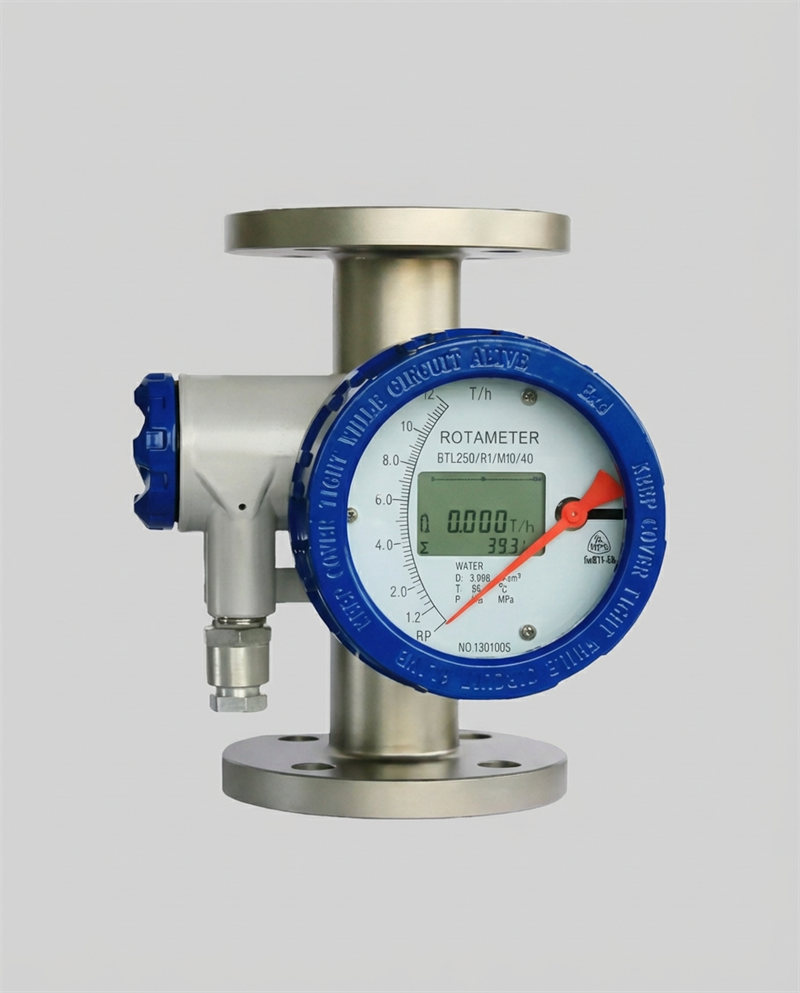
Precision Rotameter Flowmeter

Precision Rotameter Flowmeter(Variable Area Flow Meter)

Rugged industrial flow meter for high pressure and temperature applications.

  • Construction: All-metal (SS316L) design for durability.
  • Versatile: Measures Liquids, Gases, and Steam.
  • Smart: 4-20mA output with HART protocol available.
  • Display: Dual indication (Mechanical Pointer + Digital LCD).
  • Safety: No glass breakage risk.

Informação adicional

Precision Rotameter Flowmeter - Visual Flow Measurement Solution

The Rotameter Flowmeter, also known as a variable area flow meter, is a reliable and cost-effective instrument designed for precise measurement of liquid and gas flow rates in industrial applications. Utilizing the principle of variable area, this flowmeter features a tapered tube with a float that rises or falls based on the flow rate, providing direct visual readings without the need for external power. Ideal for monitoring flow in pipelines, chemical processing, water treatment, and HVAC systems, our Rotameter Flowmeter ensures high accuracy and durability even in harsh environments. With customizable options for materials like glass, metal, or plastic tubes, and scales calibrated for specific fluids, it meets diverse operational needs. Whether you’re searching for an affordable flow measurement solution or seeking to optimize process control, this rotameter delivers consistent performance, easy installation, and minimal maintenance, making it a top choice for engineers and technicians worldwide.

Product Overview

Advanced Rotameter Technology for Industrial Flow Measurement

Our rotameter flowmeter combines traditional float-type measurement with modern digital technology. Featuring a robust stainless steel body, clear analog scale, and integrated LCD digital display, this instrument provides dual visualization for enhanced accuracy and reliability. The flange connection design ensures easy installation and maintenance, making it perfect for continuous flow monitoring in various industrial environments.

Key Advantages:

  • Dual display system (analog + digital) for instant verification
  • Heavy-duty stainless steel construction for long service life
  • Wide measurement range suitable for liquids and gases
  • No external power required for basic operation
  • Direct flow visualization through transparent tube section
Precision Rotameter Flowmeter
rotameters of jadeant

Key Features of Precision Rotameter Flowmeter

Our Rotameter Flowmeter stands out with several key features that enhance its functionality and user experience. First, it offers exceptional accuracy, typically within ±1-2% of full scale, ensuring reliable readings for both low and high flow rates. The transparent tube design allows for instant visual confirmation of flow, reducing the risk of errors in real-time monitoring. Built with corrosion-resistant materials such as stainless steel or borosilicate glass, it withstands aggressive chemicals and high temperatures up to 200°C. Additionally, the flowmeter supports a wide range of flow capacities, from 0.1 L/min to 1000 L/min for liquids and equivalent for gases, making it versatile for various scales of operation. Easy calibration and optional alarms for over/under flow conditions further improve safety and efficiency. These features address common customer concerns like durability in industrial settings and the need for straightforward, maintenance-free operation, positioning our rotameter as an SEO-optimized solution for “variable area flow meter” searches.

Rotameter Water flow meter

Technical Specifications

ParameterSpecification
Measurement PrincipleVariable area (float type)
Meter Body Material304/316L Stainless Steel
Display TypeAnalog scale + LCD digital display
Accuracy Class±1.5% to ±2.5% F.S.
Flow Range0.6-6 m³/h to 25-250 m³/h (customizable)
Medium Temperature-40°C to +180°C
Ambient Temperature-20°C to +60°C
Pressure RatingPN10, PN16, PN25, PN40
Connection TypeFlange (DN15-DN150)
Flange StandardANSI, DIN, JIS available
Power Supply3.6V lithium battery / 24VDC (optional)
Output Signal4-20mA, pulse, RS485 (optional)
Protection GradeIP65
rotameter vs flow meter

Why Choose Our Rotameter Flowmeter?

Choosing our Rotameter Flowmeter offers numerous advantages that directly address customer pain points in flow measurement. Its simple mechanical design requires no power supply, making it ideal for remote or off-grid locations and reducing operational costs. High visibility through the transparent tube allows for quick checks without disassembly, minimizing downtime. Compared to electronic alternatives, rotameters are more affordable and easier to maintain, with no complex electronics prone to failure. They excel in low-flow applications where precision is critical, and their scalability supports everything from laboratory use to large industrial setups. Environmentally, they promote sustainability by enabling accurate monitoring that prevents waste. For users searching “advantages of rotameter flowmeter,” these benefits highlight reliability, cost savings, and ease of use, solving issues like high maintenance costs and inaccurate readings in traditional systems.

1. Dual Visualization System The combination of analog pointer and digital LCD display provides redundancy and confidence. Operators can quickly assess flow rates at a glance while having precise digital readings for data logging and process control.

2. Robust Industrial Design Constructed from high-grade stainless steel with flanged connections meeting international standards. The sealed design ensures reliable operation in harsh industrial environments including chemical plants, water treatment facilities, and manufacturing processes.

3. Versatile Application Range Suitable for both liquid and gas measurement with customizable flow ranges. Compatible with various media including water, chemicals, compressed air, natural gas, and corrosive fluids (with proper material selection).

4. Easy Installation & Maintenance Standard flange connections simplify installation. The transparent measuring tube allows visual inspection of the float position, enabling quick troubleshooting without disassembly.

5. Optional Smart Features Available with 4-20mA output, pulse output, or RS485 communication for integration with SCADA systems, PLCs, and remote monitoring platforms.

6. Cost-Effective Solution Low initial investment with minimal maintenance requirements. Battery-powered digital display eliminates wiring costs while providing years of autonomous operation.

measuring the volumetric flow rate of conductive

Applications

Rotameter Flowmeters are versatile tools widely used across multiple industries to solve flow measurement challenges. In the chemical and petrochemical sectors, they accurately monitor corrosive fluids and gases, ensuring process safety and efficiency. For water and wastewater treatment plants, these flowmeters provide real-time data on flow rates, aiding in resource management and compliance with environmental regulations. In pharmaceutical manufacturing, their hygienic designs (with options for sanitary fittings) maintain sterility while measuring precise volumes of liquids. HVAC systems benefit from rotameters in air and gas flow control, optimizing energy use and system performance. Additionally, in food and beverage processing, they handle viscous fluids like syrups or oils without clogging, supporting quality control. By addressing search intents such as “rotameter applications in industry” or “best flowmeter for gas measurement,” this product helps users select the right tool for their specific needs, reducing downtime and improving operational reliability.

Industrial Applications Across Multiple Sectors

Water & Wastewater Treatment

  • Drinking water production monitoring
  • Wastewater treatment flow control
  • Chemical dosing verification
  • Filter backwash flow measurement

Chemical & Petrochemical

  • Acid and alkali flow monitoring
  • Solvent transfer measurement
  • Reactor feed control
  • Cooling water circuits

HVAC & Building Services

  • Chilled water systems
  • Heating circuits
  • Cooling tower water flow
  • Air handling unit monitoring

Food & Beverage

  • Clean-in-place (CIP) systems
  • Ingredient dosing
  • Bottling line control
  • Pasteurization process monitoring

Pharmaceutical

  • WFI (Water for Injection) measurement
  • Clean steam monitoring
  • Chemical synthesis process control
  • Equipment cleaning verification

Oil & Gas

  • Natural gas flow measurement
  • Compressed air monitoring
  • Fuel oil transfer
  • Hydraulic fluid control
Industrial Flow Meters

Working Principle

How the Rotameter Flowmeter Works

The rotameter operates on the variable area principle. As fluid flows upward through the tapered measuring tube, it lifts a float whose position stabilizes when the upward force from the flowing fluid balances the float’s weight and downward drag forces.

Measurement Process:

  1. Fluid enters through the bottom inlet and flows upward through the conical tube
  2. The float rises until forces are balanced (gravity vs. flow force)
  3. The float position indicates flow rate on the calibrated scale
  4. Higher flow rates push the float higher in the wider tube section
  5. The digital sensor captures the float position and converts it to electronic display
  6. Optional transmitter sends the signal to control systems

Accuracy Factors:

  • Float design optimized for specific gravity and viscosity
  • Precision-machined tapered tube ensures linear scale
  • Temperature compensation in digital electronics
  • Vertical installation required for accurate measurement
Industrial Flow Meters show

Installation and Maintenance Guide

Installing and maintaining a Rotameter Flowmeter is straightforward, ensuring users can quickly integrate it into their systems without expert assistance. Begin by selecting a vertical installation position to allow gravity-assisted float movement, and ensure the pipeline is free of vibrations or pulsations for accurate readings. Connect via the appropriate fittings, calibrate the scale for the specific fluid density and viscosity, and verify alignment with flow direction arrows. Maintenance involves periodic cleaning of the tube to remove deposits, especially in dirty fluids, and checking for float wear. No special tools are required, and routine inspections can extend the device’s lifespan to over 10 years. 

Proper Installation for Optimal Performance

Pre-Installation Checklist:

  • Verify flow direction matches arrow on meter body
  • Ensure adequate straight pipe runs (5D upstream, 3D downstream minimum)
  • Check flange compatibility with existing piping
  • Confirm measurement range matches application requirements

Installation Steps:

  1. Position Verification: Install vertically with flow direction upward
  2. Pipe Alignment: Ensure flanges are parallel and properly aligned
  3. Gasket Selection: Use appropriate gasket material for process fluid
  4. Bolt Tightening: Tighten flange bolts in cross pattern, evenly
  5. Support: Provide adequate pipe support to prevent stress on meter
  6. Electrical Connection: Connect power supply and output signals if equipped
  7. Bypass Installation: Consider installing bypass for maintenance access

Commissioning:

  • Slowly open isolation valves to avoid float impact
  • Purge air from system completely
  • Verify zero reading with no flow
  • Compare digital and analog readings for consistency
  • Record baseline data for future reference

Maintenance Requirements

Routine Maintenance:

  • Visual Inspection (Weekly): Check for leaks, damage, or obstruction through viewing window
  • Reading Verification (Monthly): Compare analog and digital displays
  • Battery Check (Quarterly): Monitor LCD display clarity and replace battery as needed
  • Calibration Verification (Annually): Compare readings with reference meter or factory recalibration

Cleaning Procedure:

  1. Isolate meter with upstream and downstream valves
  2. Depressurize and drain the system
  3. Remove flange bolts and carefully extract meter
  4. Disassemble measuring tube (if necessary)
  5. Clean float and tube with appropriate solvent
  6. Inspect for wear, corrosion, or damage
  7. Reassemble and reinstall following installation procedures

Common Issues & Solutions:

ProblemPossible CauseSolution
Float stuck at zeroAir lock, blockagePurge air, clean filter
Erratic readingTurbulent flow, vibrationInstall flow straightener, dampen vibration
Digital display blankLow batteryReplace battery
Reading driftsTemperature effect, wearRecalibrate, check float condition
Leakage at flangesGasket failureReplace gasket, retighten bolts


Industrial Flow Meters products

Selection Guide

How to Select the Right Rotameter for Your Application

Step 1: Define Your Process Parameters

  • Fluid type (liquid or gas)
  • Flow rate range (minimum and maximum)
  • Operating pressure and temperature
  • Fluid properties (density, viscosity, corrosiveness)

Step 2: Choose Materials

  • Standard Applications: 304 stainless steel
  • Corrosive Media: 316L stainless steel
  • High Temperature: Special alloys available
  • Gasket Materials: Consult chemical compatibility chart

Step 3: Select Connection Type

  • Pipe size (DN15 to DN150)
  • Flange standard (ANSI, DIN, JIS)
  • Pressure rating (PN10, PN16, PN25, PN40)

Step 4: Determine Display & Output Options

  • Basic: Analog scale only
  • Standard: Analog + LCD digital display
  • Smart: With 4-20mA output
  • Advanced: RS485 communication + totalizer

Step 5: Special Requirements

  • Explosion-proof certification (ATEX, IECEx)
  • Sanitary design for food/pharma
  • Extended temperature range
  • Special calibration

Ordering Code Example:

RM – 50 – SS316 – PN16 – LCD – 4-20mA
│ │ │ │ │ │
│ │ │ │ │ └─ Output signal
│ │ │ │ └─────── Display type
│ │ │ └────────────── Pressure rating
│ │ └────────────────────── Material
│ └─────────────────────────── Nominal diameter (mm)
└──────────────────────────────── Product series

Industrial Flow Meters installation

Comparison with Other Flow Meter Types

Rotameter vs. Other Flow Measurement Technologies

RecursoRotameterElectromagneticTurbineVortex
Initial CostBaixaAltaMediumMedium-High
Accuracy±1.5-2.5%±0.5%±0.5-1%±1%
Visual ReadingYesNoNoNo
Power RequiredNo (basic)YesOptionalYes
Pressure DropBaixaNoneMediumBaixa
Moving PartsFloatNoneYesNone
MaintenanceBaixaVery LowMediumBaixa
Suitable for GasYesNoYesYes
Viscosity EffectMediumNoneAltaBaixa

When to Choose a Rotameter: ✓ Budget-conscious projects requiring reliable measurement ✓ Applications needing visual flow verification ✓ Remote locations without power availability ✓ Quick installation and commissioning required ✓ Both liquid and gas measurement capability needed ✓ Simple maintenance by plant personnel

When to Consider Alternatives: ✗ High accuracy requirements (±0.5% or better) ✗ Very low or very high flow rates ✗ Horizontal pipe installation only available ✗ Integration with complex control systems mandatory ✗ Custody transfer or fiscal metering applications

Industrial Flow Meters application

FREQUENTLY ASKED QUESTIONS (FAQ)

Q1: Can the rotameter be installed horizontally? 

A: No, rotameters must be installed vertically with flow upward. The float relies on gravity and flow forces to achieve balance. Horizontal installation will result in inaccurate readings.

Q2: What happens if the flow exceeds the maximum range? 

A: The float will reach the top stop. This can cause damage over time. Always select a meter with a maximum range 20-30% above your expected peak flow.

Q3: How often does the battery need replacement? 

A: Lithium batteries typically last 3-5 years depending on ambient temperature and display update frequency. A low battery indicator will alert you before failure.

Q4: Can I measure steam with this rotameter? 

A: Yes, but special high-temperature materials and seals are required. Consult factory for steam service applications above 180°C.

Q5: Does viscosity affect measurement accuracy? 

A: Yes, viscosity changes can affect calibration. For viscous fluids, specify the viscosity during ordering for proper float selection and calibration.

Q6: How do I convert the scale reading for different fluids? 

A: Use the conversion formula: Q₂ = Q₁ × √(ρ₁/ρ₂), where Q is flow rate and ρ is density. Consult the manual for detailed conversion charts.

Q7: Can the meter measure bidirectional flow? 

A: No, rotameters are designed for unidirectional flow only. Flow must enter from the bottom and exit at the top.

Q8: What causes the float to oscillate? 

A: Turbulent flow, vibration, or pulsating flow can cause oscillation. Install a flow dampener or move the meter to a more stable location.

Q9: Is factory recalibration available? 

A: Yes, we offer recalibration services with certified test equipment. Recommended every 2-3 years for critical applications.

Q10: Can I get a custom flow range? 

A: Yes, custom calibrations are available for specific applications. Provide detailed fluid properties and flow range requirements.

jade ant flow meter workshop

Send us a message

Lorem ipsum dolor sit amet, consectetur adipiscing elit dolor.

CONECTAR

Entraremos em contato com você em até 24 horas.

Para consultas urgentes, entre em contato conosco pelo número do whatsapp: +86 18817532529

aguardar

Há um catálogo de produtos mais recente e uma cotação especial para você hoje, não hesite em entrar em contato conosco.

Contact jade ant flow meters