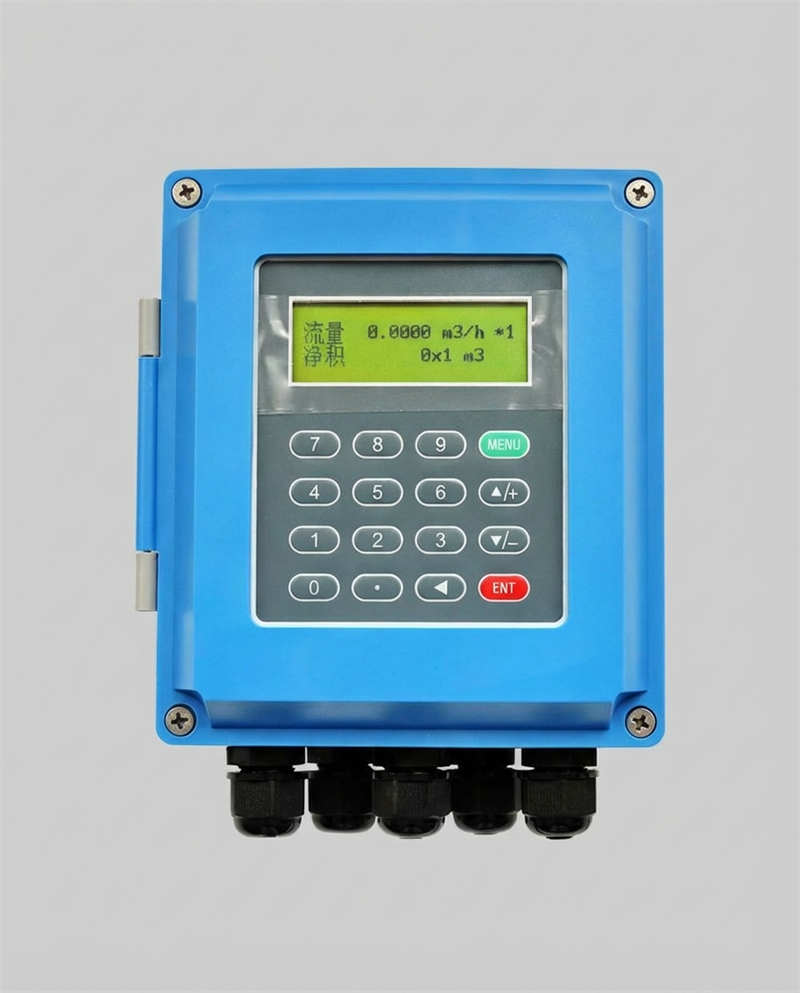
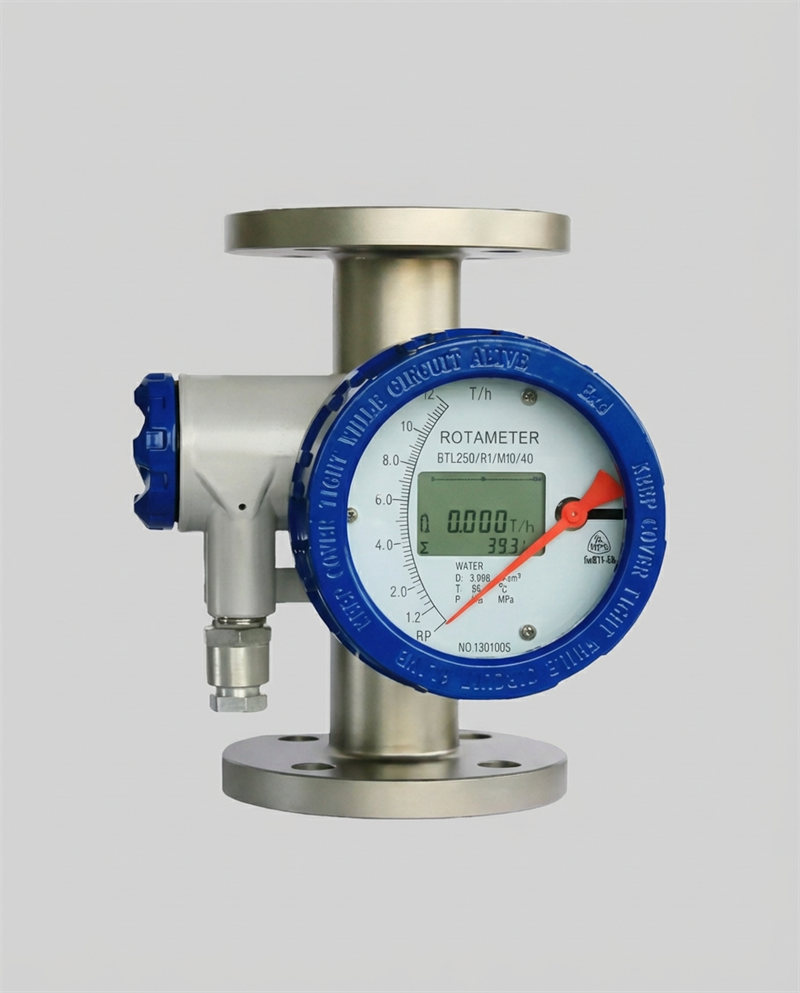
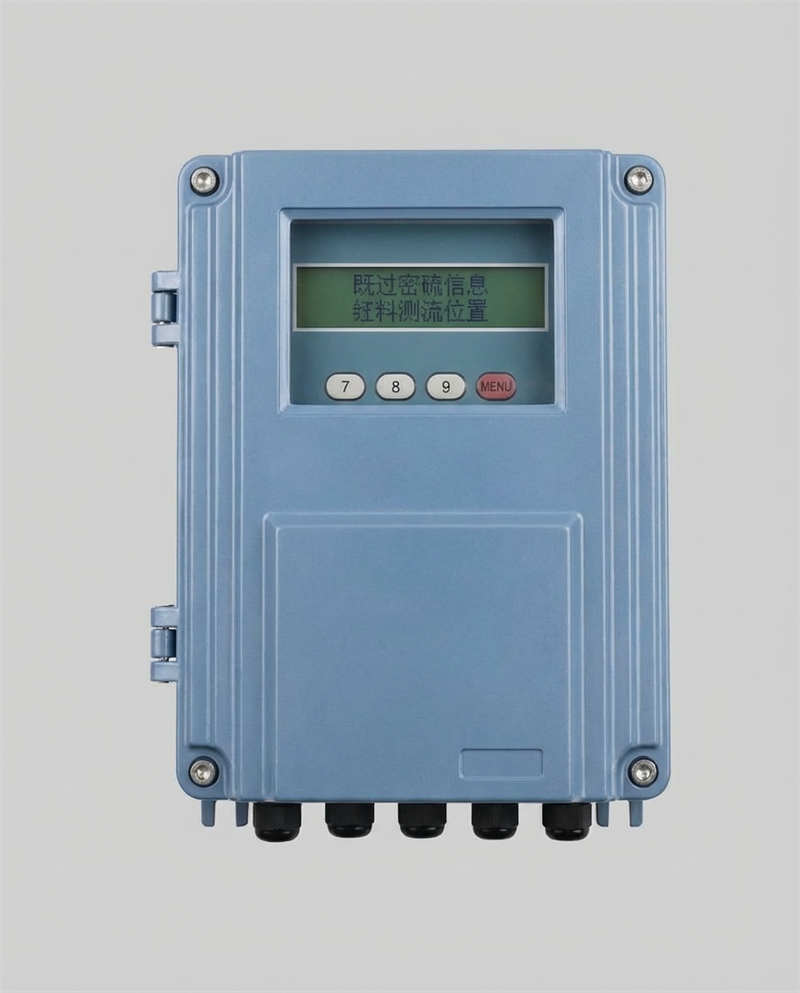
The Jade Ant Ultrasonic Flow Meter represents the cutting edge of non-contact flow measurement technology, using high-frequency sound waves to measure liquid flow velocity with exceptional accuracy and absolutely no interference with the process. Available in both clamp-on (non-invasive) and insertion configurations, our ultrasonic meters deliver unprecedented flexibility—install on existing pipelines without shutdown, process interruption, or pressure drop, while achieving ±1.0% accuracy comparable to traditional inline meters. This revolutionary capability makes Jade Ant ultrasonic meters the ideal solution for retrofit applications, temporary flow monitoring, critical processes where shutdown is impossible, and large-diameter pipelines where traditional meter installation would be prohibitively expensive.
Our advanced transit-time ultrasonic technology transmits ultrasonic signals both upstream and downstream through the flowing liquid, measuring the difference in transit times to calculate flow velocity with precision. The intelligent microprocessor compensates for temperature effects, pipe wall thickness variations, and liquid sound velocity changes, ensuring accurate measurement across diverse applications from clean water to wastewater, from chemicals to hydrocarbons, from cryogenic liquids at -40°C to hot water at +200°C. Available in sizes effectively from DN15 to DN6000 (1/2″ to 240″), with flow ranges from 0.01 m/s to 25 m/s velocity, Jade Ant ultrasonic meters serve applications including municipal water distribution, industrial process monitoring, energy management, chemical processing, oil and gas operations, and HVAC systems.
The clamp-on configuration mounts externally on the pipe with no process penetration, no wetted parts, no pressure drop, and no flow obstruction—install in minutes without cutting pipes, draining systems, or shutting down processes. Insertion meters provide higher accuracy (±0.5%) with a single probe inserted through a hot-tap fitting, ideal for large pipes where clamp-on signals may be weak. Both configurations offer maintenance-free operation with no moving parts, comprehensive output options including 4-20mA, pulse, and digital communication (Modbus, HART, Profibus), and intelligent diagnostics that continuously verify signal quality and measurement validity.
Whether you need temporary flow monitoring for a commissioning project, permanent metering on pipes too large for traditional meters, or non-invasive measurement where process contamination must be avoided, Jade Ant Ultrasonic Flow Meters deliver the accuracy, flexibility, and value modern applications demand.
Key Features
Non-Invasive Clamp-On Installation
The revolutionary clamp-on ultrasonic flowmeter mounts externally on the outside of the pipe without any process penetration, cutting, welding, or system shutdown. Two ultrasonic transducers attach to the pipe exterior using magnetic mounts, strap-on fixtures, or permanent brackets, transmitting and receiving ultrasonic signals through the pipe wall and flowing liquid. Installation takes 15-30 minutes versus hours or days for traditional inline meters requiring pipe cutting, flanging, and system drainage. This non-invasive capability delivers transformative advantages: zero process downtime for installation on operating systems, no pressure drop since there’s no flow obstruction, no contamination risk with no wetted components in contact with the process, no leak potential from flanged connections or penetrations, and complete portability allowing one meter to monitor multiple measurement points sequentially or relocate as needs change.
Clamp-on meters are ideal for temporary flow monitoring during commissioning, troubleshooting, or energy audits where permanent installation isn’t justified. They excel on large-diameter pipes (DN300-DN6000) where inline meter cost would be prohibitive—a DN1000 electromagnetic meter might cost $20,000-40,000 while a clamp-on ultrasonic meters costs $5,000-8,000 and installs without construction work. Retrofit applications benefit enormously from installation without shutdown, critical for continuous processes in refineries, chemical plants, and power generation facilities where shutdown costs exceed $50,000-100,000 per day. The ability to install on existing pipes with various materials (carbon steel, stainless steel, ductile iron, PVC, concrete, fiberglass) and configurations (straight pipes, reducers, elbows with adequate straight run) makes clamp-on ultrasonics the most versatile flow measurement technology available.
Advanced Transit-Time Measurement Technology
Jade Ant ultrasonic flowmeters employ proven transit-time (time-of-flight) measurement technology, the most accurate method for clean to moderately dirty liquids. The system uses two piezoelectric transducers positioned diagonally on opposite sides of the pipe, each alternately transmitting and receiving ultrasonic signals. When a transducer transmits an ultrasonic pulse, it travels through the pipe wall, across the flowing liquid at an angle to the flow direction, through the opposite pipe wall, and reaches the receiving transducer. The transit time depends on the sound velocity in the liquid and the liquid’s flow velocity—flow in the direction of signal travel decreases transit time, while flow opposite to signal direction increases transit time.
By measuring transit time in both directions (upstream and downstream), the system calculates the difference in transit times, which is directly proportional to the average flow velocity across the acoustic path. The fundamental relationship is: ΔT = (2 × V × L × cos θ) / C², where ΔT is the transit time difference, V is flow velocity, L is the acoustic path length, θ is the beam angle, and C is sound velocity in the liquid. The beauty of this differential measurement is that it cancels out the effect of sound velocity in the liquid (which varies with temperature and composition), leaving only the flow velocity component. Modern digital signal processing measures transit times with nanosecond precision, translating to velocity resolution better than 0.001 m/s and flow accuracy of ±1.0% for clamp-on and ±0.5% for insertion configurations.
Intelligent Signal Processing and Diagnostics
The advanced microprocessor-based converter incorporates sophisticated algorithms that optimize measurement performance across diverse pipe sizes, materials, liquids, and flow conditions. Automatic pipe material recognition and sound velocity detection identify the pipe characteristics during initial setup, while continuous adaptive signal processing adjusts amplification, filtering, and timing parameters in real-time to maintain optimal signal strength as conditions change. The system automatically compensates for temperature effects on sound velocity using integrated RTD sensors that measure pipe/liquid temperature, applying correction algorithms that maintain accuracy across temperature ranges from -40°C to +200°C.
Comprehensive self-diagnostics continuously monitor signal quality, verifying adequate signal strength, acceptable signal-to-noise ratio, proper transducer coupling, and valid transit time measurements. The diagnostic system provides real-time feedback during installation, guiding optimal transducer positioning for maximum signal strength. During operation, intelligent alarms warn of developing issues including weak signals from transducer fouling or misalignment, excessive noise from gas bubbles or suspended solids, empty pipe conditions, and reverse flow detection. Advanced signal averaging and filtering algorithms extract stable flow measurements even in challenging conditions including turbulent flow, pulsating pumps, partially full pipes, and electrically noisy environments. This intelligence transforms ultrasonic technology from a laboratory curiosity into a robust industrial instrument capable of reliable long-term operation.
Portable and Permanent Configurations
Jade Ant offers ultrasonic flowmeters in both portable handheld configurations for temporary measurement and permanent fixed installations for continuous monitoring. Portable ultrasonic flowmeters feature battery-powered operation (8-12 hours continuous use), integrated display and keypad, built-in data logging (typically storing 50,000+ measurement points), and rugged carrying cases with transducers, coupling gel, cables, and accessories. These portable meters serve commissioning engineers verifying system performance, energy auditors documenting water and energy consumption, maintenance technicians troubleshooting flow problems, and process engineers balancing flows across parallel equipment. The ability to quickly measure flows at dozens of locations with a single meter—impossible with fixed inline meters—provides unprecedented insight into system operation and identifies optimization opportunities.
Permanent ultrasonic installations use wall-mounted or panel-mounted converters with remote transducers installed on the pipes, providing continuous flow monitoring with outputs connected to SCADA, control systems, or local recorders. These fixed installations offer all the advantages of clamp-on technology (no pressure drop, no process penetration, no maintenance) in a permanent configuration suitable for custody transfer, billing, regulatory compliance, and critical process control. The transducers can be installed with permanent brackets and protective covers, ensuring long-term stability in outdoor, underground, or harsh industrial environments. Both portable and permanent configurations use identical measurement technology—the choice depends on application requirements for temporary versus continuous monitoring.
Multi-Path Measurement for Enhanced Accuracy
For applications requiring the highest accuracy on large pipes, Jade Ant offers multi-path ultrasonic flowmeters with 2, 4, or even 8 independent acoustic paths measuring flow at different positions across the pipe cross-section. Single-path meters measure velocity along one diagonal path, which may not represent the true average velocity in large pipes where velocity profiles can be complex due to upstream disturbances, elbows, or partially developed flow. Dual-path configuration adds a second acoustic path at a different elevation, averaging the two measurements for better representation of the overall flow profile. Four-path configuration positions acoustic paths at four different elevations, providing excellent averaging across the pipe diameter and delivering ±0.5% accuracy on pipes DN300-DN3000. Eight-path configurations offer the ultimate accuracy approaching ±0.25% for custody transfer applications on large pipelines.
Multi-path meters are particularly valuable for natural gas liquid pipelines, crude oil transport, water supply mains, and other applications where high-value commodities or regulatory requirements demand maximum accuracy. While more expensive than single-path meters, multi-path ultrasonics often prove more economical than alternative technologies for very large pipes—a DN2000 electromagnetic meter might cost $100,000+ while a 4-path ultrasonic system costs $30,000-50,000 and offers comparable or superior accuracy with easier installation.
Insertion Ultrasonic Flowmeters
For applications where clamp-on signal strength is inadequate (very thick pipe walls, concrete-lined pipes, large pipes with weak signals), Jade Ant insertion ultrasonic flowmeters provide an excellent alternative combining ultrasonic technology advantages with improved signal strength. The insertion design mounts one or two ultrasonic transducers on a probe that inserts into the pipe through a hot-tap fitting, positioning the transducers in direct contact with the flowing liquid. This direct liquid contact eliminates signal attenuation through pipe walls, providing strong signals even on pipes up to DN6000 with thick walls or challenging materials.
Installation requires drilling and tapping the pipe for the insertion fitting—more invasive than clamp-on but far simpler and faster than installing a flanged inline meter. The insertion can often be performed using hot-tap equipment on pressurized lines without shutdown. Insertion ultrasonics deliver ±0.5% accuracy comparable to electromagnetic meters while retaining key ultrasonic advantages: minimal pressure drop (just the small probe obstruction), no moving parts requiring maintenance, and ability to withdraw the probe for inspection or replacement through isolation valves without system shutdown. Applications include large water and wastewater pipes, irrigation canals, open channels with stilling wells, and industrial process pipes where accuracy requirements exceed clamp-on capabilities.